1
Problem Parallele „Wahrheiten“
Leitstand, Teamleitung und MA arbeiten mit unterschiedlichen Exporten.
Sobald mehrere Schichtlinien und Ausnahmen aufeinandertreffen
Leitstand, Teamleitung und MA arbeiten mit unterschiedlichen Exporten.
Korrekturen bleiben im Tageskanal hängen—die Nacht erfährt zu spät Bescheid.
Jede Korrektur erzeugt eine neue Dateiversion.
Dauerbelastung wird sichtbar, wenn es kaum noch Spielraum gibt.
The base pattern goes in quickly; the system keeps it current as reality changes
Add people and roles.
Build the core 2/2 template.
Publish shifts to the team.
Run swaps and hours inside the same tool.
Even a simple 2/2 board loses clarity when edits and actual time stay manual.
Trouble rarely starts in the pattern itself—it starts after swaps, leave, and sick days when nobody shares the same version.
Schedule, moves, and worked time sit in one place, so the shift lead sees a live picture by person and shift.
Ein Kalender für Rhythmus, Sonderfälle und Transparenz
Veröffentlichen statt verteilen—jeder arbeitet gegen dieselbe Version.
Wechsel und Abdeckung bleiben zusammenhängend lesbar.
Wer springt ein, bleibt nachvollziehbar im Gesamtplan.
Hotspots erkennen, bevor die Abrechnungswoche Druck macht.
Not abstract automation—concrete control points every shift.
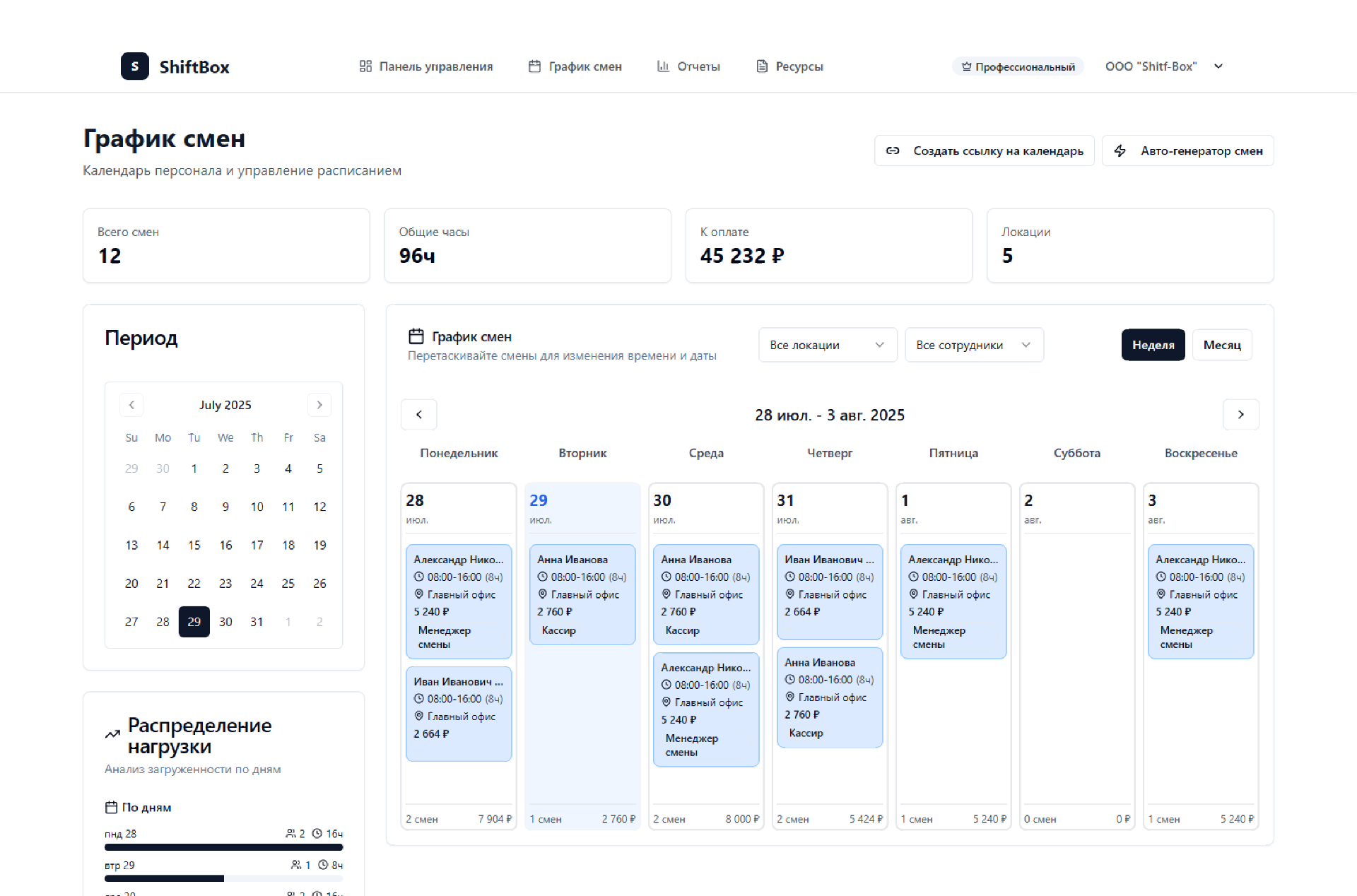
2/2 no longer lives apart from leave, sick days, and moves: everyone sees the same current shift picture.
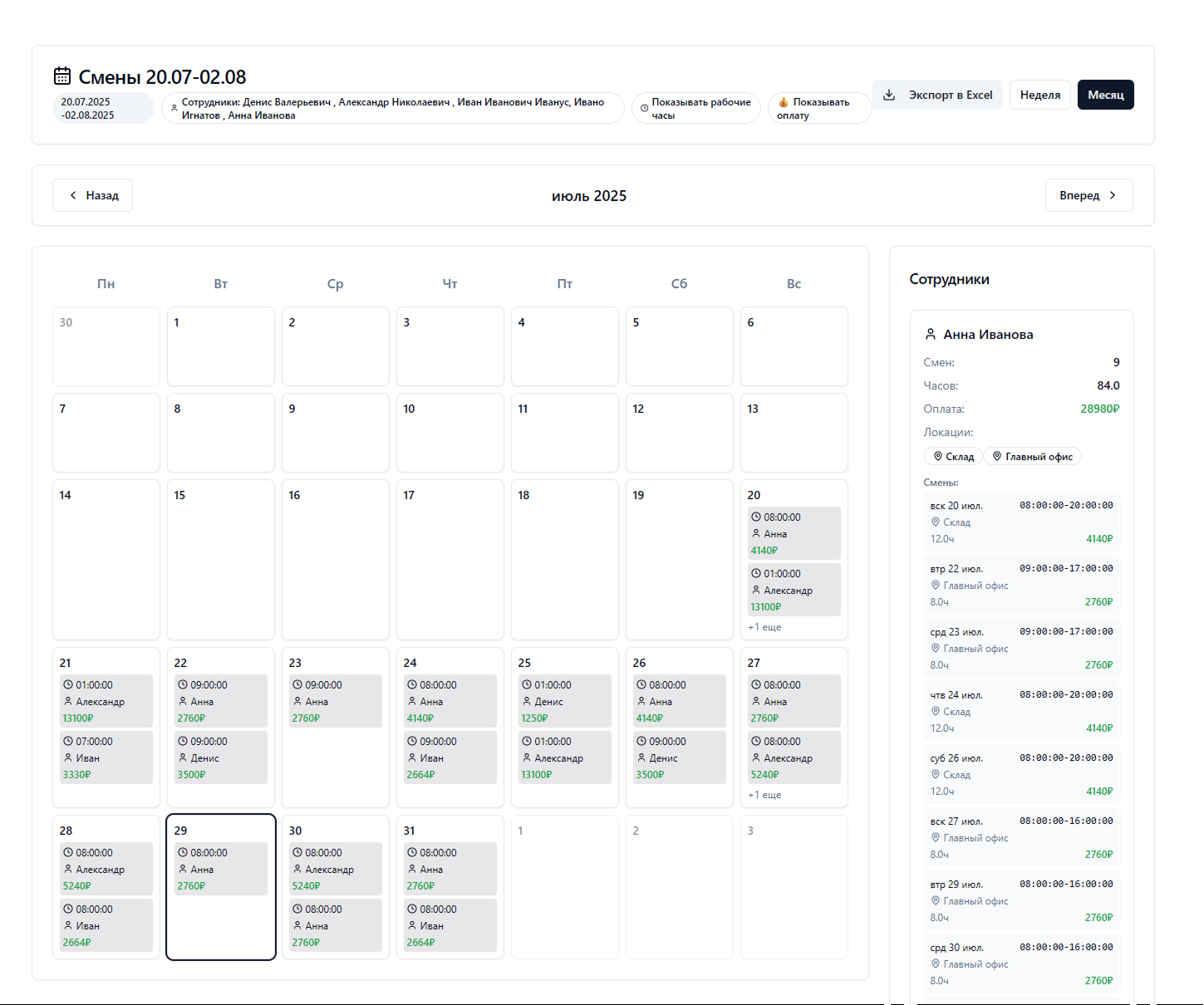
Hours per person, coverage swaps, and overload sit together so leads can decide before period close—not after.
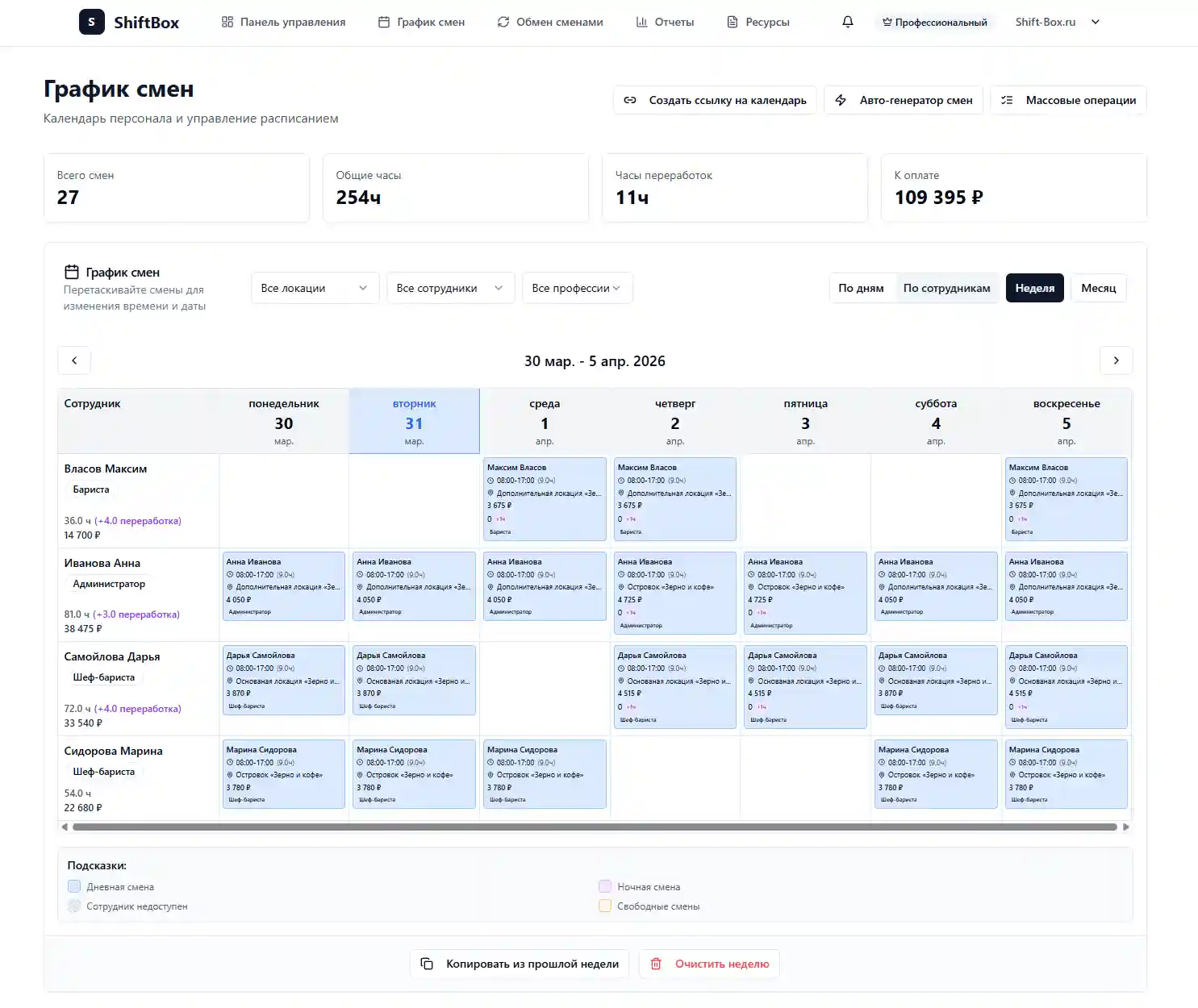
After publish, staff open the latest plan in their portal—no new file after every edit.
Calendar, people, hours, coverage, and reports share one workflow—no Excel, chat threads, and manual roll-ups.
Schichten in einer klaren Matrix planen, per Drag-and-drop zuweisen und Deckungsluecken sofort erkennen.
Ist-Stunden, Verspaetungen und Ueberstunden liegen an einem Ort — ohne Tabellen-Chaos am Monatsende.
Team oeffnet einen Browser-Link, sieht Schichten, markiert Verfuegbarkeit und beantragt Tausch ohne schweres Onboarding.
Wenn sich Schichten aendern, sieht das Team den neuen Plan im Portal — Manager erklaeren nicht jeden Edit in Nebenthreads.
On a live roster, each role needs a different slice of the same truth.
Sees people, shifts, and load without waiting for a manual end-of-period pack.
Works in one place: builds shifts, edits the board, and publishes without endless threads and file resends.
Gets a cleaner base for timesheets, hour checks, and payout prep—not scattered sources.
Teams on this pattern rarely break on day one—they break once real edits pile up. That is when one shared process starts saving time.
"We are a team of twelve. After a few moves and vacations the manager could not tell whose cycle was current. Now schedule, changes, and hours live in ShiftBox: one calendar for the lead, one published view for the crew."
Every fix meant a new sheet, a people-by-people check, and manual hour reconciliation at period end.
Template, exceptions, and shift facts stay in one process that survives each swap.
The crew stops rebuilding 2/2 by hand after every edit and shares one current picture of people, hours, and shifts.
Value shows up when schedule, exceptions, and hours share one workflow.
Any base pattern looks simple until real exceptions appear. Once moves, swaps, and deviations stack up, a manual process stops being transparent—for managers and staff alike.
ShiftBox keeps this scenario in one place: calendar, worked time, coverage, and publish act as a single loop. Edits no longer drag a new file version and a final manual roll-up behind them.
A steadier board that survives real-world changes across the week or period.
Especially useful where the pattern looks standard but every exception shifts the final picture of people and hours.
Kostenlos testen und den gemeinsamen Kalender spüren—statt Tabellenchaos.
Schichten, Vertretungen und Stunden an einem Ort—für Teams, die nicht auf „Montag bis Freitag“ warten können.
Kontinuierlicher Betrieb braucht eine gemeinsame Referenz
Ja—entscheidend ist eine veröffentlichte Sicht, die alle Rollen teilen. So bleibt klar, wer wann die Linie hält und wo Lücken entstehen.
Legen Sie das Grundmuster fest und pflegen Sie Ausnahmen zentral. So verrutscht die Nachtabdeckung nicht in verstreute Notizen.
Die Änderung landet dort, wo später abgerechnet und kommuniziert wird—ohne die gesamte Kette manuell pro Person neu zu stricken.
Wenn Plan und Stunden zusammenlaufen, sehen Sie Verdichtungen früher—nicht erst in der Nachberechnung.
Ähnliche Szenarien für Schichtrhythmen