1
Problem Plan und Realität divergieren leise
Extra-Minuten und informelle Verlängerungen kehren nicht zum Masterplan zurück.
Tägliche Mini-Drift summiert sich, wenn niemand die laufende Gesamtsicht hat.
Extra-Minuten und informelle Verlängerungen kehren nicht zum Masterplan zurück.
Deckung lebt im Chat, die Lohnbuchhaltung sieht noch das alte Template.
Überlast wird oft erst sichtbar, wenn Summen fällig sind.
Build the foundation first, then decide on live data
Teams usually import current rules and shifts, then see plan, actuals, and variance in one workflow—not scattered sources.
Add people, roles, rates, or rules that matter for your scenario.
Move the current roster and base parameters into one system.
Start seeing the planned picture per person and load before final reconciliation.
Record actual hours and decisions inside the same process.
The overtime problem is rarely the math—it is spotting overload too late
When shifts and hours live in spreadsheets, overload per person often surfaces only after the fact.
The lead can see earlier where load is growing and who should not take the next heavy shifts.
Less arguing about numbers, faster decisions for the team.
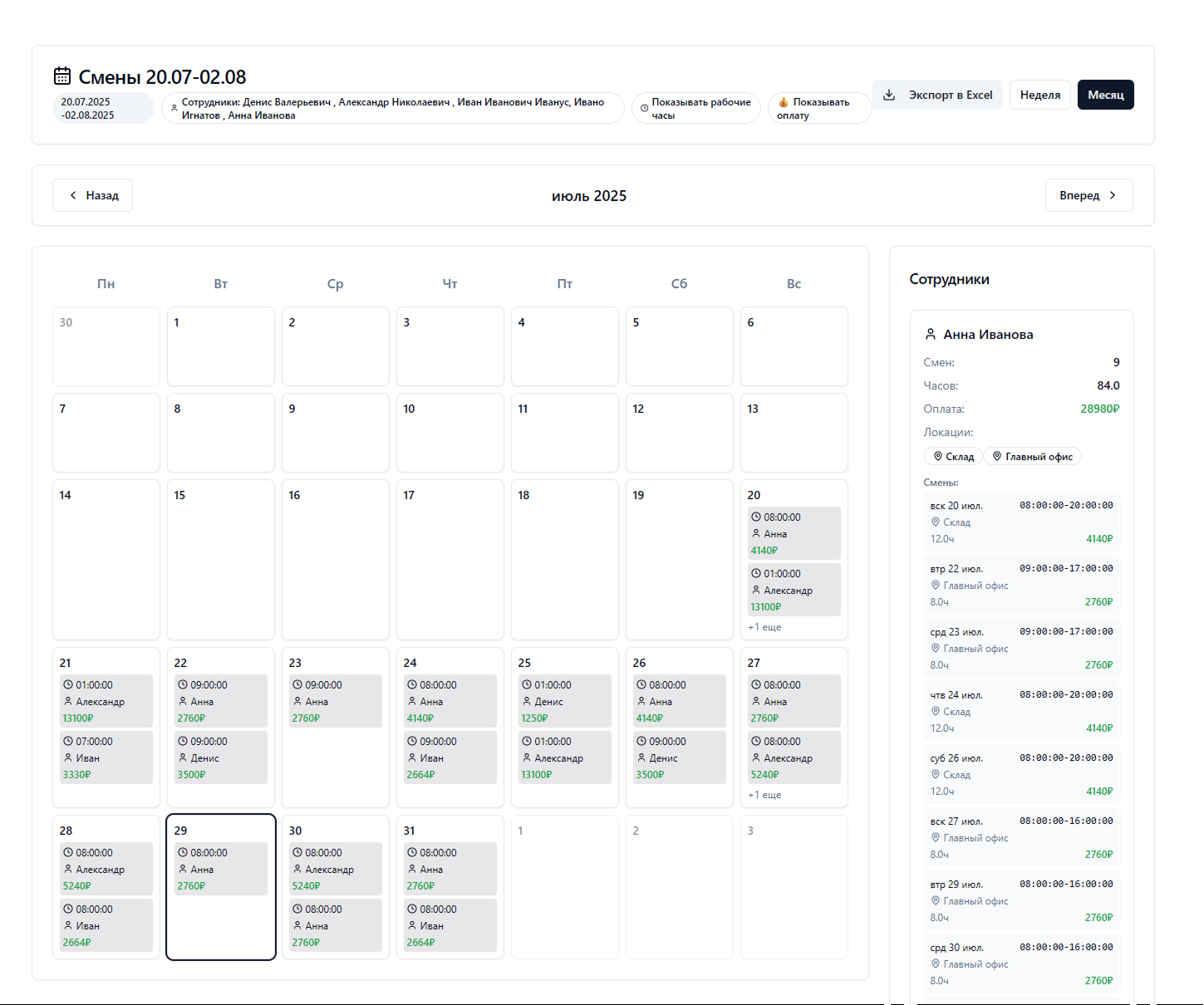
Plan, actuals, and people context sit together, so overtime control does not start with hunting for the right data version.
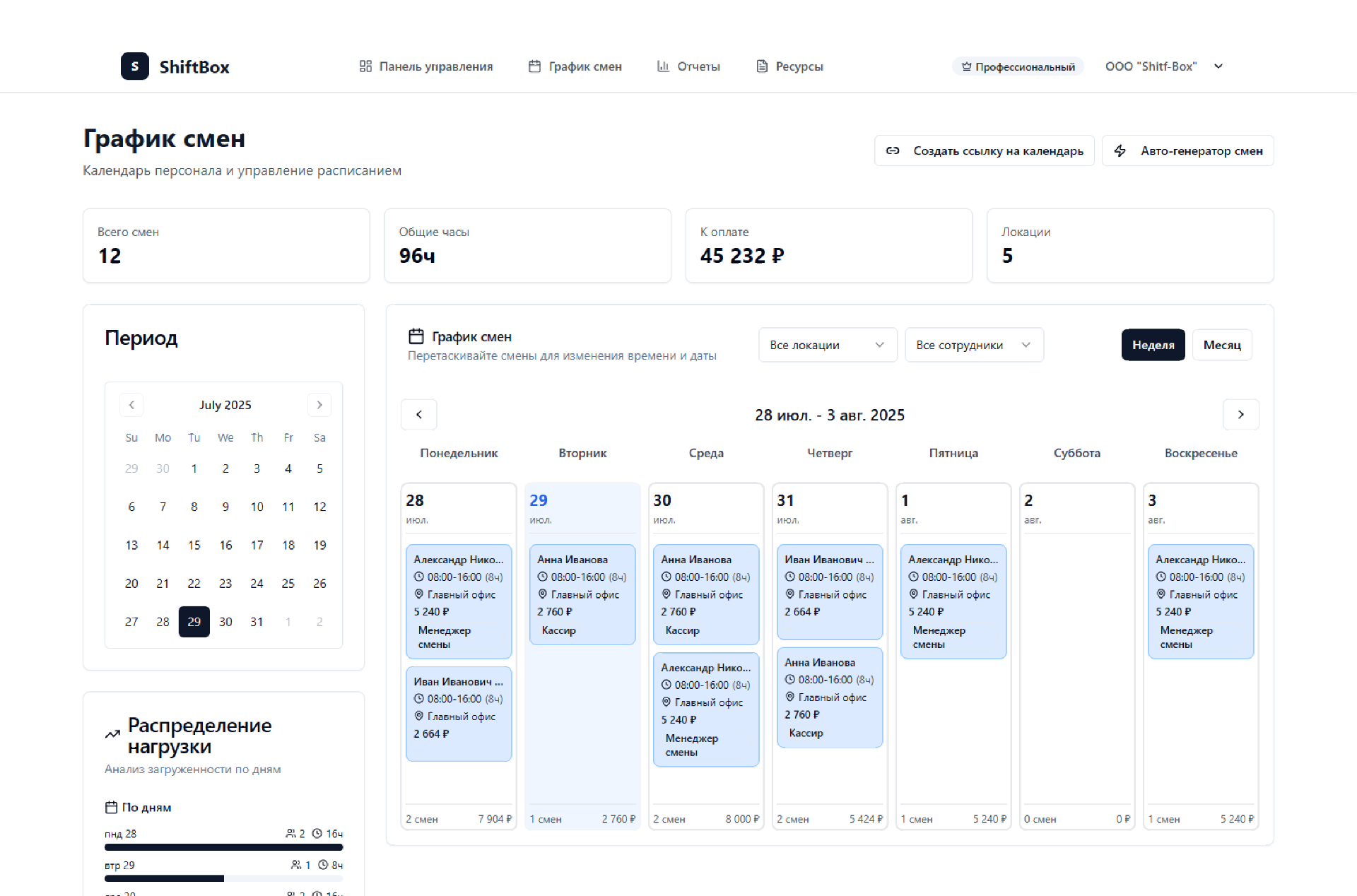
Easier to spot overload, norm drift, or costly shift patterns before they become a period-end problem.
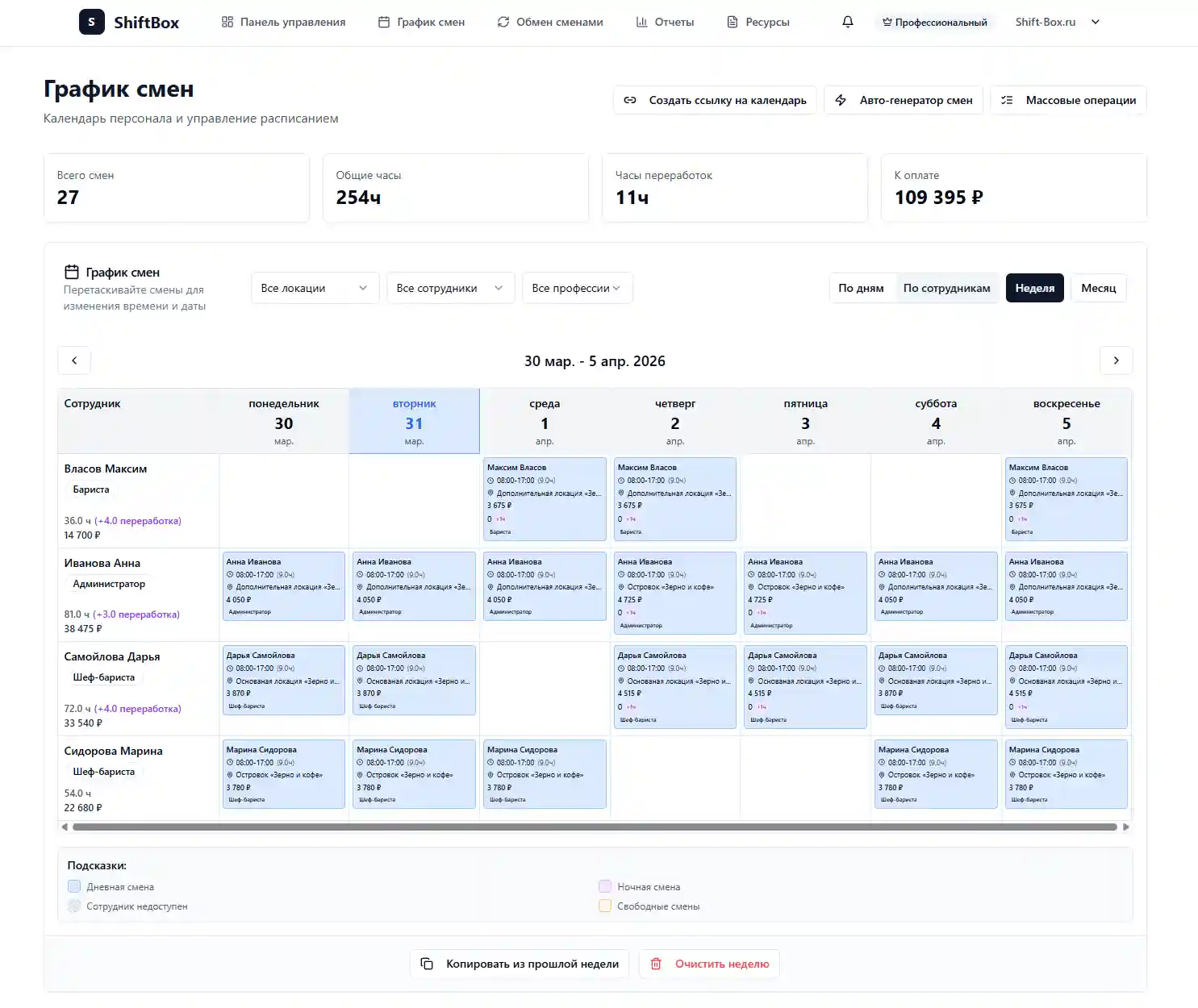
Finance, HR, and the lead get a cleaner base for reconciliation, payouts, and roster decisions.
Calendar, people, hours, coverage, and reports share one workflow—no Excel, chat threads, and manual roll-ups.
Schichten in einer klaren Matrix planen, per Drag-and-drop zuweisen und Deckungsluecken sofort erkennen.
Ist-Stunden, Verspaetungen und Ueberstunden liegen an einem Ort — ohne Tabellen-Chaos am Monatsende.
Team oeffnet einen Browser-Link, sieht Schichten, markiert Verfuegbarkeit und beantragt Tausch ohne schweres Onboarding.
Wenn sich Schichten aendern, sieht das Team den neuen Plan im Portal — Manager erklaeren nicht jeden Edit in Nebenthreads.
When data sits in one place, every role moves faster and with less friction.
Gets an earlier, clearer picture of how extra hours, overtime, and load affect the business and the team.
Works in one loop: sees roster, hours, and variance without jumping between sheets, chats, and notes.
Gets a noticeably cleaner base for hour checks, payouts, plan-vs-actual review, or HR reconciliation.
These scenarios rarely break because of a formula. The issue is assembling the right picture of people, hours, and variance too late.
"We run three locations. We used to notice overload only at month-end when changing the roster was already too late. Now the team runs this in ShiftBox, sees variance before period close, and prepares calculation on cleaner data."
You had to assemble the right data per person and hours first, then decide or prepare the calculation.
Plan, actuals, and variance live in one process, so the lead and final calculation share one picture.
The process stops starting with manual reconciliation and moves to earlier, calmer control of people, hours, and variance.
Not after calculation and reconciliation—while you can still influence the process.
In many companies the issue is not the formula—it is that extra hours and overtime live in several sources. Every decision starts with manual fact gathering instead of managing the situation.
ShiftBox gathers roster, hours, and variance in one place. Control becomes more predictable: leads see risks earlier, and final reconciliation rests on cleaner data.
Earlier visibility into problems and less manual routine before final calculation or reconciliation.
Especially useful for shift teams, site networks, and roles where load, rate, or labor cost stop being obvious without one system.
ShiftBox kostenlos testen und sehen, wie Stunden echte Schichtänderungen folgen.
ShiftBox verbindet veröffentlichte Schichten mit Ist-Stunden, damit Überstundenmuster früher sichtbar werden und der Monatsabgleich für Führung und Finance entlastet wird.
So reduzieren Schichtteams „Überraschungsstunden“ am Periodenende
Ja: Wenn Stunden gegen den Plan laufen, fallen Muster leichter auf als in verstreuten Tabellen.
Aktualisierungen bleiben an einem Ort, statt manuelle Ketten nachzurechnen.
Schichten und Ist-Stunden zusammen erleichtern eine konsistente Prüfung von Zuschlägen.
Ja. Deckung und Stunden lassen sich standortübergreifend vergleichen ohne Datei-Merge.
Sie ergänzen angrenzende Aufgaben im Alltag