1
Problem Übergabe-Lücken sind Sicherheits- und Service-Risiko
Nachtdeckung ist fragil, wenn Kommunikation informell bleibt.
Müdigkeit, Zuschläge und kleinere Crews machen Fehler sofort teuer.
Nachtdeckung ist fragil, wenn Kommunikation informell bleibt.
Kleine Fehler werden große Korrekturen, wenn Nachtregeln greifen.
Wer die Nacht wirklich stand, wird oft rückwärts rekonstruiert.
Without a long rollout project or multi-week implementation
Teams usually import the current template and crew first, publish shifts to staff, then handle exceptions, actual hours, and edits inside the same system.
Add people, roles, and sites if the scenario needs them.
Move the current shift template or work cycle into the calendar.
Publish the schedule to the team portal—no file blasts.
Run swaps, exceptions, and hours in one place from there.
Even night shifts lose clarity fast when changes and actual hours stay manual.
Trouble rarely starts in the pattern itself—it starts after mixed day/night runs, swaps, and overtime when nobody shares the same version.
Schedule, moves, and worked time sit in one place, so the shift lead sees a live picture by person and shift.
Not abstract automation—concrete control points every shift.
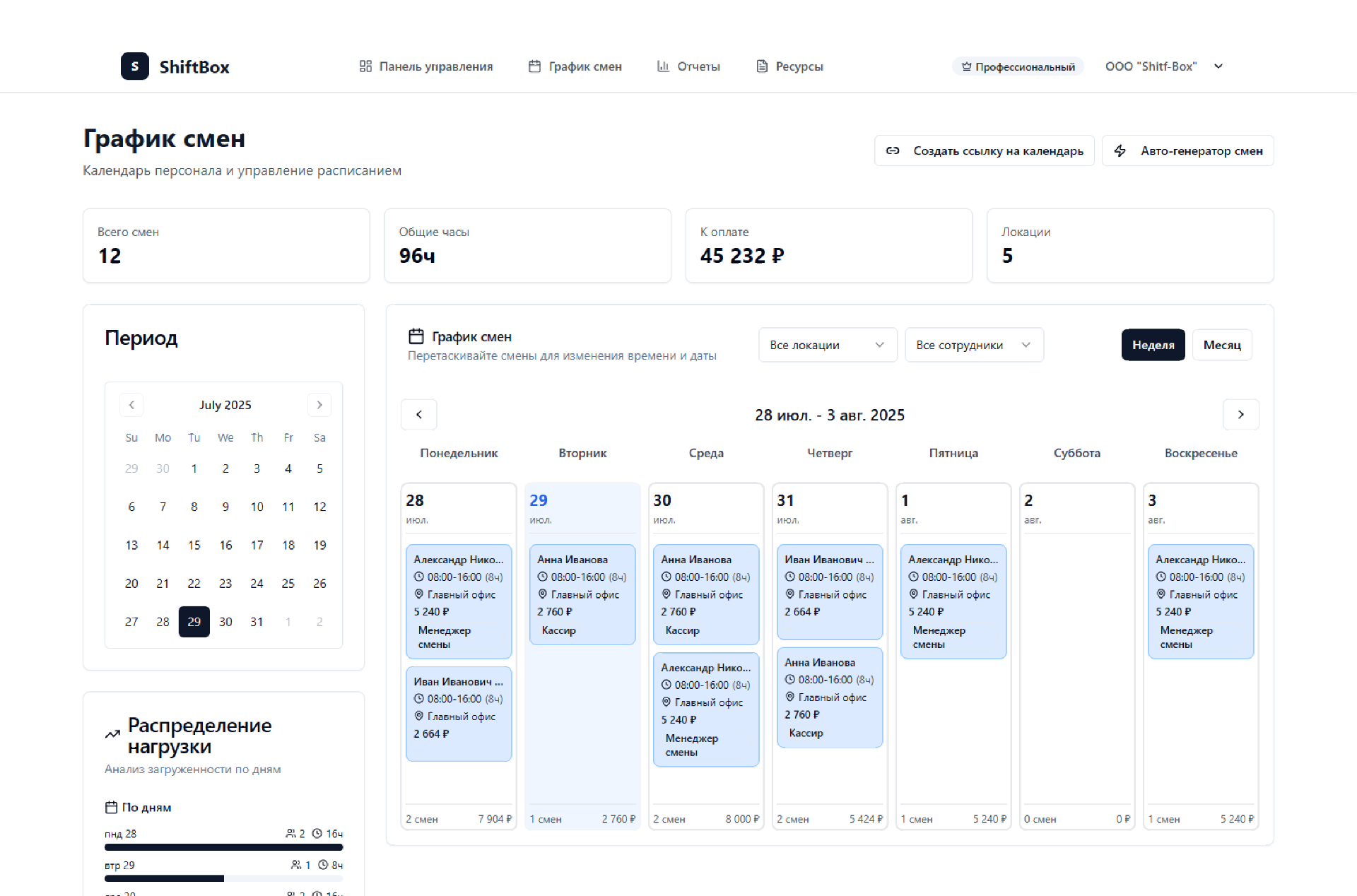
Night shifts no longer live apart from leave, sick days, and moves: everyone sees the same current shift picture.
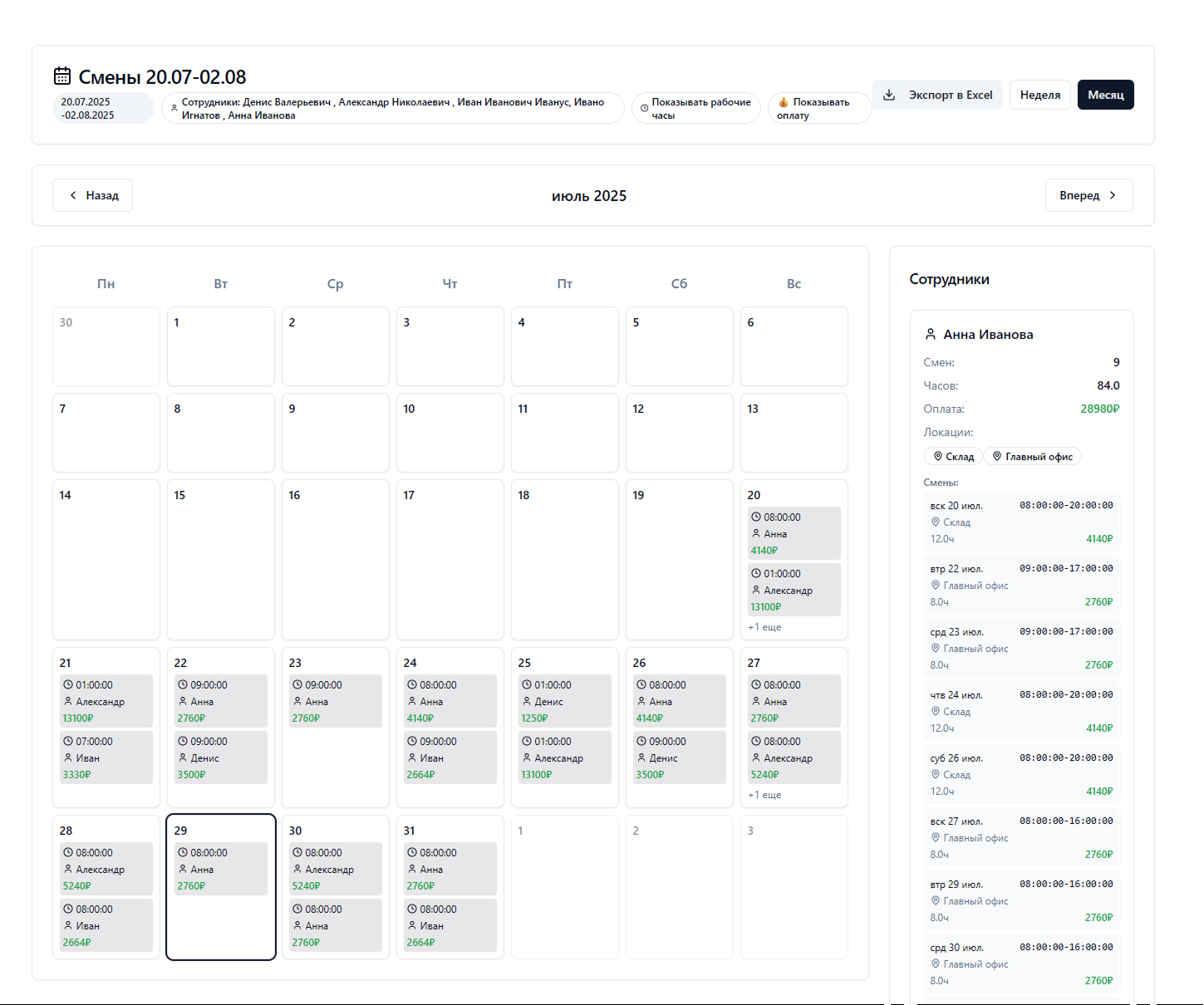
Hours per person, coverage swaps, and overload sit together so leads can decide before period close—not after.
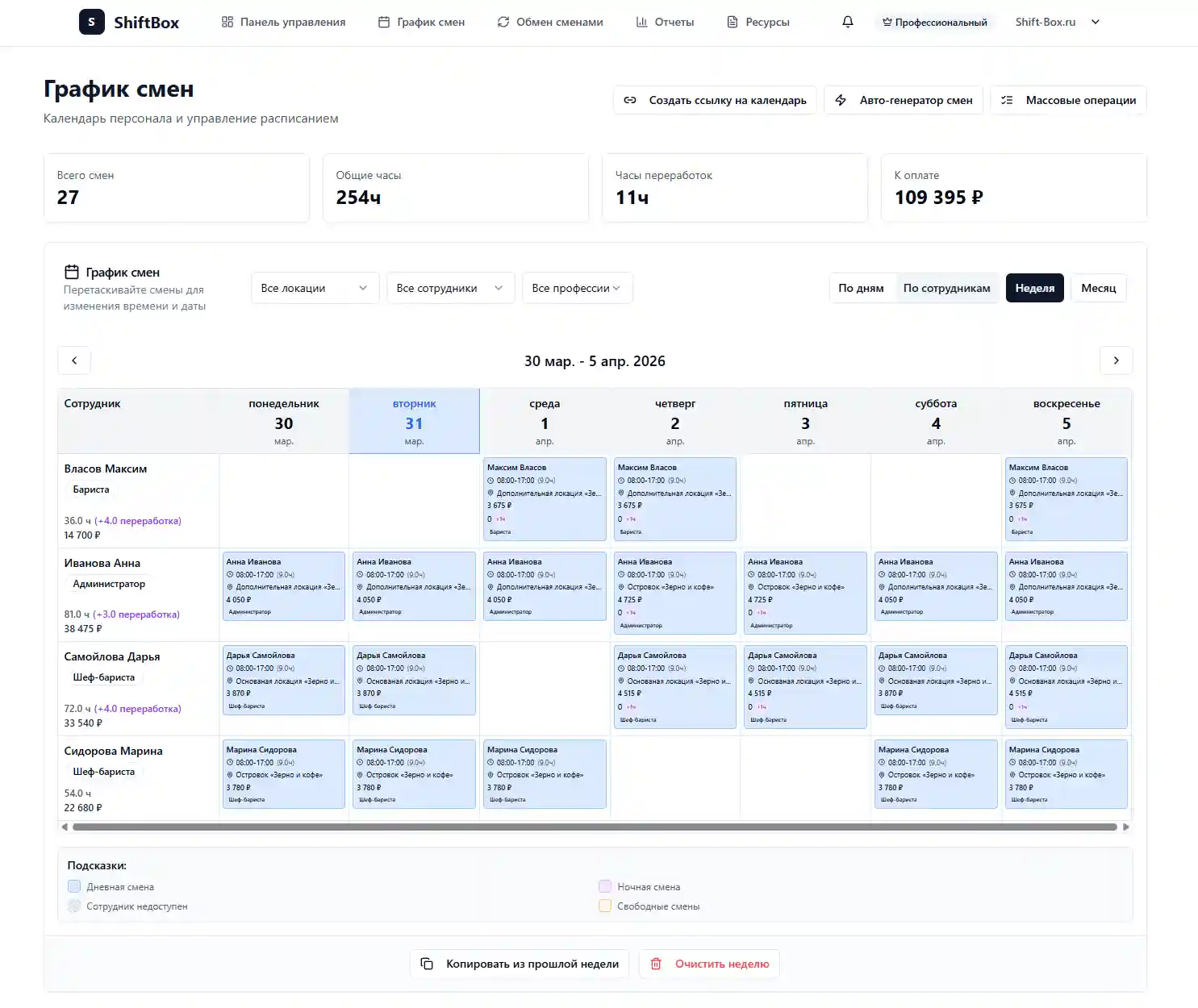
After publish, staff open the latest plan in their portal—no new file after every edit.
Calendar, people, hours, coverage, and reports share one workflow—no Excel, chat threads, and manual roll-ups.
Schichten in einer klaren Matrix planen, per Drag-and-drop zuweisen und Deckungsluecken sofort erkennen.
Ist-Stunden, Verspaetungen und Ueberstunden liegen an einem Ort — ohne Tabellen-Chaos am Monatsende.
Team oeffnet einen Browser-Link, sieht Schichten, markiert Verfuegbarkeit und beantragt Tausch ohne schweres Onboarding.
Wenn sich Schichten aendern, sieht das Team den neuen Plan im Portal — Manager erklaeren nicht jeden Edit in Nebenthreads.
On a live roster, each role needs a different slice of the same truth.
Sees people, shifts, and load without waiting for a manual end-of-period pack.
Works in one place: builds shifts, edits the board, and publishes without endless threads and file resends.
Gets a cleaner base for timesheets, hour checks, and payout prep—not scattered sources.
Overnight teams rarely break on day one—they break once real edits pile up. That is when one shared process starts saving time for leads and crews.
"We run 24/7 with fourteen people. Night and day posts used to live in separate files, so overload and premiums surfaced too late. Now schedule, changes, and hours live in ShiftBox: one calendar for the manager, one published view for the crew."
Every fix meant a new sheet, a people-by-people check, and manual hour reconciliation at period end.
Template, exceptions, and shift facts stay in one process that survives each swap.
The crew stops rebuilding night coverage by hand after every edit and shares one current picture of people, hours, and shifts.
Not only plan posts, but keep the real hour picture
Night shifts add another layer on top of a normal roster: you need to staff posts and still not lose the actual time and load picture later.
ShiftBox keeps shifts and hours in one process so night scheduling does not become a separate manual quest at period close.
A clearer night roster and less manual confusion around hours and overtime.
Especially useful where day and night posts rotate and change quickly.
Kostenlos testen und eine Woche mit gemischter Tag/Nacht-Besetzung modellieren.
ShiftBox hilft Nachtteams, Deckung, Vertretungen und Stunden in einem Workflow zu führen, damit Zuschläge und Lohnreviews leichter zu verteidigen sind und Müdigkeitsrisiko früher sichtbar wird.
Deckung, Zuschläge und Lohnvorbereitung für Nachtteams
Ja: Schichten so strukturieren, dass Nachtdeckung für Operations und Lohnprüfung klar reviewbar ist.
Wenn Vertretungen den Live-Plan aktualisieren, folgen nachgelagerte Stundenansichten den neuesten Zuweisungen.
Ein veröffentlichter Plan reduziert "wer sollte decken"-Verwirrung zwischen Schichten.
Ja. Last über Tagesabschnitte vergleichen ohne parallele Tabellen.
Verwandte Seiten für Teams mit komplexer Stundenlast