1
Problem Zwei Raster im Kopf
Kalenderwoche sagt A, der Turnus sagt B—Excel verliert leicht den Faden.
Sobald Frei- und Arbeitstage gegen die Woche „wandern“
Kalenderwoche sagt A, der Turnus sagt B—Excel verliert leicht den Faden.
Urlaub bricht das Sechs-Tage-Muster—ohne Werkzeug entstehen Lückenlisten.
Wer einspringt, muss das Gesamtbild sehen—nicht nur eine Zelle.
Vier-Tage-Blöcke summieren sich—Überlast wird oft retrospektiv sichtbar.
The base cycle goes in quickly; the system keeps it current as reality changes
Teams usually sketch the 4/2 template first, add people and roles, then run swaps and real-world edits inside the same system.
Add people and roles.
Build the core 4/2 template.
Publish shifts to the team.
Run exceptions and hours inside the same tool.
Even a stable 4/2 block drifts when leave and swaps live outside the roster
Trouble usually starts not on day one, but after the first exceptions break the base template.
Cycle, changes, and actual load sit in one place, so the lead can keep the roster workable.
Not abstract automation—concrete control points every shift.
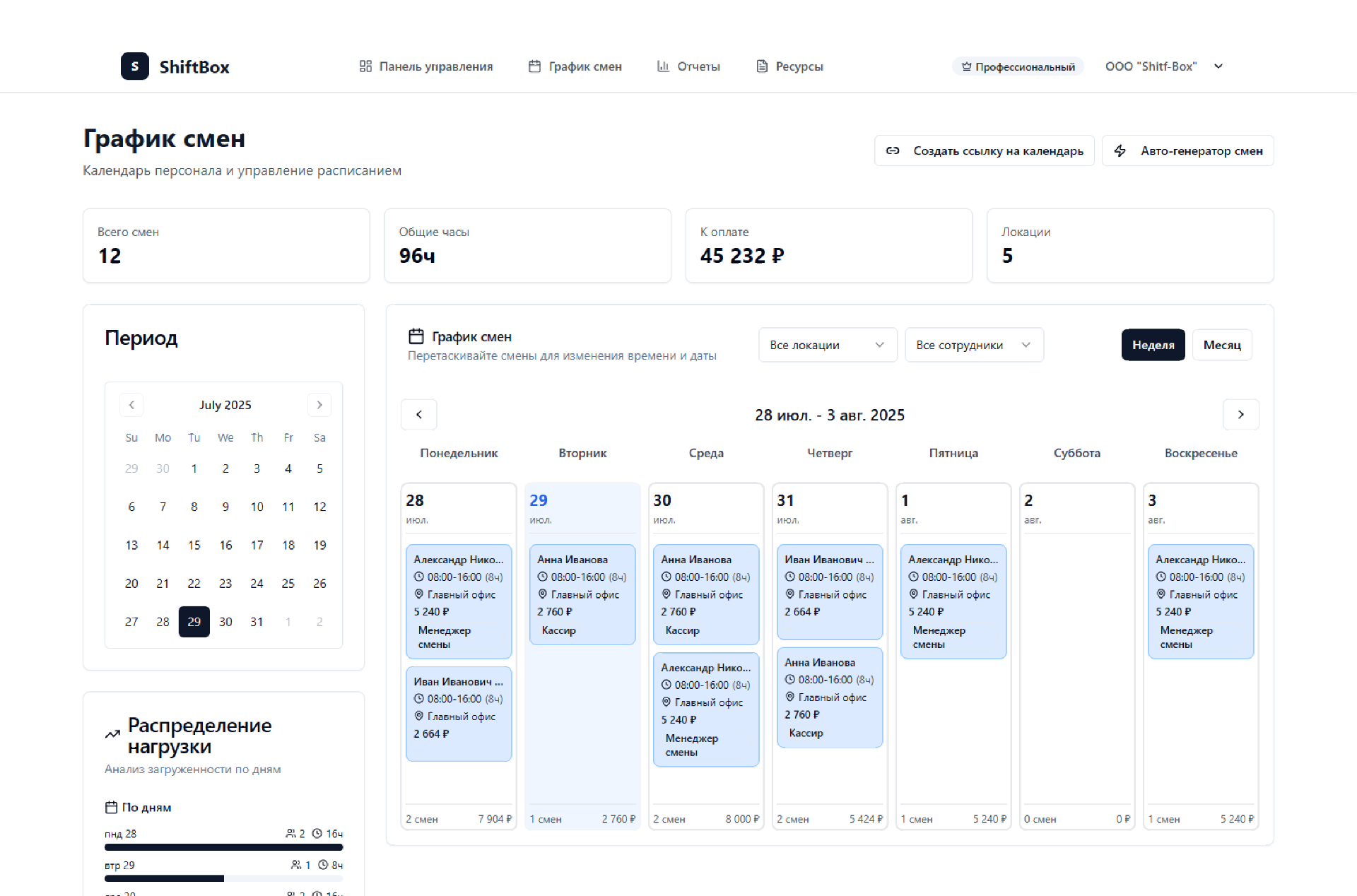
4/2 no longer lives apart from leave, sick days, and moves: everyone sees the same current shift picture.
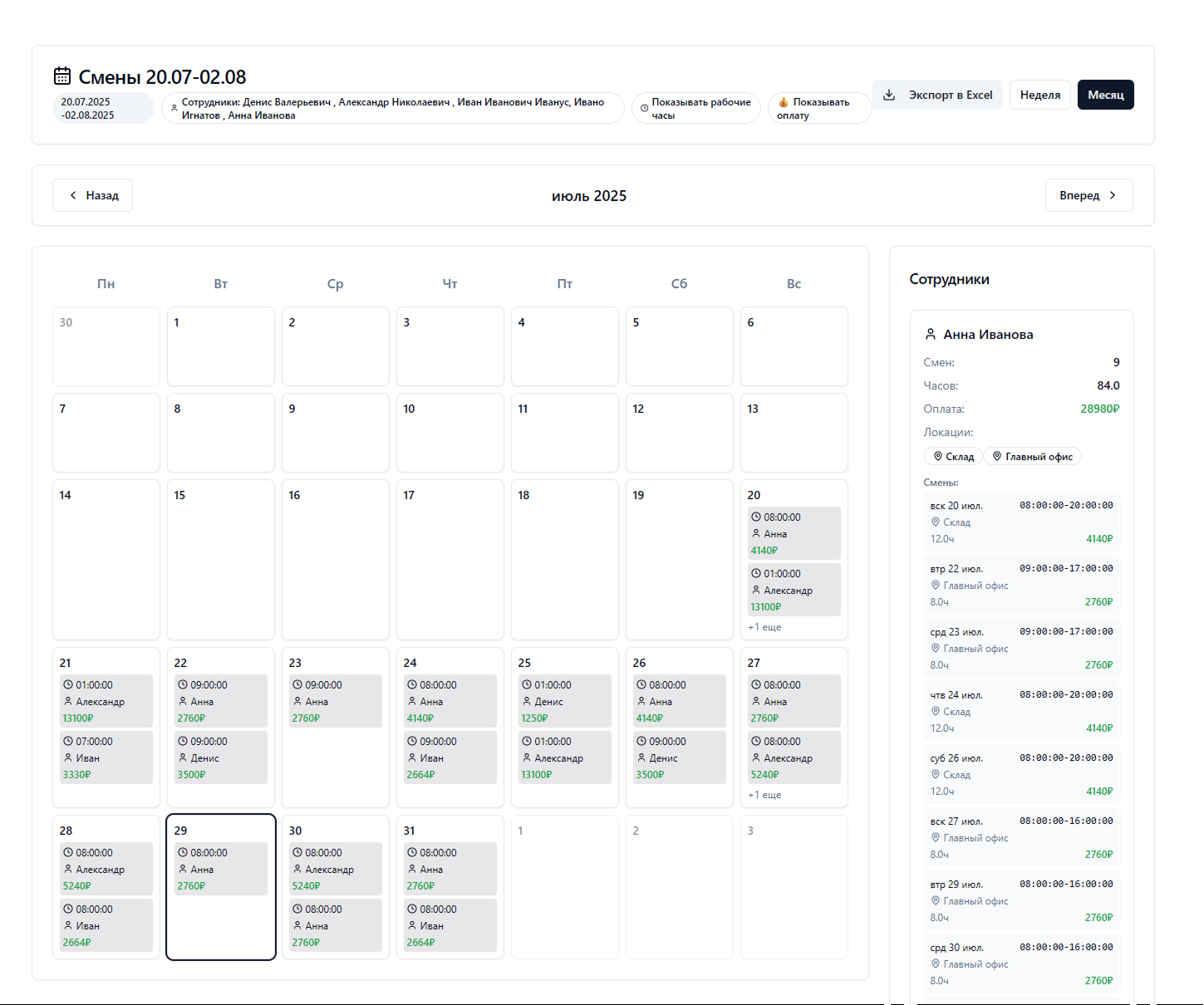
Hours per person, coverage swaps, and overload sit together so leads can decide before period close—not after.
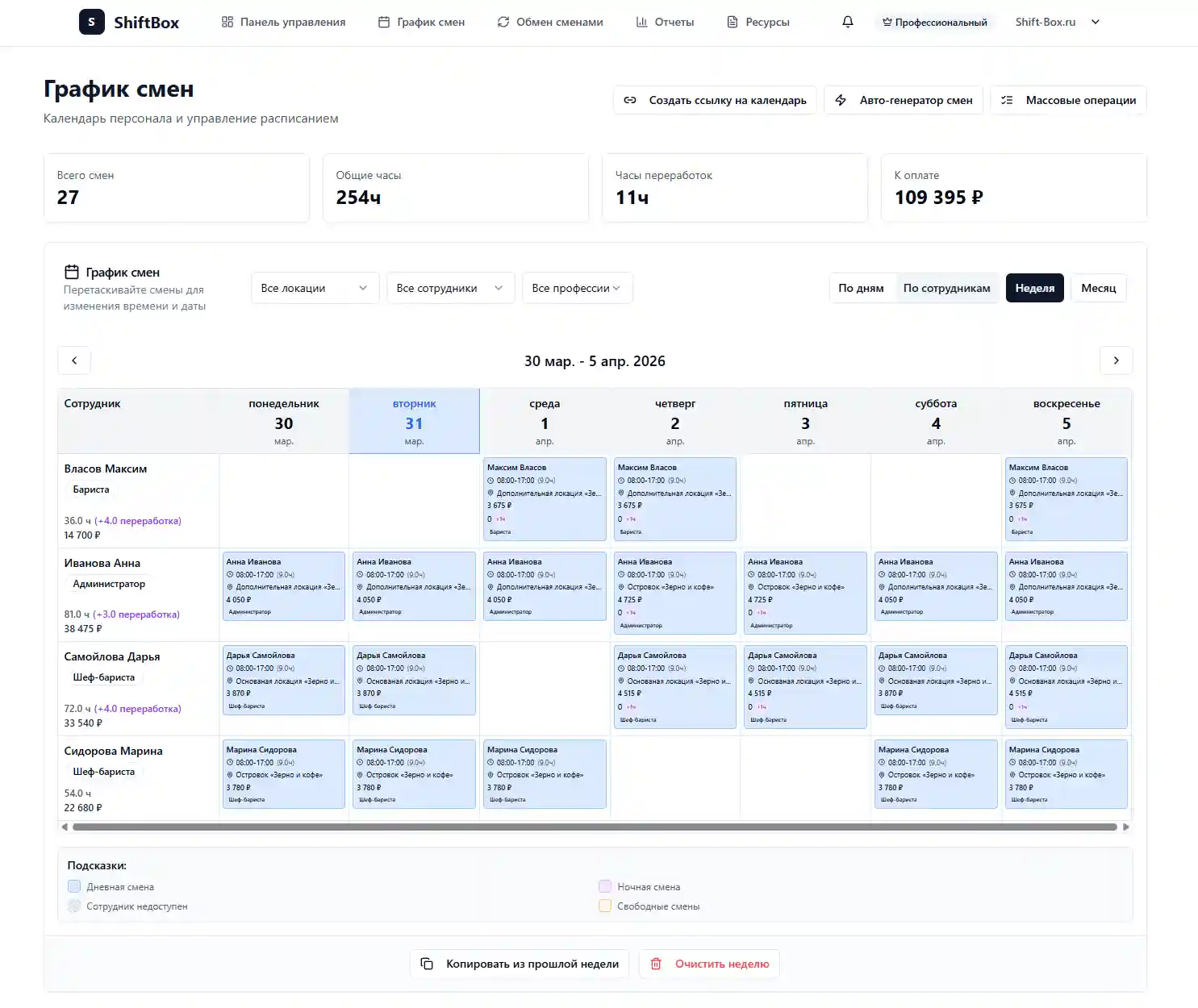
After publish, staff open the latest plan in their portal—no new file after every edit.
Calendar, people, hours, coverage, and reports share one workflow—no Excel, chat threads, and manual roll-ups.
Schichten in einer klaren Matrix planen, per Drag-and-drop zuweisen und Deckungsluecken sofort erkennen.
Ist-Stunden, Verspaetungen und Ueberstunden liegen an einem Ort — ohne Tabellen-Chaos am Monatsende.
Team oeffnet einen Browser-Link, sieht Schichten, markiert Verfuegbarkeit und beantragt Tausch ohne schweres Onboarding.
Wenn sich Schichten aendern, sieht das Team den neuen Plan im Portal — Manager erklaeren nicht jeden Edit in Nebenthreads.
On a live roster, each role needs a different slice of the same truth.
Sees people, shifts, and load without waiting for a manual end-of-period pack.
Works in one place: builds shifts, edits the board, and publishes without endless threads and file resends.
Gets a cleaner base for timesheets, hour checks, and payout prep—not scattered sources.
Teams on 4/2 rarely break on day one—they break once real edits pile up. That is when one shared process starts saving time.
"We are a team of eighteen on a 4/2 cycle. After the first exceptions we used to rebuild the block by hand and re-check every person. Now schedule, changes, and hours live in ShiftBox: one calendar for the manager, one published view for the crew."
Every fix meant a new sheet, a people-by-people check, and manual hour reconciliation at period end.
Template, exceptions, and shift facts stay in one process that survives each swap.
The crew stops rebuilding 4/2 by hand after every edit and shares one current picture of people, hours, and shifts.
The cycle stays readable even when real exceptions show up
A 4/2 pattern looks simple until leave, sick days, and swaps enter the picture. Once real exceptions stack up, the template stops being transparent for leads and crews alike.
ShiftBox keeps the cycle, shifts, and hours in one place so you can maintain a current picture without constant manual recalculation.
A clearer 4/2 cycle and less manual confusion around shifts, days off, and hours.
Especially useful where the pattern is stable on paper but changes often in the details.
ShiftBox kostenlos testen und den Sechs-Tage-Takt gemeinsam stabilisieren.
Schichten, Vertretungen und Stunden vereinen—damit der Sechs-Tage-Takt nicht zur Excel-Interpretationsfrage wird.
Sechs-Tage-Zyklus und betrieblicher Alltag unter einen Hut
Weil der Turnus sechs Tage dauert und die Woche sieben hat. Eine zentrale Planquelle verhindert, dass jede Rolle ihr eigenes Raster bastelt.
Änderungen werden dort erfasst, wo später auch kommuniziert und ausgewertet wird—nicht in separaten Dateien pro Schichtführung.
Ja—wenn Abwesenheiten im selben Ablauf wie das Grundmuster liegen, bleibt erkennbar, wie Lücken geschlossen werden.
Über persönliche Links zur veröffentlichten Version—ohne App-Installation.
Ähnliche Szenarien für Schichtrhythmen