1
Problem Post holes are discovered late
Dispatch learns at handover instead of during planning.
Contracts demand coverage; operations still runs on fragmented updates.
Dispatch learns at handover instead of during planning.
The roster file stops matching who actually stood post.
Billing and payroll need a coherent trail per site and shift.
Gradually—no separate mega-project or stopping day-to-day operations.
Teams usually move one site or post into the system first, then scale across the crew. Guarding firms with distributed sites see value on the first rollout step.
Add sites, roles, teams, or posts to your structure.
Build the base roster by people and coverage zones.
Publish shifts to officers without emailing new spreadsheets.
Record substitutions, hours, and changes inside the system.
Review load and prepare data for payroll and billing.
24-hour posts and multiple client sites expose manual process gaps fast
The more posts, shifts, and moves you run, the easier the live picture gets lost between files.
Roster, actual shifts, and hours sit in one place so leads keep every site under control.
Not automation for its own sake—real control points for daily operations.
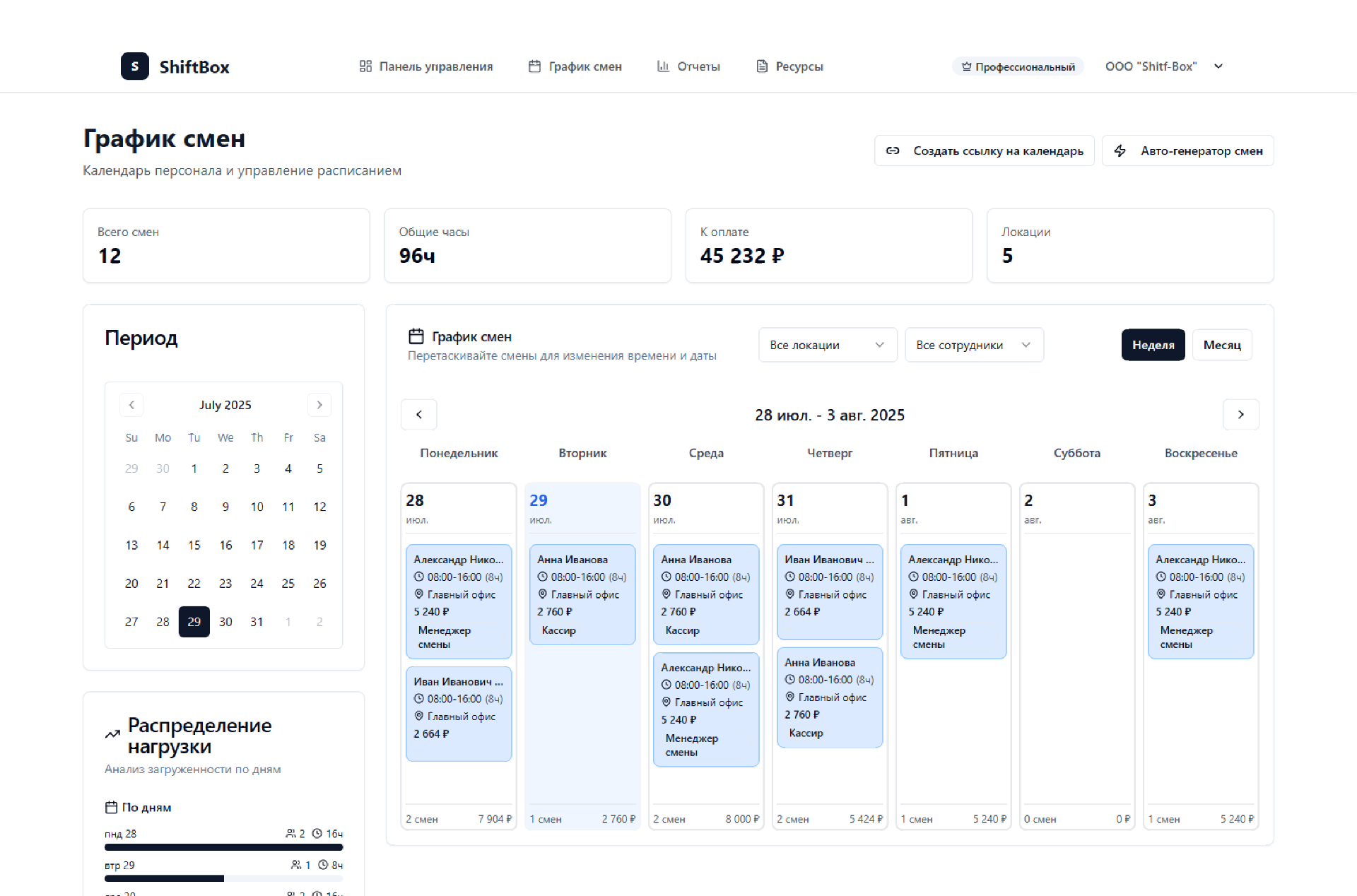
See officers, posts, and client sites at once so leads can close coverage and spot weak points early.
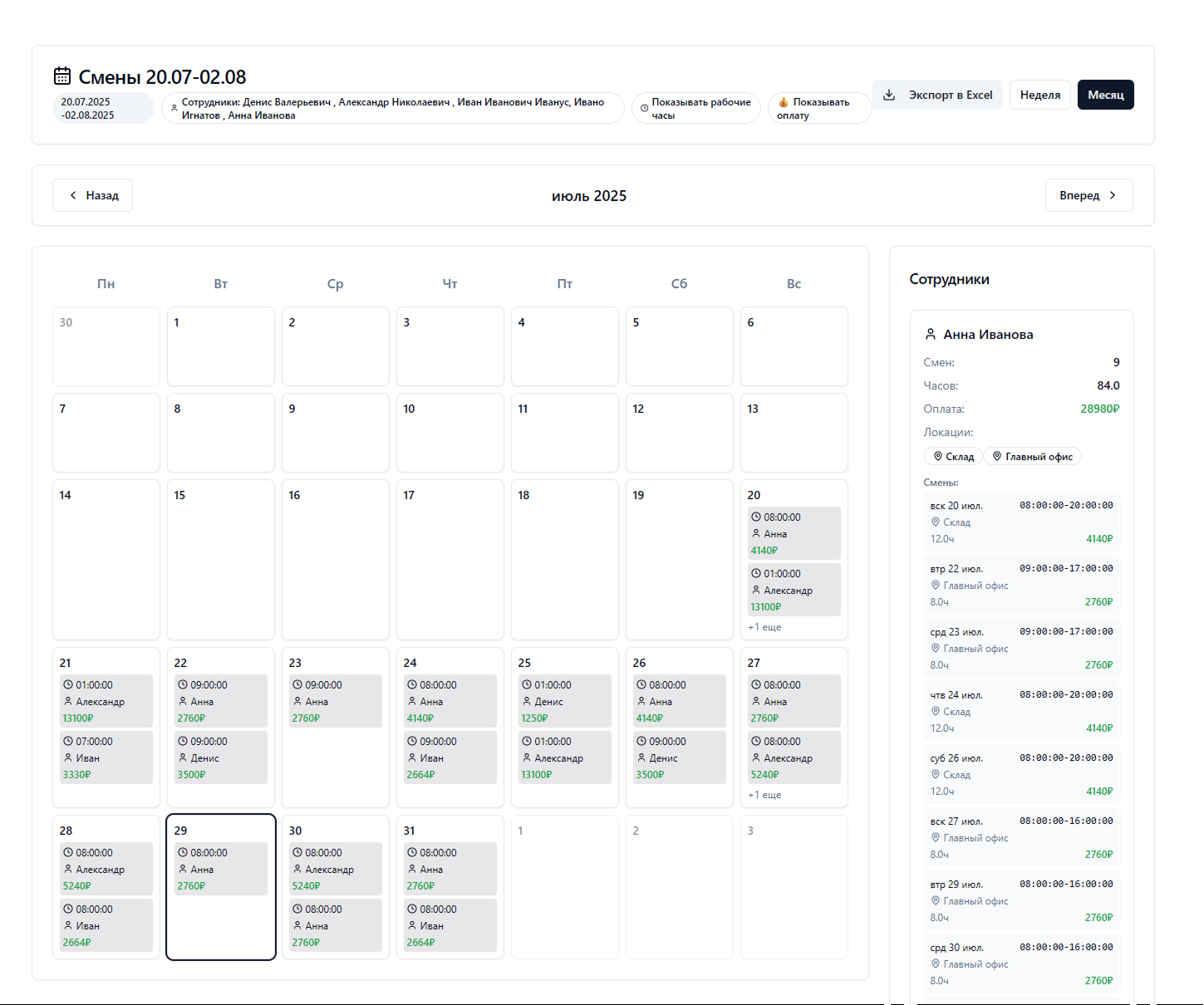
Changes no longer vanish in chats: shift fact, swaps, and load sit in one workflow.
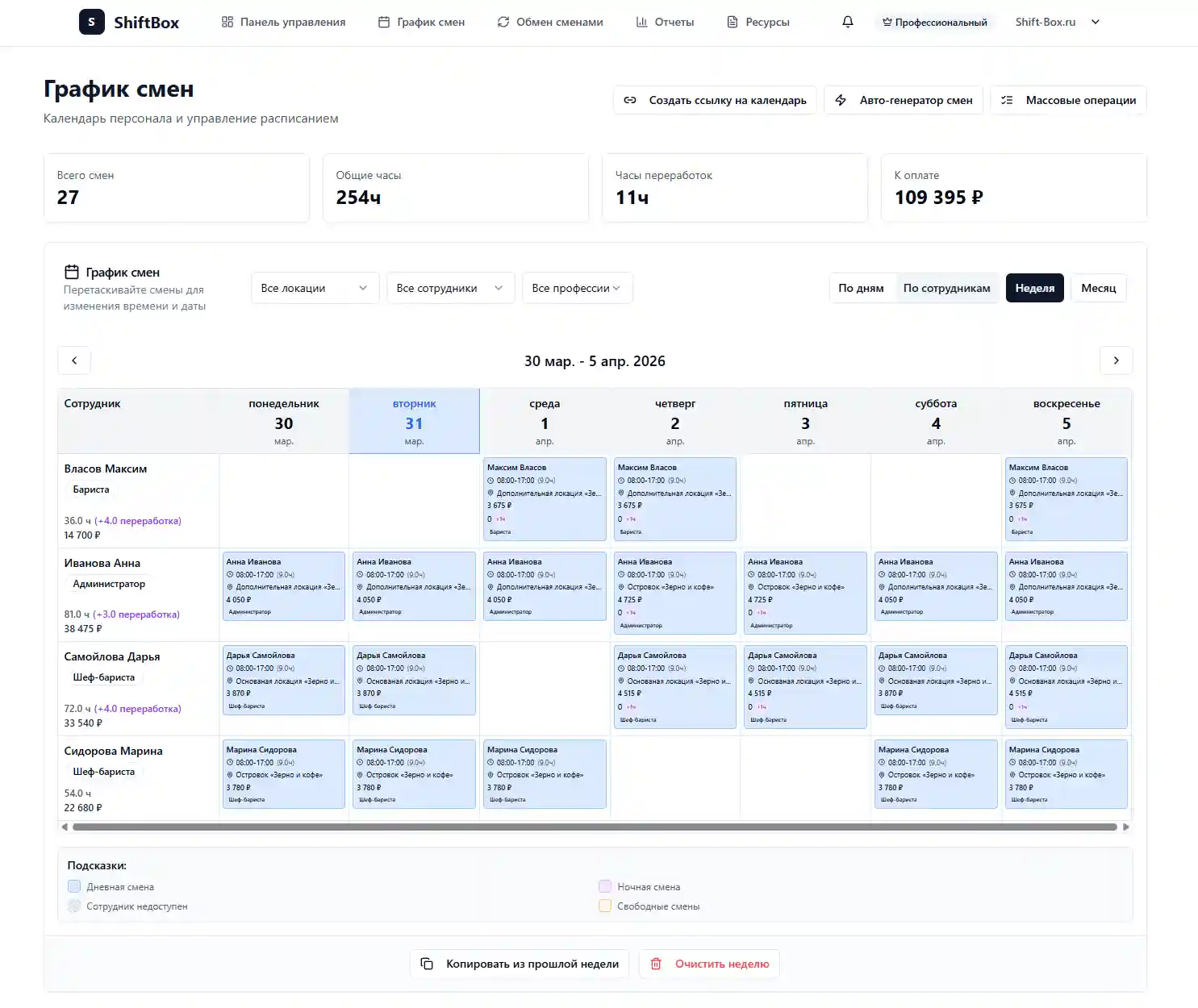
Easier to prepare payroll data, spot overload, and see where the process needs attention.
Calendar, people, hours, swaps, and reports share one workflow—no Excel, chat threads, and manual roll-ups.
Build shifts in a clear matrix calendar, assign people with drag-and-drop, and immediately see coverage gaps.
Actual hours, lateness, and overtime live in one place so managers are not reconciling spreadsheets at month-end.
Staff open a browser link, see their shifts, mark unavailability, and request swaps without a heavy onboarding flow.
When shifts change, people see the new plan in their workspace—managers do not re-explain every edit in side threads.
Each role gets its benefit, but everyone works in one contour—not scattered files.
Sees a clearer picture of sites, people, and load without constantly asking managers for summaries.
Works with a live roster every day: builds shifts, applies changes, and publishes without chat chaos.
Gets a much cleaner base for timesheets, hour checks, and final employee calculations.
Industry teams need more than a neat template—they need to keep the process current when swaps, sick days, and people changes hit.
"We run a guarding firm with eight posts. We used to reconstruct 24-hour coverage and cross-site swaps from message threads. After ShiftBox, roster, changes, and hours stopped living apart: the coordinator works in one window, and the team sees a ready, current shift plan."
People and site changes had to be confirmed by hand, and the final hour picture came from several sources.
Sites, shifts, swaps, and actual time live in one process that is easier to keep current.
The team stops fighting operational fires in spreadsheets and moves to more predictable control of roster, hours, and swaps.
With many officers across sites, manual setups break quickly
Security and guarding rosters are not just the plan. You need the real picture by site, post, and substitution so period close is not a manual merge from scattered sources.
ShiftBox gathers shifts and hours in one process. That makes site control easier and final reconciliation before payouts calmer.
A clearer site roster and less manual confusion around timesheets and substitutions.
Especially useful for 24-hour posts, distributed sites, and teams with constant moves.
Try it free and model a week across two sites with swaps.
ShiftBox helps guarding companies keep posts, substitutions, and hours in one workflow so coverage is easier to guarantee and financial reviews are less painful.
Coverage, replacements, and hour tracking for contract teams
Yes: structure sites and posts so coverage is visible per location and across the roster.
Publish updates once; officers follow the live schedule instead of call trees.
When hours accumulate next to assignments, overload is easier to spot before invoicing and payroll.
A browser link is enough for most teams; no app install is required for basic visibility.
Related scenarios for 24-hour posts and night hours
When you need a dedicated focus on day-on/day-off patterns.
When night hours and premiums need separate handling.
When 12-hour rotating posts follow a four-week industrial cycle.
When four crews trade 12-hour blocks on a 2-2-3 rhythm.