1
Problem Two on, two off, three on — then it mirrors
Each crew follows a 2-2-3 block of 12-hour shifts, then the inverse rest pattern. Crews start the block on different days so someone is always on post while others recover.
Four crews, twelve-hour shifts, and a cadence that only looks simple on the first page of the spreadsheet
Each crew follows a 2-2-3 block of 12-hour shifts, then the inverse rest pattern. Crews start the block on different days so someone is always on post while others recover.
The complete rotation across four teams typically spans four weeks. Planners who only print one week miss which crew is entering a heavy 48-hour stretch.
One week a person works three days (36 hours); another week two days (24 hours); block transitions can reach 48 hours before rest. Static templates flatten that reality.
A 48-hour week on 12-hour shifts can trigger premium pay or compliance questions depending on your rules—especially after swaps or call-out coverage.
If start dates drift after manual edits, coverage gaps appear at handoffs or two crews accidentally stack on the same lane.
Rotating through day and night 12-hour posts on 2-2-3 is common in plants and security. Without one live roster, handoffs depend on whoever remembers the last change.
Build the repeating block once, offset four crews, then manage reality on top of the pattern
Most industrial and 24/7 teams already know their crew names and which week each team entered the cycle. ShiftBox turns that into a published rotation instead of a fragile workbook that breaks after the first swap.
Add four crews, roles, and 12-hour shift types (day, night, or both).
Define the 2-2-3 work block and rest mirror for one crew.
Offset crew start dates so coverage is continuous across the month.
Publish the generated rotation to staff through their portal or link.
Record swaps, leave, and call-outs without redrawing the base block.
The pattern is hard enough to build once—keeping it accurate through uneven weeks is where spreadsheets fail
Teams draw the 2-2-3 skeleton correctly on day one. Trouble starts when swaps, sick days, and crew-offset mistakes stack up—and nobody can tell which week shape each person is actually running.
The 2-2-3 block is generated once, crews stay offset in one calendar, and exceptions update the live picture planners and payroll both read.
Pitman 2-2-3 trades perfectly flat weeks for continuous coverage—planning systems must respect that trade
When each crew's block position is live, planners spot who is entering a dense stretch before assigning extra coverage.
Trading a rest day for an extra 12-hour block can flip a light week heavy. The roster should reflect that immediately—not after payroll reconstructs it.
Vacation and sick days are part of the operational calendar. Backfill rules stop living in verbal agreements between shift leads.
Planners see combined coverage; each crew reads their lane. No parallel "crew A final" and "crew B final" files.
Long shifts mean fewer transitions—but each handoff matters more. A single gap on 2-2-3 is twelve hours of exposure.
Hours accumulate unevenly across the four-week cycle. Finance gets a cleaner trail when assignments and actual time share one workflow.
Not abstract workforce software—concrete control points for rotating 12-hour crews
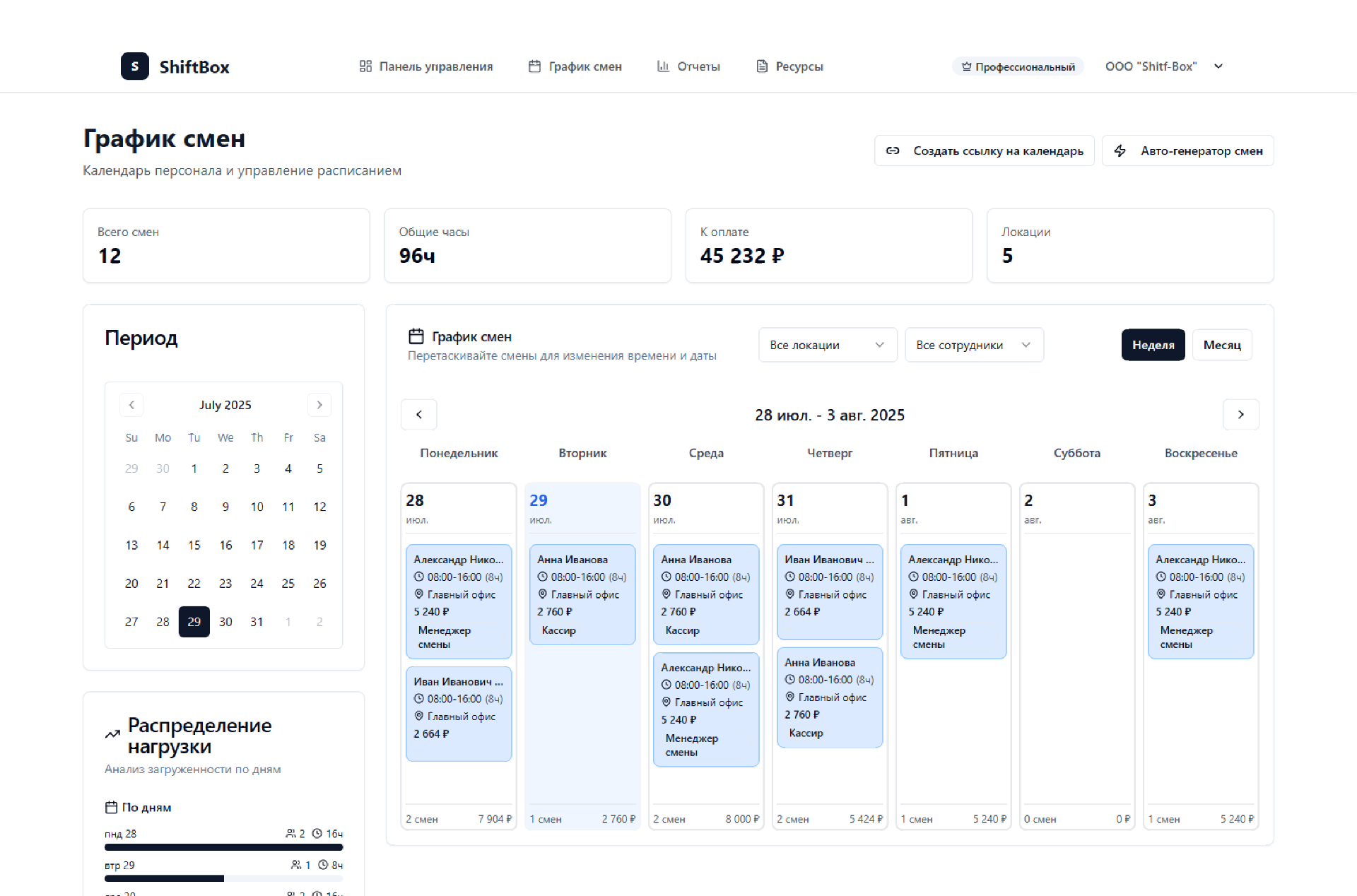
Define the pattern once: two days on, two off, three on, then the mirror rest sequence. Assign four crews with staggered entry points and publish a continuous 24/7 calendar without redrawing cells every month.
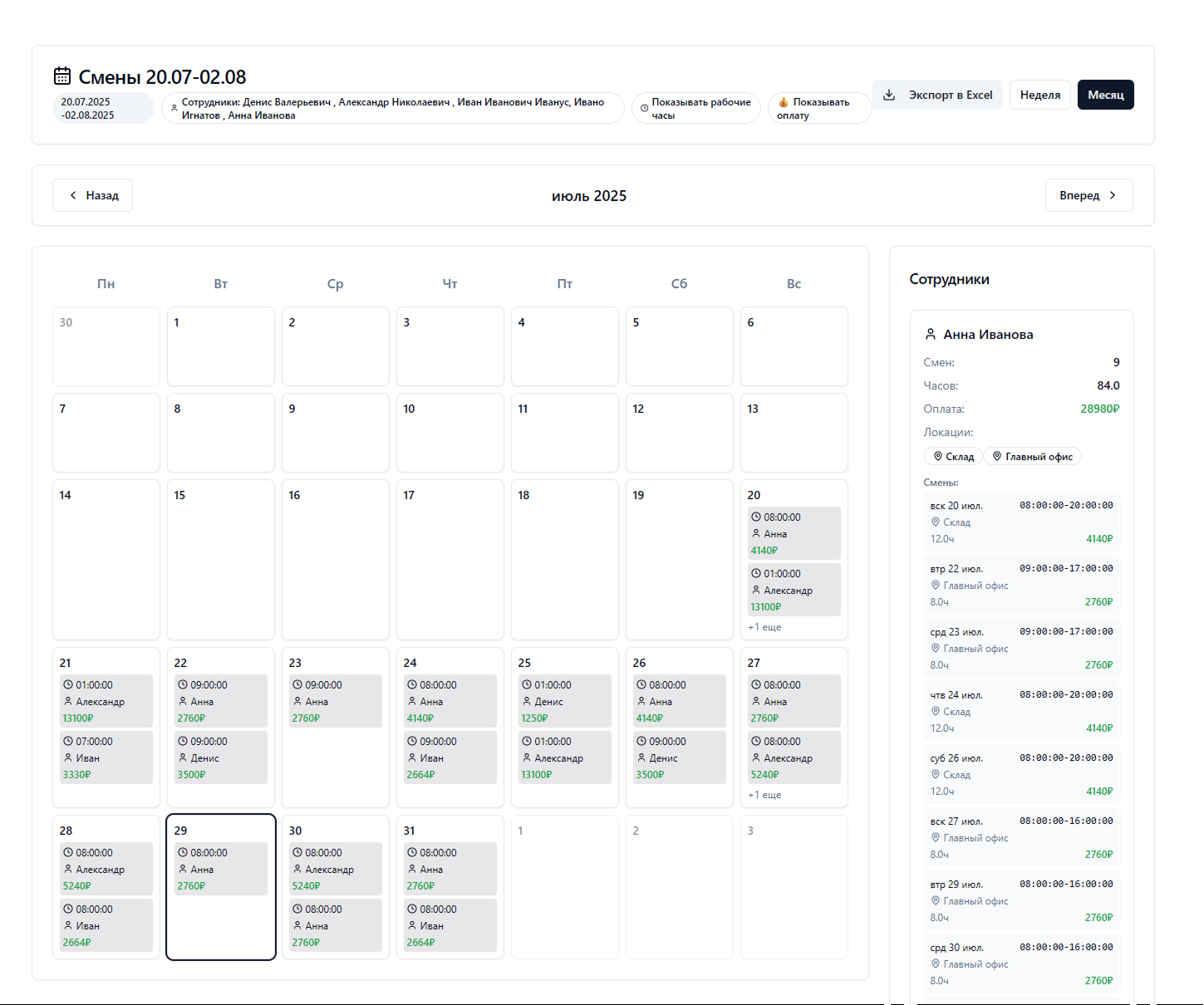
Compare planned 12-hour blocks to worked time per person. Spot when a crew member is sliding from a 24-hour week into a 48-hour stretch—especially after substitutions or emergency coverage.
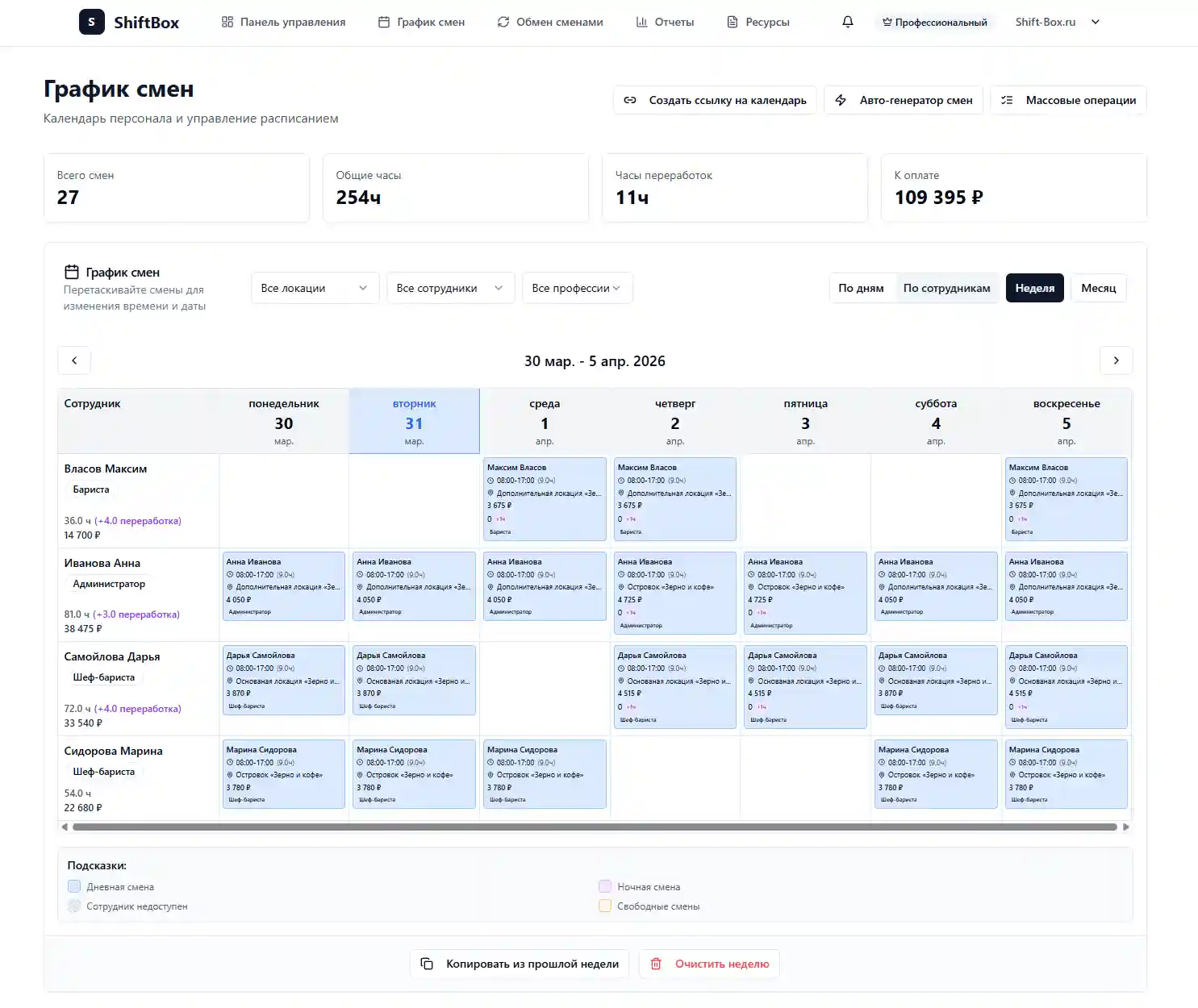
After publish, staff open the latest plan showing their next day block, night block, or rest sequence—no new file after every swap or leave approval.
Calendar, crews, 12-hour blocks, hour roll-ups, and coverage gaps share one workflow—no fragile Excel tabs, chat threads, and manual week-by-week reconciliation.
Build shifts in a clear matrix calendar, assign people with drag-and-drop, and immediately see coverage gaps.
Actual hours, lateness, and overtime live in one place so managers are not reconciling spreadsheets at month-end.
Staff open a browser link, see their shifts, mark unavailability, and request swaps without a heavy onboarding flow.
When shifts change, people see the new plan in their workspace—managers do not re-explain every edit in side threads.
On a four-crew rotation, each role needs a different slice of the same uneven truth
Sees whether four-crew coverage holds through block transitions and whether any lane is chronically short before production or service levels slip.
Works from a generated 2-2-3 base: records swaps, backfill, and leave without rebuilding crew offsets by hand after every change.
Gets a clearer hour picture when weeks naturally swing between 24, 36, and 48 hours—especially after substitutions and premium rules apply.
Teams on Pitman rarely fail on the first publish—they fail when uneven weeks, swaps, and crew-offset mistakes compound across a month. That is when one shared process starts saving hours for schedulers and payroll alike.
"We run four crews on 12-hour blocks—two on, two off, three on. The Excel template looked fine until someone swapped a rest day and Crew C slipped a week ahead of everyone else. Payroll kept finding 48-hour weeks we had not planned for. Now the 2-2-3 block is generated in ShiftBox, crews stay offset, and we see who is heading into a heavy week before we approve another swap."
Each crew lead maintained their own correction notes, overtime showed up unevenly across the four-week cycle, and night handoffs depended on a group chat that never matched the file.
The 2-2-3 pattern, crew offsets, swaps, and hour totals stay in one process that survives each block transition.
The operation stops rebuilding Pitman rotations by hand after every edit and shares one current picture of crews, uneven weeks, and 12-hour coverage.
Value shows up when the generated block, exceptions, and hours share one workflow through all four crews
The Pitman 2-2-3 schedule exists because many operations need true 24/7 coverage without hiring excessive headcount. Four crews rotate through a repeating sequence of twelve-hour shifts: two consecutive workdays, two rest days, three workdays, then the pattern inverts with two on, three off. When each crew enters the block on a different day, the stagger produces continuous coverage while giving every person regular multi-day rest stretches.
That design deliberately creates uneven weekly hours. In a light week a crew member might work only two 12-hour shifts—24 hours total. In a standard three-day stretch the same person works 36 hours. At block boundaries, a crew can accumulate 48 hours before the longer rest sequence arrives. Planners who treat every week as forty hours will misforecast labor cost. Payroll teams who only audit at month-end will chase surprises that were visible mid-cycle if the roster tracked assignments properly.
ShiftBox addresses the part spreadsheets handle poorly: keeping the generated 2-2-3 rotation current. You model the block, offset four crews, publish the calendar, then manage swaps, sick leave, and emergency coverage on top without redrawing the skeleton. Hour variance sits next to the schedule so supervisors see when a substitution pushes someone into a heavy week. Staff read their next block from a single published source—critical when day and night 12-hour posts alternate through the month.
Industrial plants, utilities, security posts, and emergency-style operations often choose Pitman over simpler patterns because the rest blocks are longer than many alternatives. The tradeoff is planning complexity. ShiftBox does not pretend that complexity disappears—it gives you a honest place to generate the schedule and operate it as reality diverges from the perfect grid.
A steadier Pitman board that survives uneven weeks and real-world swaps.
Especially useful where four crews, 12-hour blocks, and 24/7 coverage are non-negotiable—and manual templates keep breaking at overtime boundaries.
Model four crews, twelve-hour blocks, and uneven weekly hours—then keep swaps and overtime visible in one roster.
Ask for a walkthrough if you run mixed day/night 2-2-3—we can map your crew offsets together.
ShiftBox helps teams generate and operate the Pitman 2-2-3 rotating pattern—four crews, twelve-hour shifts, uneven weekly hours, and 24/7 coverage in one workflow instead of a brittle spreadsheet.
Rotating 12-hour blocks, four crews, and the overtime surprises uneven weeks create
Four crews rotate through a repeating block: two consecutive 12-hour shifts, two days off, three consecutive shifts, two off, two on, three off. Staggered start dates across crews produce continuous 24/7 coverage without everyone working the same week shape.
A crew on three 12-hour days works 36 hours that week; on two days it works 24; on a full block stretch it can hit 48 before rest days arrive. Payroll and planners need that variance in view—not buried in a template that assumes 40 hours every week.
Yes: you define the 2-2-3 block, assign crews with offset start dates, and publish the repeating calendar. Edits, swaps, and leave then sit on top of the generated pattern instead of redrawing it by hand.
Day and night lanes can live in one published roster so handoffs, premiums, and coverage gaps are readable for operations and payroll—not split across separate files.
When substitutions update the live schedule, hour totals follow the latest assignments. That matters on 2-2-3 because a single extra shift can push a person from a light week into overtime territory.
No install is required. Staff open a link to the latest publish and can bookmark it on mobile—useful for crews who rotate between day blocks and night blocks every few days.
Neighboring schedules for continuous 12-hour operations