1
Problem Two crews, two stories
Each team remembers a different version of who traded shifts last Tuesday.
Symmetry on paper does not stop drift once swaps and leave enter the picture
Each team remembers a different version of who traded shifts last Tuesday.
The master file changes faster than the group chat can resend screenshots.
You reconstruct coverage and hours from fragments instead of a timeline.
Backfill rules are verbal, so coverage quality swings week to week.
The base pattern goes in quickly; the system keeps it current as reality changes
Add people and roles.
Build the core 2/2 template.
Publish shifts to the team.
Run swaps and hours inside the same tool.
Even a simple 2/2 board loses clarity when edits and actual time stay manual.
Trouble rarely starts in the pattern itself—it starts after swaps, leave, and sick days when nobody shares the same version.
Schedule, moves, and worked time sit in one place, so the shift lead sees a live picture by person and shift.
Keep the repeating block, the exceptions, and the worked-time trail aligned
Planners edit; crews refresh—no competing "final" attachments.
Substitutions stay dated so mirrored teams do not argue from memory.
Compare planned blocks to what actually ran before overtime hardens.
Vacations and sick days are part of the operational calendar, not a side spreadsheet.
Not abstract automation—concrete control points every shift.
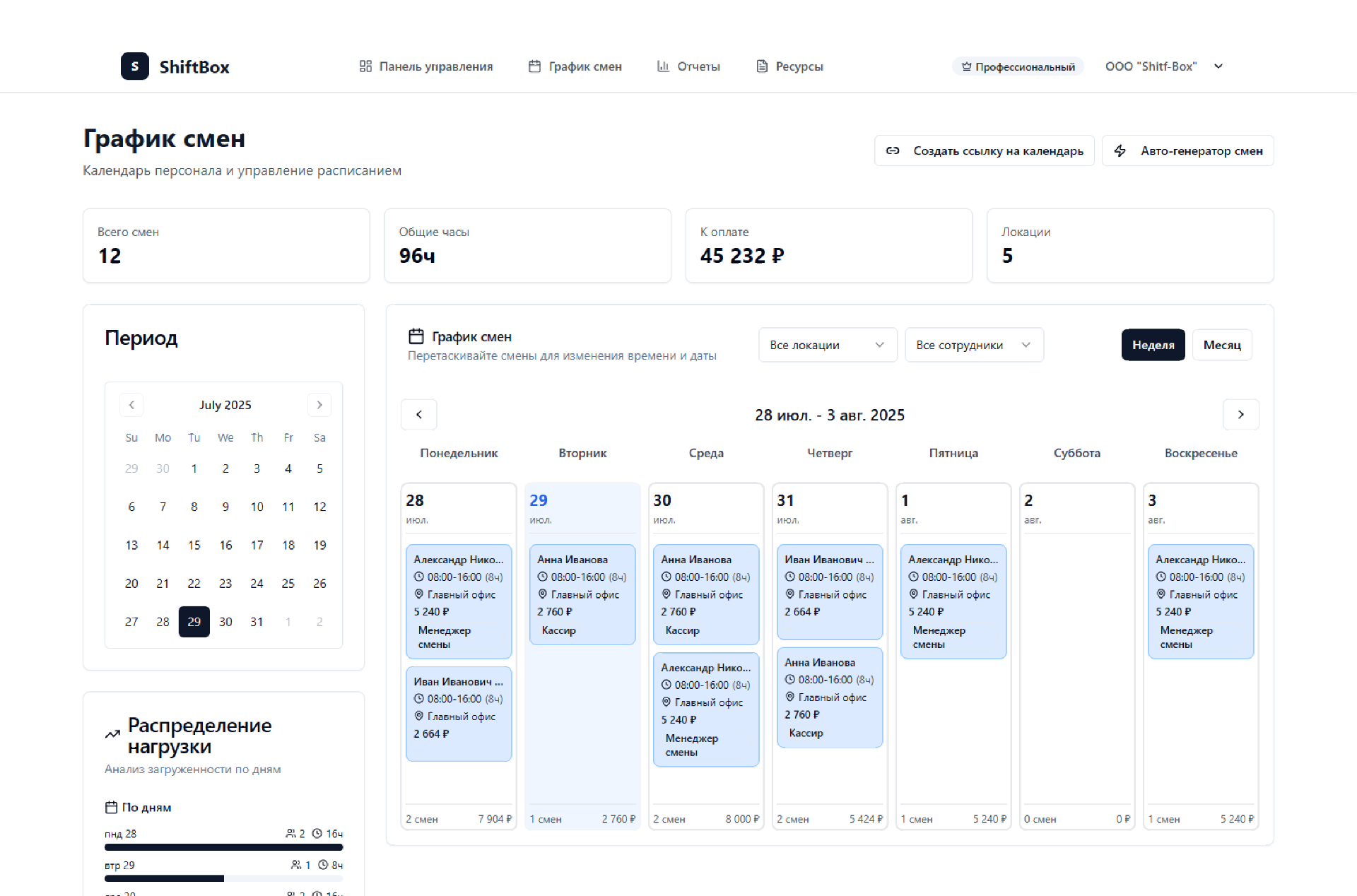
2/2 no longer lives apart from leave, sick days, and moves: everyone sees the same current shift picture.
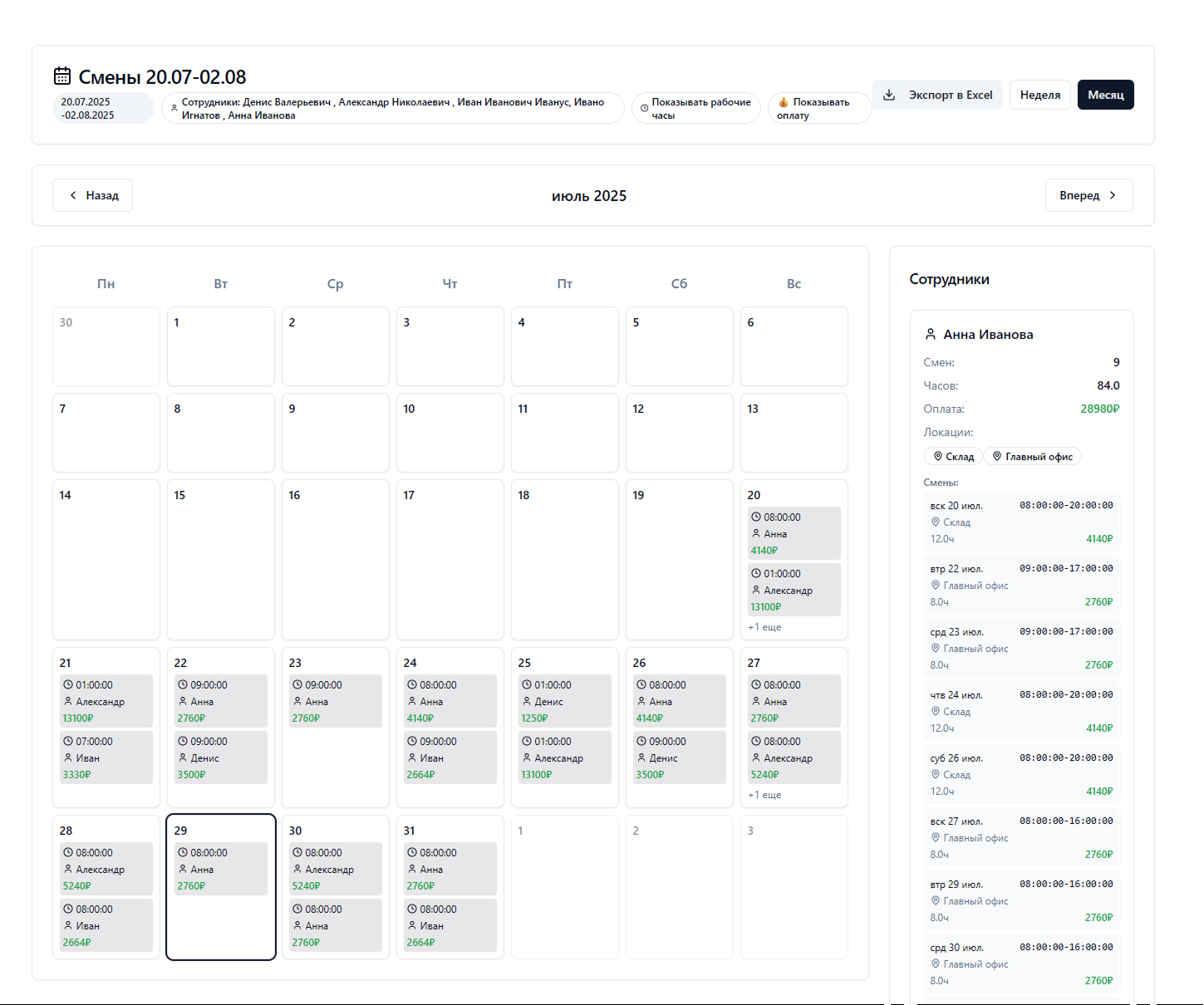
Hours per person, coverage swaps, and overload sit together so leads can decide before period close—not after.
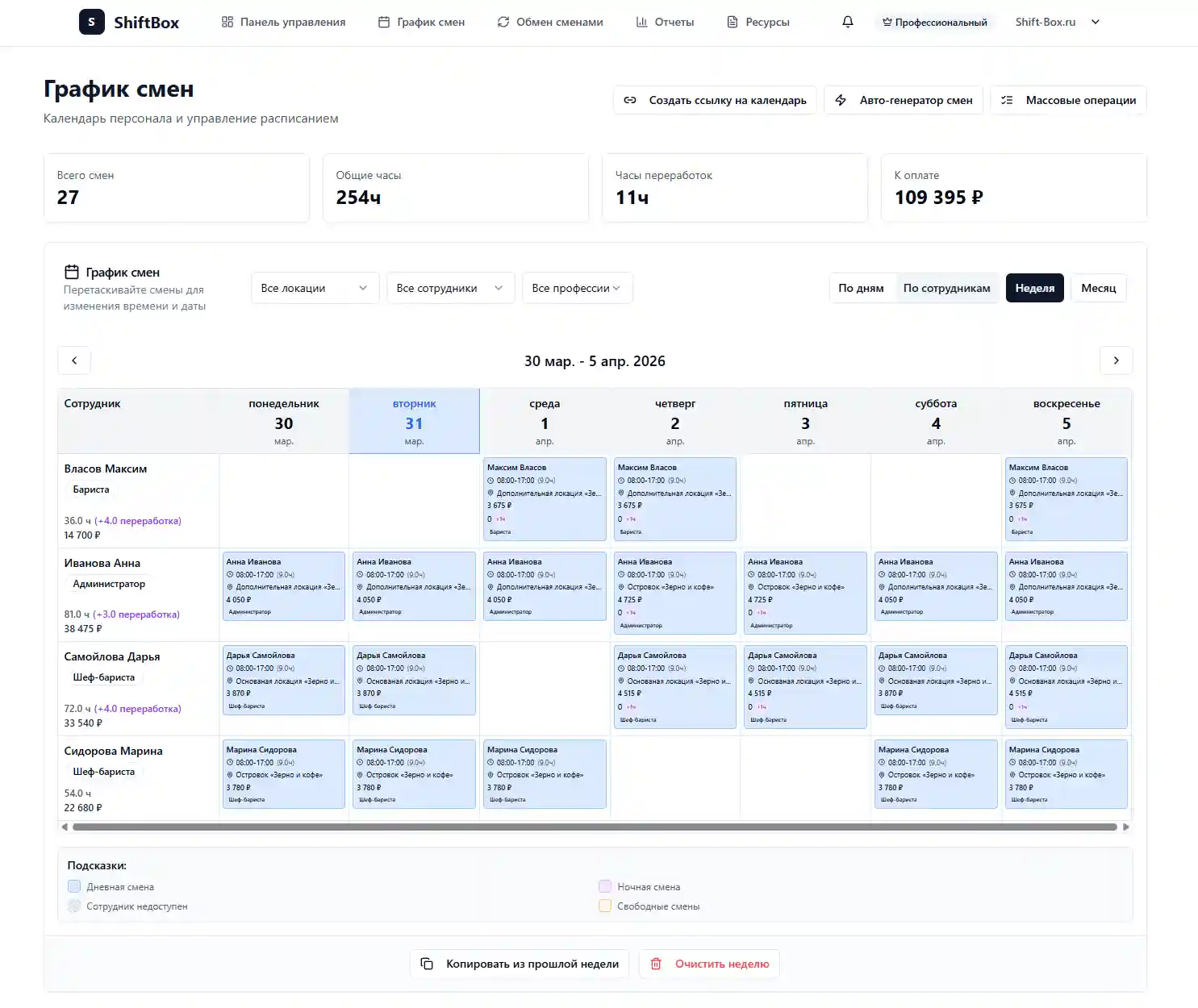
After publish, staff open the latest plan in their portal—no new file after every edit.
Calendar, people, hours, coverage, and reports share one workflow—no Excel, chat threads, and manual roll-ups.
Build shifts in a clear matrix calendar, assign people with drag-and-drop, and immediately see coverage gaps.
Actual hours, lateness, and overtime live in one place so managers are not reconciling spreadsheets at month-end.
Staff open a browser link, see their shifts, mark unavailability, and request swaps without a heavy onboarding flow.
When shifts change, people see the new plan in their workspace—managers do not re-explain every edit in side threads.
On a live roster, each role needs a different slice of the same truth.
Sees people, shifts, and load without waiting for a manual end-of-period pack.
Works in one place: builds shifts, edits the board, and publishes without endless threads and file resends.
Gets a cleaner base for timesheets, hour checks, and payout prep—not scattered sources.
Teams on this pattern rarely break on day one—they break once real edits pile up. That is when one shared process starts saving time.
"We are a team of twelve. After a few moves and vacations the manager could not tell whose cycle was current. Now schedule, changes, and hours live in ShiftBox: one calendar for the lead, one published view for the crew."
Every fix meant a new sheet, a people-by-people check, and manual hour reconciliation at period end.
Template, exceptions, and shift facts stay in one process that survives each swap.
The crew stops rebuilding 2/2 by hand after every edit and shares one current picture of people, hours, and shifts.
Value shows up when schedule, exceptions, and hours share one workflow.
Any base pattern looks simple until real exceptions appear. Once moves, swaps, and deviations stack up, a manual process stops being transparent—for managers and staff alike.
ShiftBox keeps this scenario in one place: calendar, worked time, coverage, and publish act as a single loop. Edits no longer drag a new file version and a final manual roll-up behind them.
A steadier board that survives real-world changes across the week or period.
Especially useful where the pattern looks standard but every exception shifts the final picture of people and hours.
Start free and publish a 2/2 baseline your crews can open anywhere.
Ask for a walkthrough if you run mirrored day/night crews—we can map that scenario.
ShiftBox keeps the familiar 2/2 beat from turning into tribal knowledge—publish, adjust, and read hours from one place.
Symmetric cycles still need a system when two teams trade places every few days
Most teams import or sketch the repeating block quickly, then spend their time on the messy part—exceptions—rather than redrawing the skeleton.
You structure the published calendar so each team reads their lane, while planners see the combined coverage picture.
When hours drift from the planned block, the signal sits next to the schedule instead of hiding in a second file.
No install is required; they use a link to the latest publish and can bookmark it on mobile.
Related scenarios for rotating crews