1
Problème Coverage does not match the book
Clients arrive while the roster still shows yesterday’s plan.
Demand is lumpy and call-outs are frequent—static tables cannot keep up.
Clients arrive while the roster still shows yesterday’s plan.
The official schedule is never the fastest channel.
Extra coverage disappears from the paper trail.
Gradually—no separate mega-project or stopping day-to-day operations.
Teams usually move one salon or branch into the system first, then scale across the crew. Multi-role salons see value on the first rollout step.
Add sites, roles, teams, or locations to your structure.
Build the base roster by people and work zones.
Publish shifts to staff without emailing new spreadsheets.
Record substitutions, hours, and changes inside the system.
Review load and prepare data for payroll.
Salon ops calm down when sites, roles, and changes sit in one place
Trouble usually starts when you have to rebuild the plan fast across stylists, front desk, and branches—not on day one.
Roster, changes, and actual hours sit in one process so the salon admin decides faster and does not lose crew detail.
Useful for a single studio or a multi-branch network
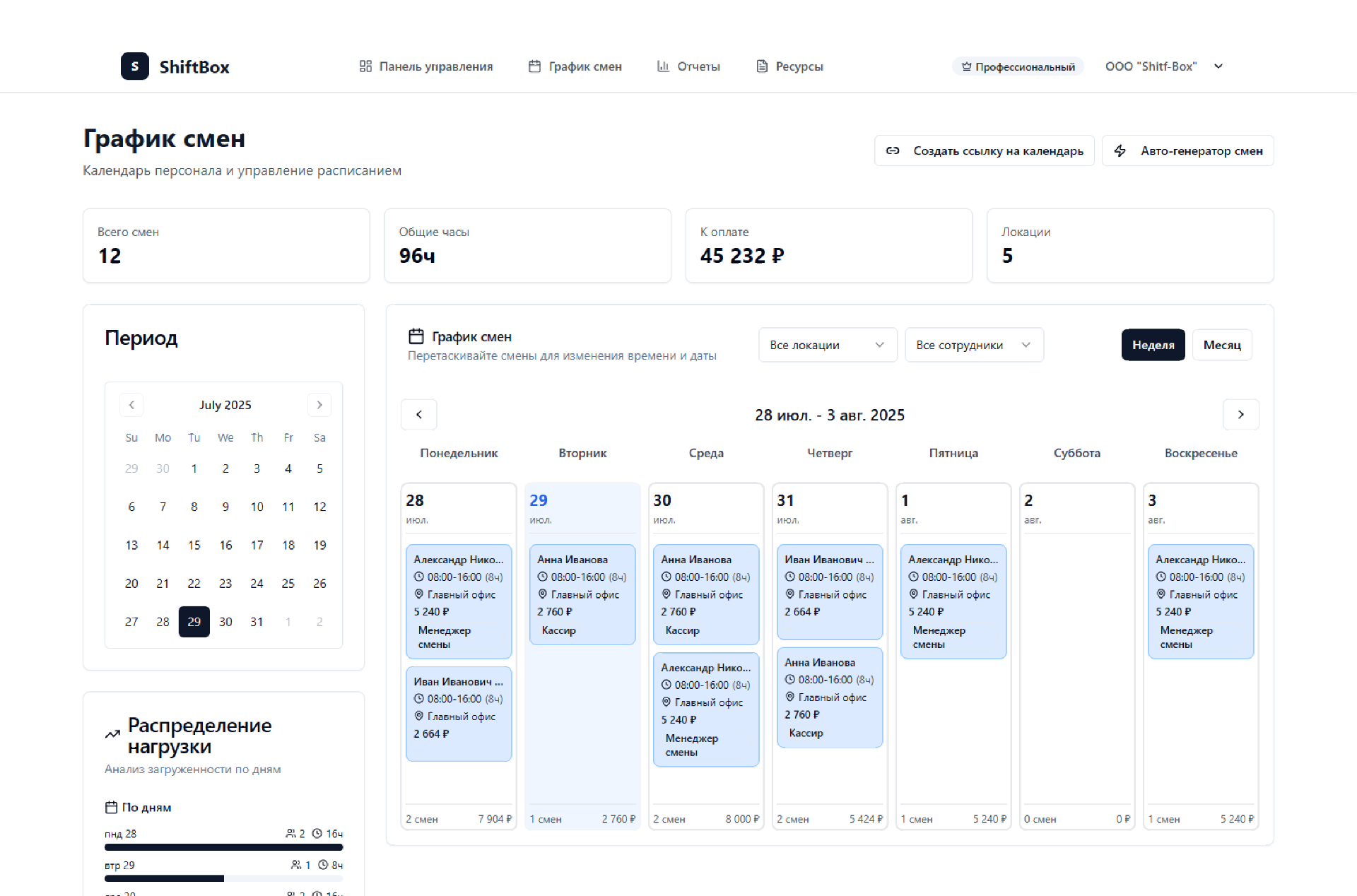
See who covers reception, who works as a stylist, and where the branch is understaffed.
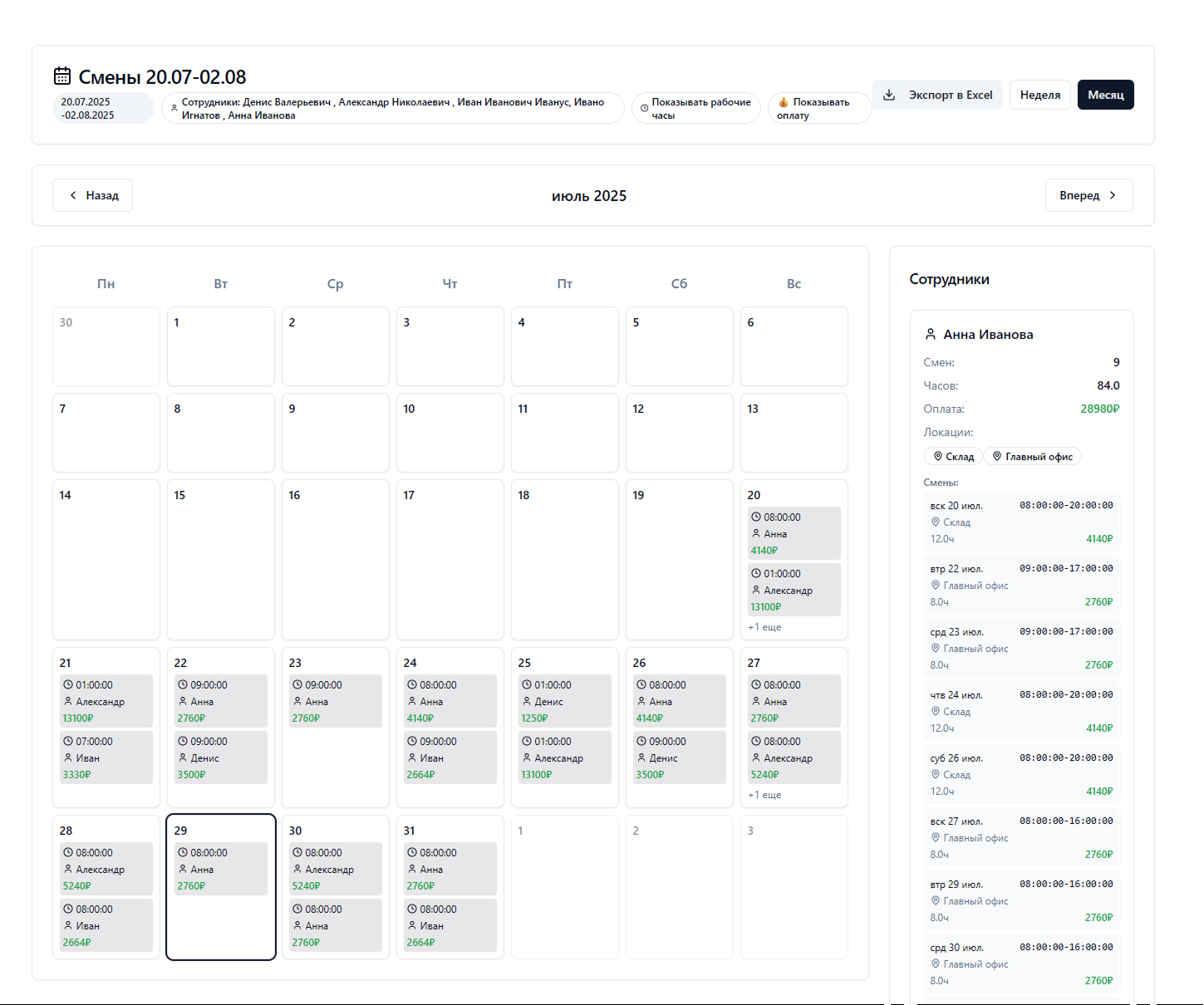
The system helps you keep actual attendance and assemble hour data more transparently.
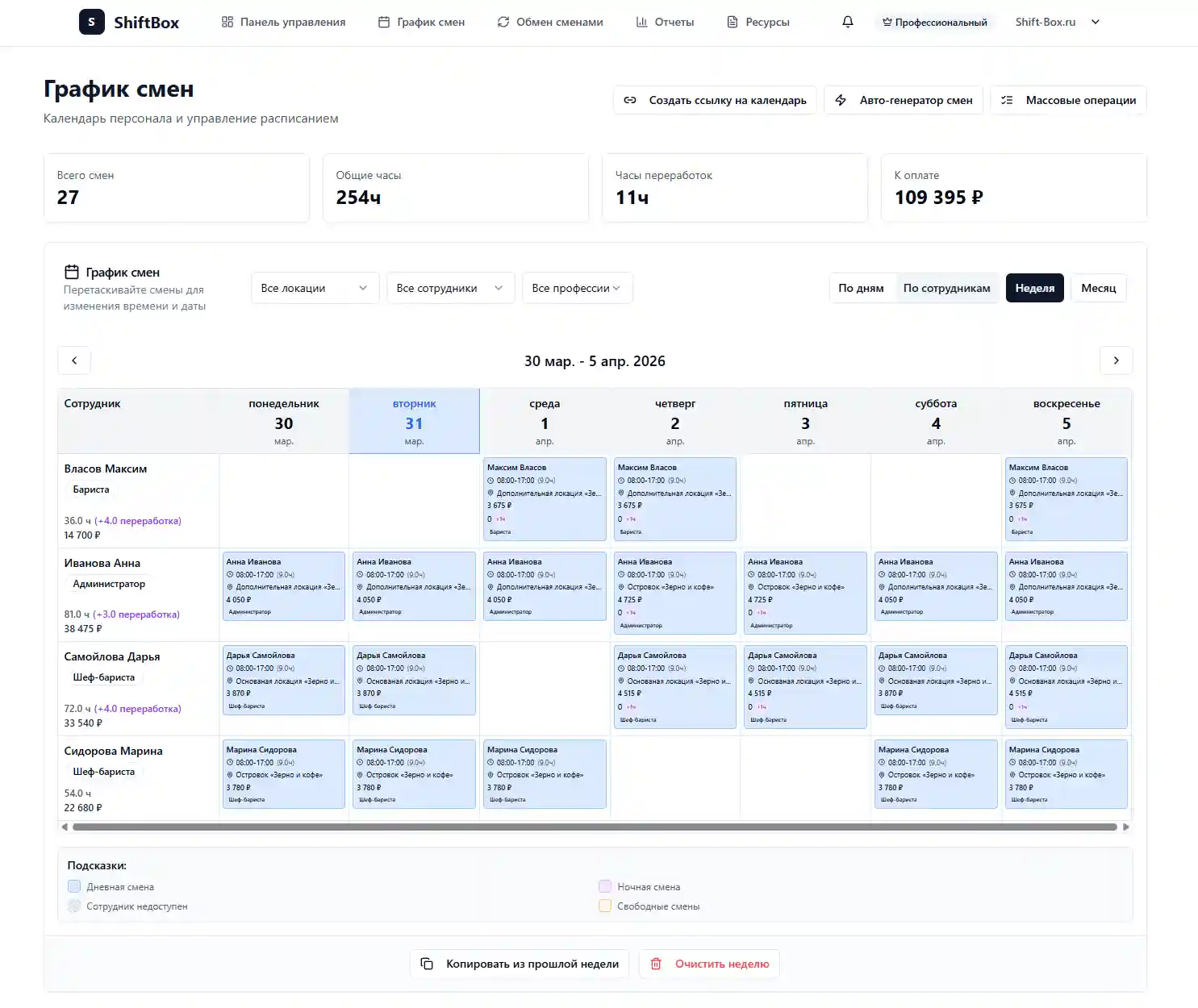
Easier to read team load and see where the roster needs a rebuild early.
Calendar, people, hours, swaps, and reports share one workflow—no Excel, chat threads, and manual roll-ups.
Construisez les shifts dans une matrice claire, assignez en glisser-deposer et voyez tout de suite les trous de couverture.
Heures reelles, retards et heures supplementaires au meme endroit pour eviter la reconciliation de tableurs en fin de mois.
Le staff ouvre un lien navigateur, voit ses shifts, marque l indisponibilite et demande des echanges sans onboarding lourd.
Quand les shifts changent, chacun voit le nouveau plan dans son espace — les managers ne reexpliquent pas chaque modification dans des fils paralleles.
Each role gets its benefit, but everyone works in one contour—not scattered files.
Sees a clearer picture of sites, people, and load without constantly asking managers for summaries.
Works with a live roster every day: builds shifts, applies changes, and publishes without chat chaos.
Gets a much cleaner base for timesheets, hour checks, and final employee calculations.
Industry teams need more than a neat template—they need to keep the process current when swaps, sick days, and people changes hit.
"We run three beauty salons. After sick leave and stylist moves, the schedule used to diverge between branches and people. After ShiftBox, roster, changes, and hours stopped living apart: the coordinator works in one window, and the team sees a ready, current shift plan."
People and site changes had to be confirmed by hand, and the final hour picture came from several sources.
Sites, shifts, swaps, and actual time live in one process that is easier to keep current.
The team stops fighting operational fires in spreadsheets and moves to more predictable control of roster, hours, and swaps.
When the admin knows who is in and who is not, every change costs less time
In a salon or barbershop, the team roster directly affects bookings and site load. When the plan diverges between reception, stylists, and the owner, it quickly turns into constant questions and manual checks.
ShiftBox keeps shifts, hours, and changes in one place. That makes load easier to balance, keeps the schedule current, and calms final payout prep.
A clearer stylist roster and less daily manual work on changes.
Especially useful for salons with several roles, branches, and uneven day-to-day load.
Try it free and model a peak weekend with swaps.
ShiftBox helps salons keep stylists, support roles, and hours in one workflow so appointment peaks are easier to staff and payouts are easier to review.
Fauteuils, pics et paie pour petites équipes
Oui, structurez les rôles comme le salon fonctionne vraiment.
Mettez à jour le planning vivant une fois ; l’équipe arrête de courir après les captures.
Quand les heures suivent les shifts publiés, les revues de paiement démarrent plus propres.
Oui, comparez la couverture sans fusion manuelle.
Scénarios similaires pour plannings flexibles et charge inégale