1
Problème Plans and reality diverge quietly
Extra minutes and informal extensions never make it back to the master schedule.
Small daily drift adds up when nobody sees the running total against the plan.
Extra minutes and informal extensions never make it back to the master schedule.
Coverage changes live in chats, so payroll still sees the old template.
They only discover overload when totals are due.
Build the foundation first, then decide on live data
Teams usually import current rules and shifts, then see plan, actuals, and variance in one workflow—not scattered sources.
Add people, roles, rates, or rules that matter for your scenario.
Move the current roster and base parameters into one system.
Start seeing the planned picture per person and load before final reconciliation.
Record actual hours and decisions inside the same process.
The overtime problem is rarely the math—it is spotting overload too late
When shifts and hours live in spreadsheets, overload per person often surfaces only after the fact.
The lead can see earlier where load is growing and who should not take the next heavy shifts.
Less arguing about numbers, faster decisions for the team.
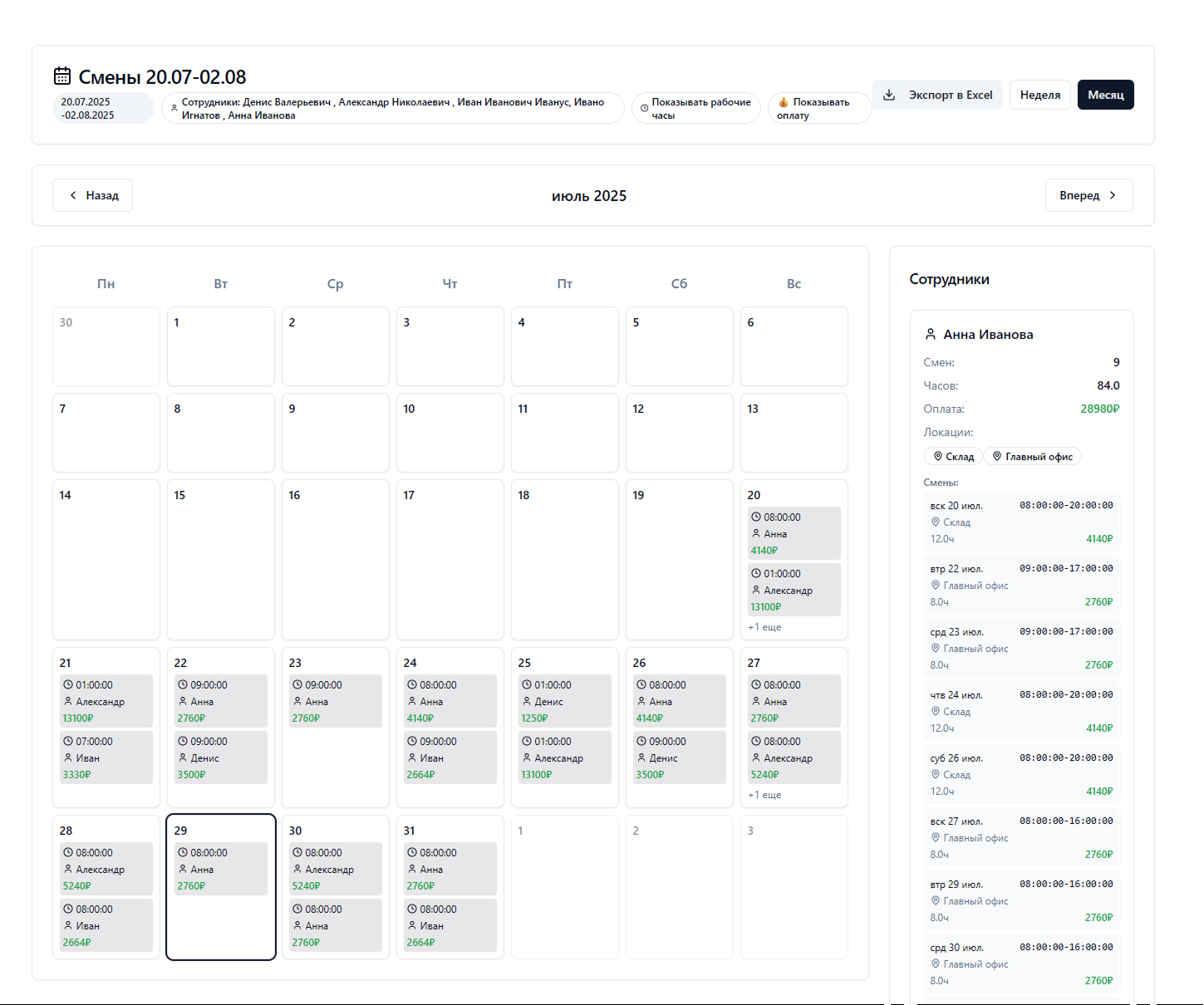
Plan, actuals, and people context sit together, so overtime control does not start with hunting for the right data version.
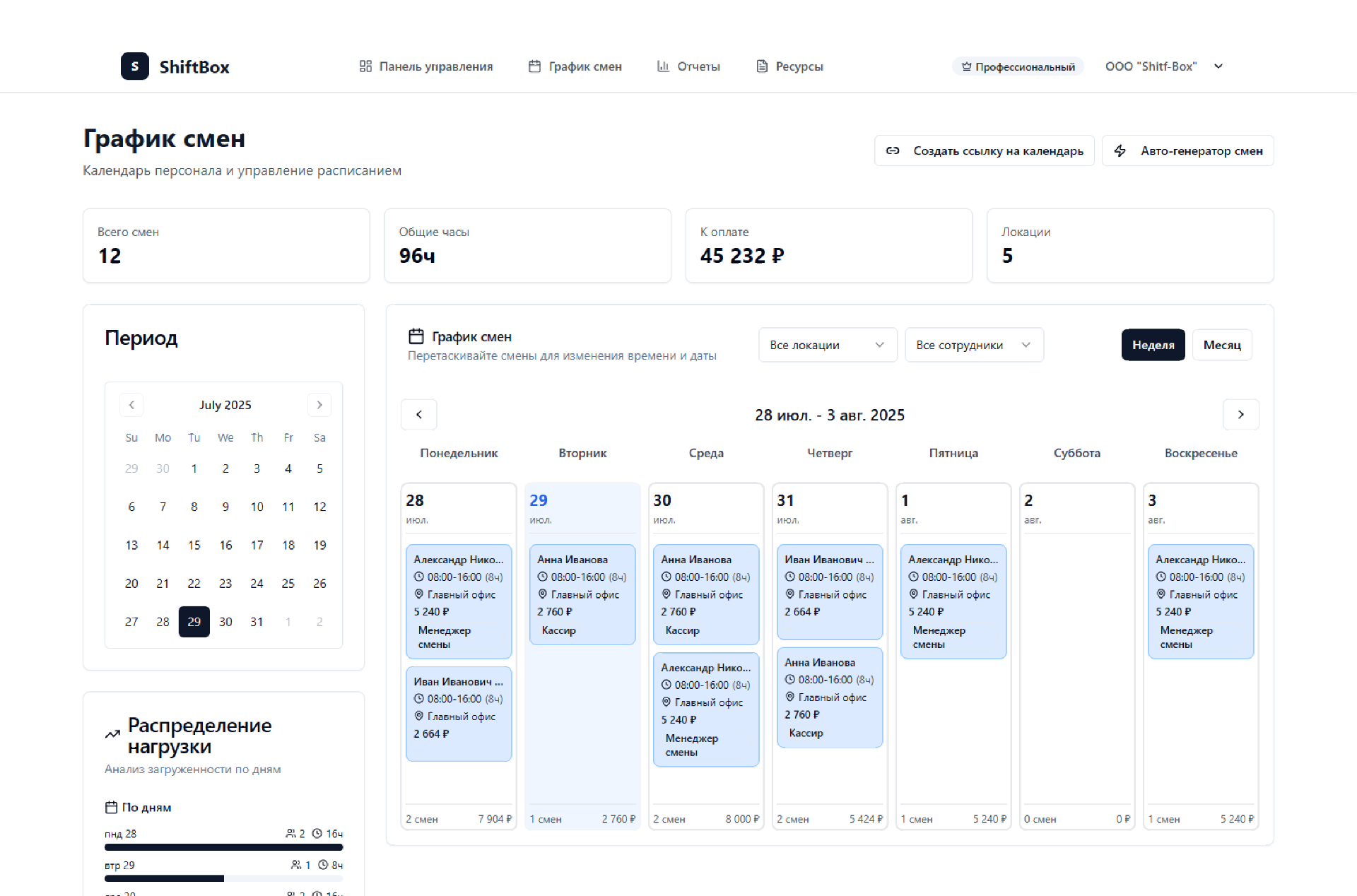
Easier to spot overload, norm drift, or costly shift patterns before they become a period-end problem.
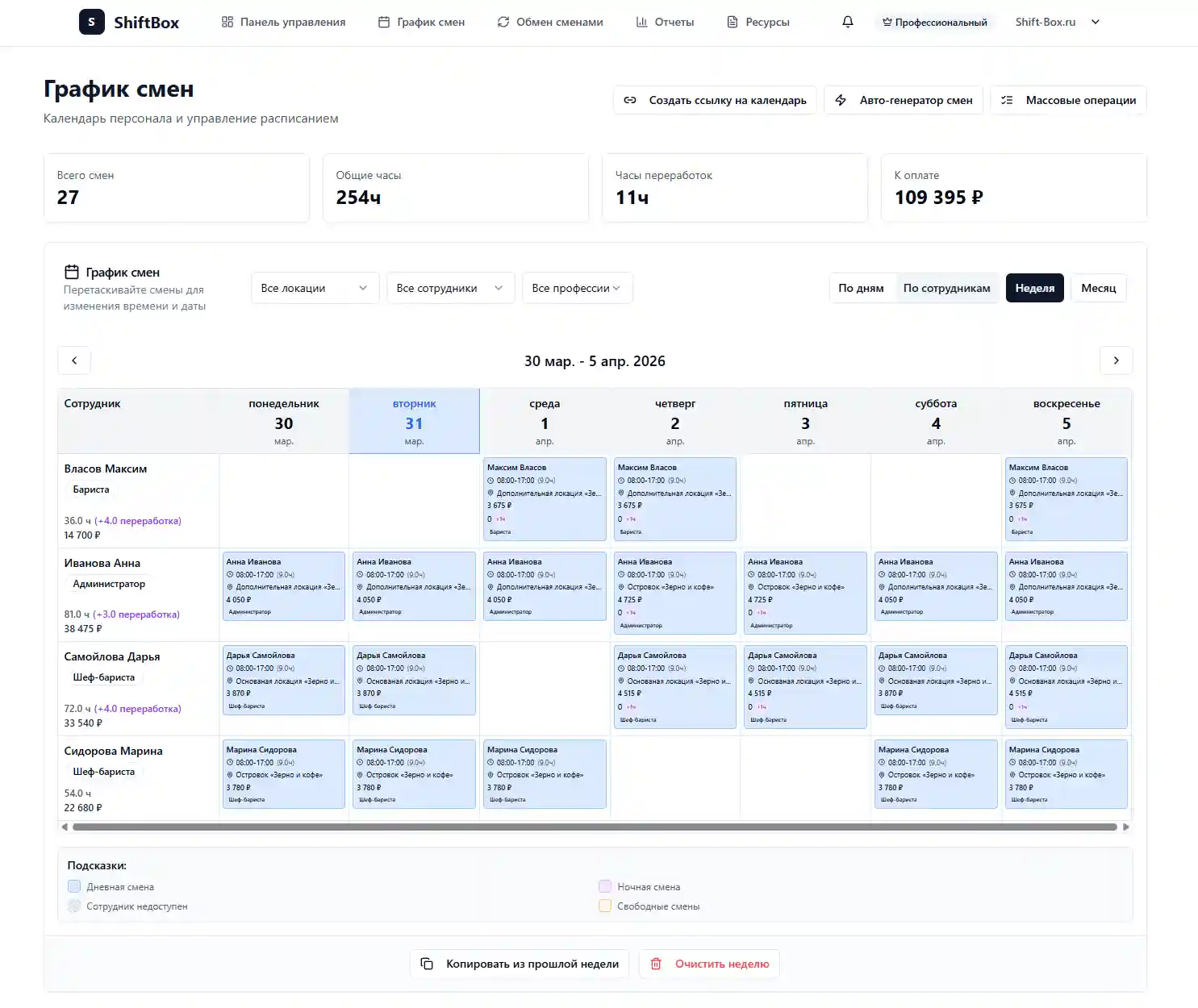
Finance, HR, and the lead get a cleaner base for reconciliation, payouts, and roster decisions.
Calendar, people, hours, coverage, and reports share one workflow—no Excel, chat threads, and manual roll-ups.
Construisez les shifts dans une matrice claire, assignez en glisser-deposer et voyez tout de suite les trous de couverture.
Heures reelles, retards et heures supplementaires au meme endroit pour eviter la reconciliation de tableurs en fin de mois.
Le staff ouvre un lien navigateur, voit ses shifts, marque l indisponibilite et demande des echanges sans onboarding lourd.
Quand les shifts changent, chacun voit le nouveau plan dans son espace — les managers ne reexpliquent pas chaque modification dans des fils paralleles.
When data sits in one place, every role moves faster and with less friction.
Gets an earlier, clearer picture of how extra hours, overtime, and load affect the business and the team.
Works in one loop: sees roster, hours, and variance without jumping between sheets, chats, and notes.
Gets a noticeably cleaner base for hour checks, payouts, plan-vs-actual review, or HR reconciliation.
These scenarios rarely break because of a formula. The issue is assembling the right picture of people, hours, and variance too late.
"We run three locations. We used to notice overload only at month-end when changing the roster was already too late. Now the team runs this in ShiftBox, sees variance before period close, and prepares calculation on cleaner data."
You had to assemble the right data per person and hours first, then decide or prepare the calculation.
Plan, actuals, and variance live in one process, so the lead and final calculation share one picture.
The process stops starting with manual reconciliation and moves to earlier, calmer control of people, hours, and variance.
Not after calculation and reconciliation—while you can still influence the process.
In many companies the issue is not the formula—it is that extra hours and overtime live in several sources. Every decision starts with manual fact gathering instead of managing the situation.
ShiftBox gathers roster, hours, and variance in one place. Control becomes more predictable: leads see risks earlier, and final reconciliation rests on cleaner data.
Earlier visibility into problems and less manual routine before final calculation or reconciliation.
Especially useful for shift teams, site networks, and roles where load, rate, or labor cost stop being obvious without one system.
Try ShiftBox free and see how hours follow real shift changes.
ShiftBox connects published shifts with actual hours so overtime patterns surface earlier and month-end reconciliation is less painful for managers and finance.
Réduire les surprises en fin de période
Oui : lorsque les heures suivent le plan, les patterns ressortent mieux que dans des feuilles éparpillées.
Les mises à jour restent au même endroit, sans recalcul manuel en chaîne.
Garder shifts et heures ensemble facilite une revue cohérente des primes.
Oui. Comparez couverture et heures entre sites sans fusionner des fichiers.
Pour aller plus loin sur les tâches voisines