1
Problème “Approved schedule” ≠ worked time
Swaps and extensions never return to the canonical file.
Payroll needs precise hours; operations often stores intent across many channels.
Swaps and extensions never return to the canonical file.
Managers forward screenshots and chat logs at the deadline.
Without a trail, every correction is a negotiation.
Build the foundation first, then decide on live data
Teams usually import current rules and shifts, then see plan, actuals, and variance in one workflow—not scattered sources.
Add people, roles, rates, or rules that matter for your scenario.
Move the current roster and base parameters into one system.
Start seeing the planned picture per person and load before final reconciliation.
Record actual hours and decisions inside the same process.
The main benefit appears before payroll close: when the lead sees the picture before the problem hardens.
If hours, shifts, and payouts live apart, every cycle starts with hunting data—not managing it.
Hours, shifts, and variance sit together, so the site manager and finance work from one base—not scattered files.
Less arguing about numbers, faster decisions for the team.
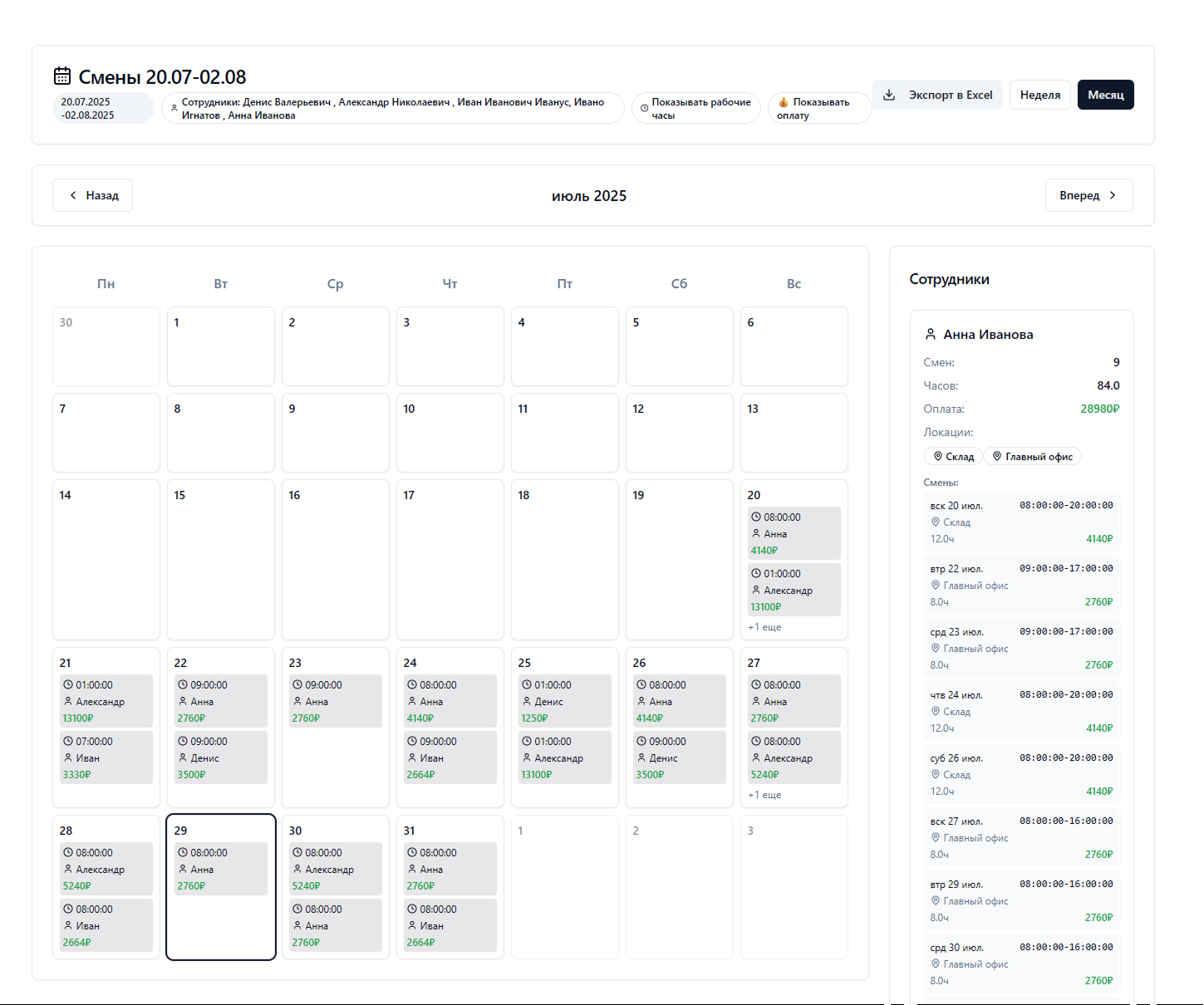
Plan, actuals, and people context sit together, so shift-based payroll does not start with hunting for the right data version.
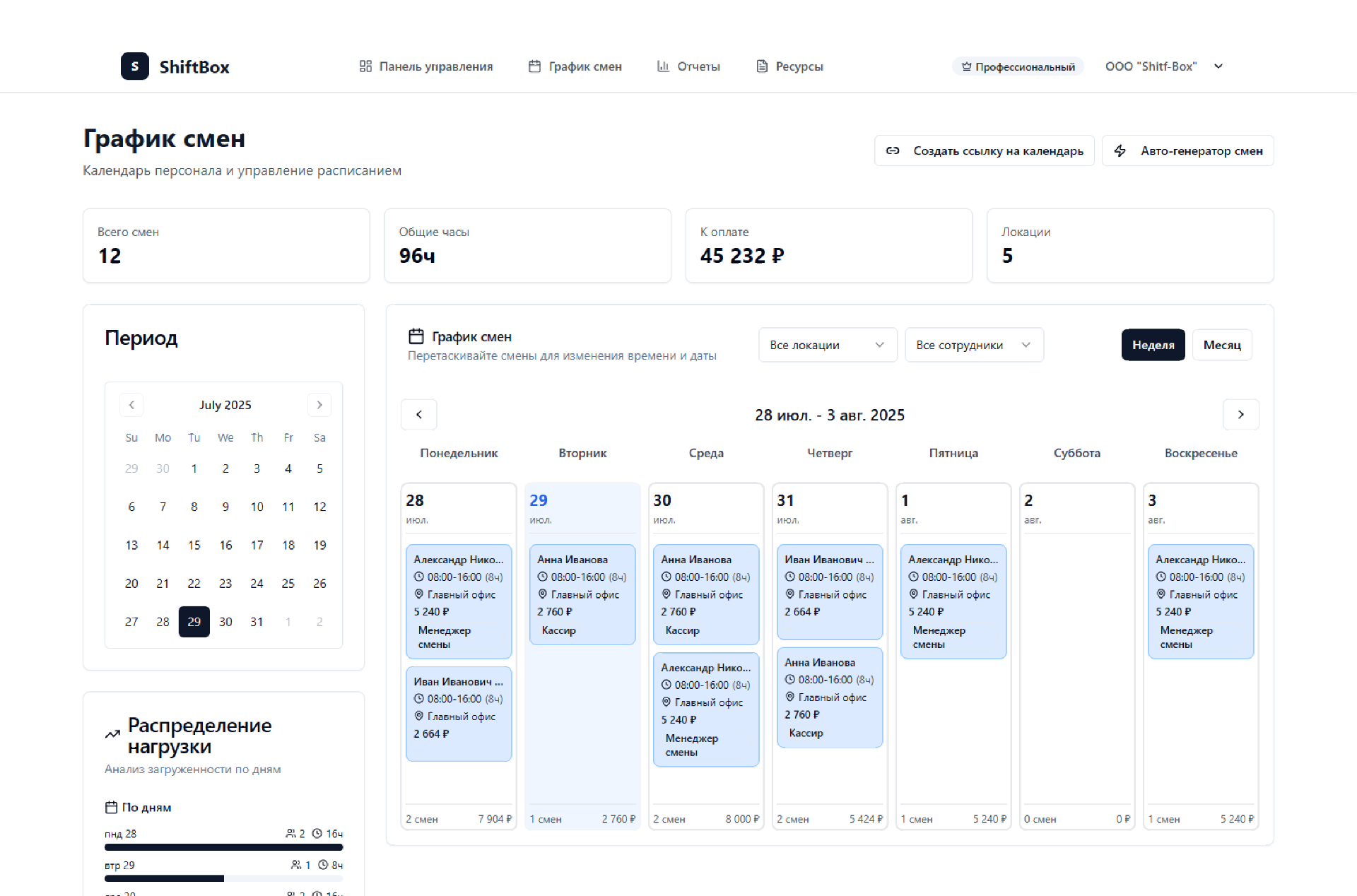
Easier to spot overload, norm drift, or costly shift patterns before they become a period-end problem.
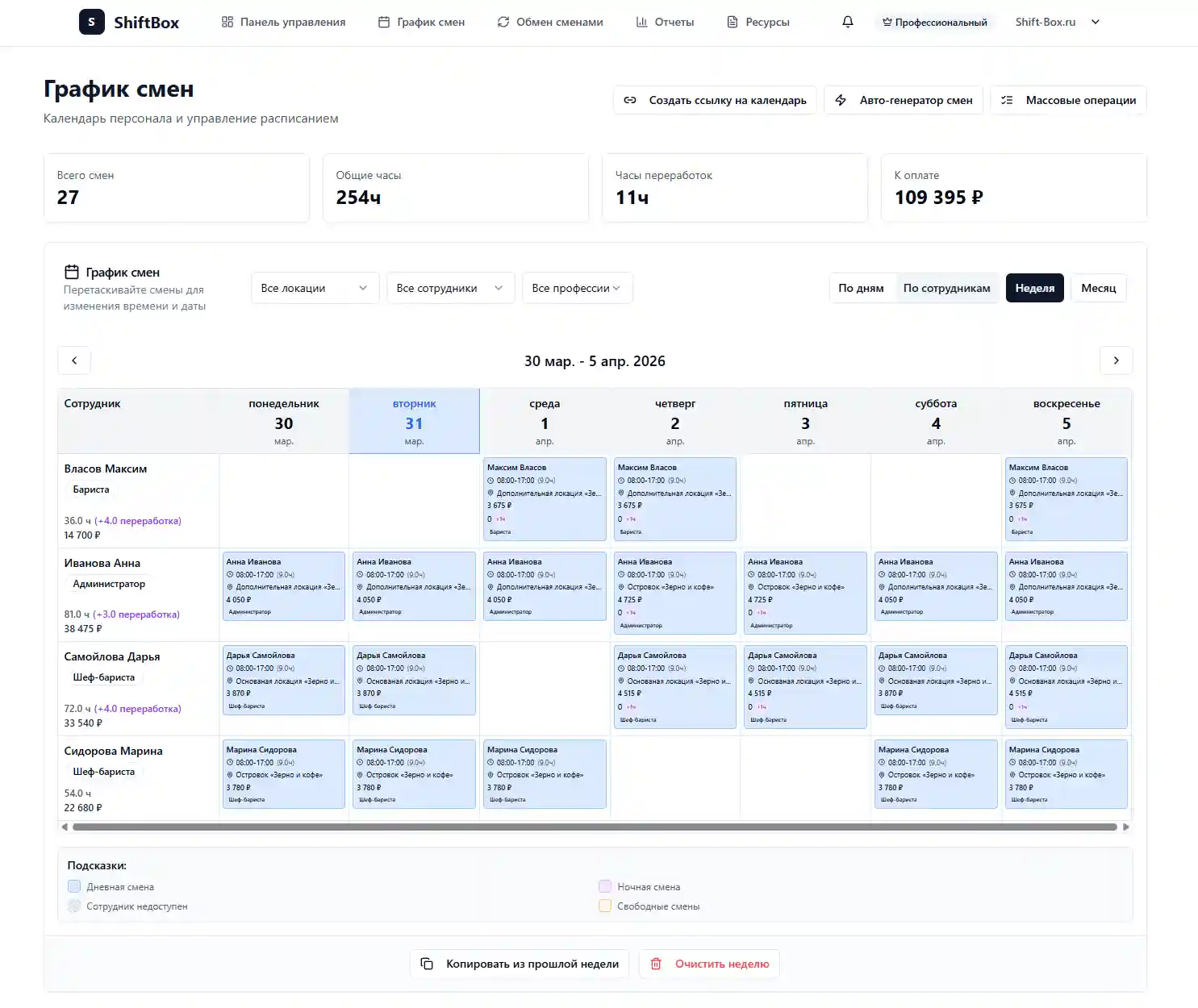
Finance, HR, and the lead get a cleaner base for reconciliation, payouts, and roster decisions.
Calendar, people, hours, coverage, and reports share one workflow—no Excel, chat threads, and manual roll-ups.
Construisez les shifts dans une matrice claire, assignez en glisser-deposer et voyez tout de suite les trous de couverture.
Heures reelles, retards et heures supplementaires au meme endroit pour eviter la reconciliation de tableurs en fin de mois.
Le staff ouvre un lien navigateur, voit ses shifts, marque l indisponibilite et demande des echanges sans onboarding lourd.
Quand les shifts changent, chacun voit le nouveau plan dans son espace — les managers ne reexpliquent pas chaque modification dans des fils paralleles.
When data sits in one place, every role moves faster and with less friction.
Gets an earlier, clearer picture of how hours, shifts, and payouts affect the business and the team.
Works in one loop: sees roster, hours, and variance without jumping between sheets, chats, and notes.
Gets a noticeably cleaner base for hour checks, payouts, plan-vs-actual review, or HR reconciliation.
These scenarios rarely break because of a formula. The issue is assembling the right picture of people, hours, and variance too late.
"We are a team of twenty-two. Final calculation used to start with gathering data from sheets, chats, and manual edits. Now the team runs this in ShiftBox, sees variance before period close, and prepares payroll on cleaner data."
You had to assemble the right data per person and hours first, then decide or prepare the calculation.
Plan, actuals, and variance live in one process, so the lead and final calculation share one picture.
The process stops starting with manual reconciliation and moves to earlier, calmer control of people, hours, and variance.
When hours and shifts are already in the system, the final step is noticeably calmer
In many companies shift payroll stalls not because of the formula, but because you must manually assemble the right picture of people and hours before calculation.
ShiftBox makes that foundation cleaner: roster, changes, and actual time sit in one place, so finance and the lead can work with the outcome more confidently.
A more transparent path from shifts and hours to pay—without endless manual roll-ups.
Especially useful for shift teams with overtime, night work, and frequent moves.
Try ShiftBox free and see how shifts and hours stay paired.
ShiftBox helps teams connect published shifts with actual hours so salary calculation and payout reviews start from data operations already trusts.
Comment les données opérationnelles aident la finance
Non : il renforce l’opérationnel pour livrer des données shifts/heures plus propres avant le HCM ou la paie.
Oui : structurez personnes et sites comme la finance attend les agrégats.
Les changements restent dans le même flux pour que les totaux suivent la dernière publication.
Avec shifts et ajustements au même endroit, reconstruire une journée est plus simple.
Pages pour heures et charge