1
Problème Everyone runs their own version of the week
Flexibility without a published plan becomes permanent uncertainty.
Without a system of record, flexibility turns into constant improvisation.
Flexibility without a published plan becomes permanent uncertainty.
Shortened opens and extended closes never return to the roster.
Each day restarts negotiations instead of executing a plan.
Gradually—without rebuilding your entire current plan at once
Teams usually bring roles and base shift windows in first, then record live changes and actual hours in one process.
Add employees and roles.
Build base shift windows.
Publish the schedule to the crew.
Run changes and hours in the system from there.
Flexible does not have to mean chaos when the process is not split across tables
The hard part is not the shifts themselves—it is how fast changes diverge between people and files.
Shifts, changes, and actual hours sit in one place so leads keep the picture under control.
Concrete control points for every day—not abstract automation.
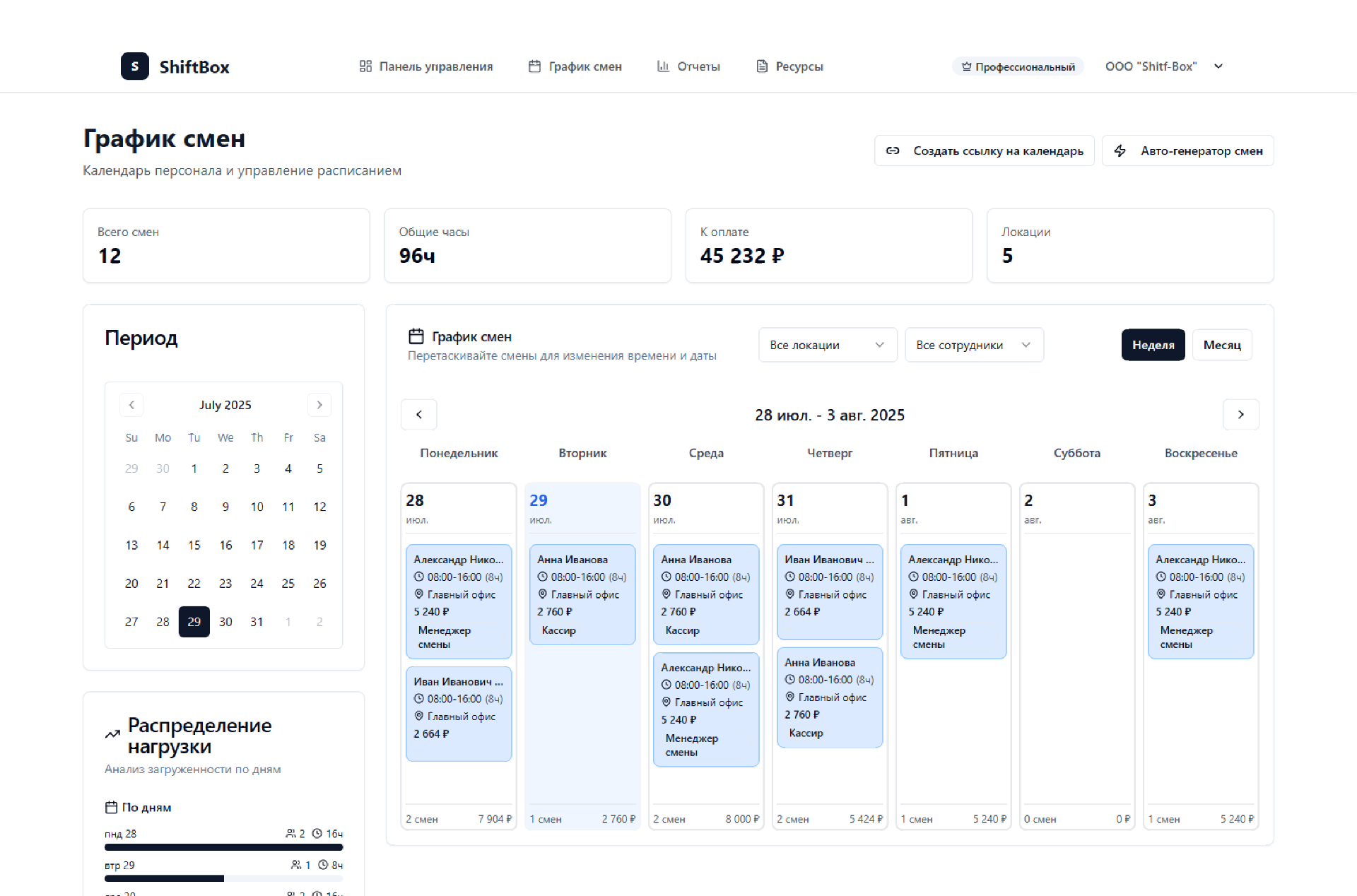
A floating roster no longer lives apart from leave, sick days, and moves: the whole crew sees one current shift picture.
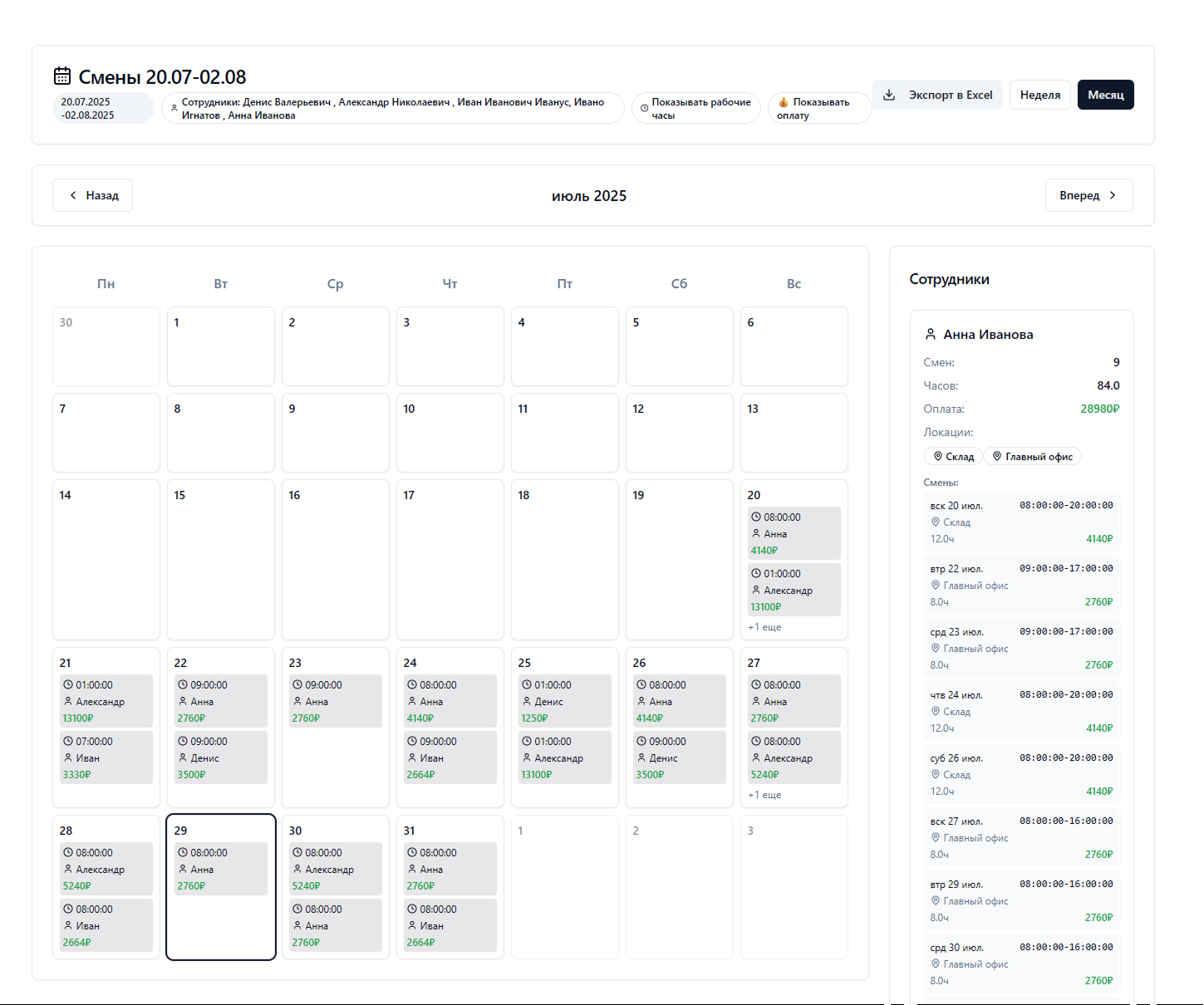
Hours per person, swaps, and overload sit together so leads decide before period close—not after.
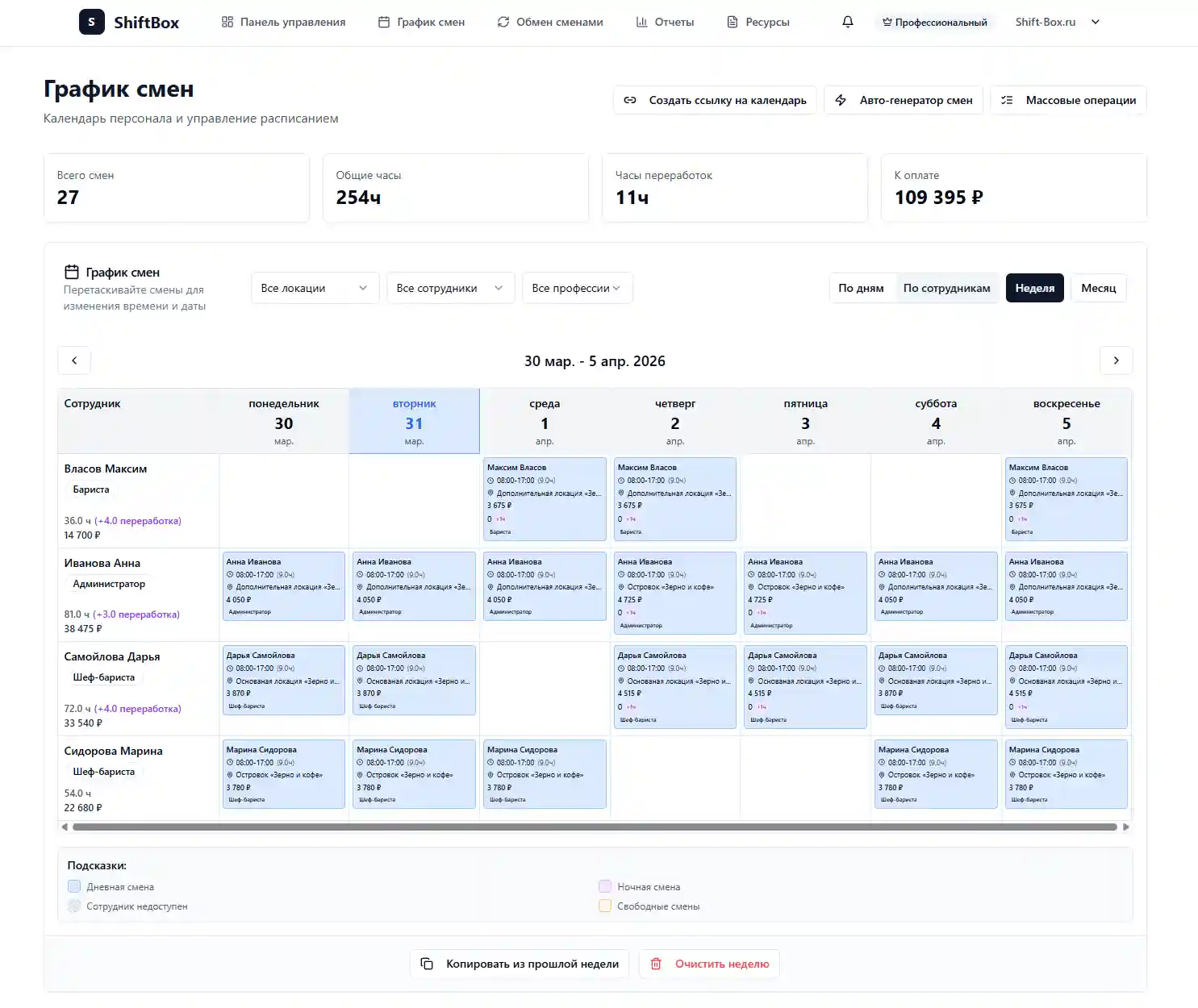
After publish, staff see the ready schedule in their portal—no new file blast after every edit.
Calendar, people, hours, swaps, and reports share one workflow—no Excel, chat threads, and manual roll-ups.
Construisez les shifts dans une matrice claire, assignez en glisser-deposer et voyez tout de suite les trous de couverture.
Heures reelles, retards et heures supplementaires au meme endroit pour eviter la reconciliation de tableurs en fin de mois.
Le staff ouvre un lien navigateur, voit ses shifts, marque l indisponibilite et demande des echanges sans onboarding lourd.
Quand les shifts changent, chacun voit le nouveau plan dans son espace — les managers ne reexpliquent pas chaque modification dans des fils paralleles.
When the roster is live, each role needs its own slice of transparency.
Gets a clearer picture of people, shifts, and load instead of waiting for a final manual team summary.
Works in one workspace: builds shifts, edits the plan, and publishes changes without endless threads and file resends.
Gets a cleaner base for timesheets, hour checks, and payout prep—not a pile of scattered sources.
Teams with this work format usually hit trouble not on day one but after live edits. That is when one process starts saving time for leads and the crew.
"We run an 18-person operations team. Flexible shifts used to spread across chats and tables, and we assembled hour fact only at period end. Now roster, changes, and hours live in ShiftBox: the manager opens one calendar, and the crew sees a ready, current schedule."
Every edit meant a new spreadsheet, rechecking people, and manual hour reconciliation at period close.
Template, exceptions, and shift fact live in one process that does not break with every swap.
The team stops rebuilding the floating roster by hand after every edit and gets one current picture by people, hours, and shifts.
When the plan moves often, changes and hours especially need one home
A floating roster does not have to be chaotic. Trouble usually starts when shift changes live apart from actual hours and the final load picture.
ShiftBox keeps that process in one window: you do not have to merge shifts, changes, and hours from several sources later.
A more transparent flexible roster and less manual hour digging at period close.
Especially useful for variable load, mixed shift lengths, and frequent moves.
Try it free and model two weeks with uneven daily demand.
ShiftBox helps teams with variable demand keep shifts, swaps, and hours in one workflow so flexibility does not collapse into spreadsheet drift and chat truth.
Demande variable sans perdre la discipline
Oui : adaptez la couverture à la demande quotidienne avec une source publiée unique.
Les changements mettent à jour le même planning vivant que l’équipe consulte déjà.
Quand les heures suivent le dernier plan, la charge extra apparaît avant la paie.
Oui, structurez les rôles pour que la couverture partielle colle à l’opération.
Pages qui complètent les tâches voisines