1
Problem Viele Mini-Änderungen
Kurze Zyklen verstärken jeden Tausch—Versionen verlaufen schnell.
Typische Stolpersteine nach den ersten „nur mal kurz“-Korrekturen
Kurze Zyklen verstärken jeden Tausch—Versionen verlaufen schnell.
Ohne Werkzeug wird aus einem Ersatz schnell eine komplette Neukonstruktion pro Mitarbeitendem.
Die Pause zwischen den Blöcken täuscht: Lastspitzen bleiben unsichtbar, bis es eng wird.
Ein Ausfall verschiebt den nächsten Block—Excel verliert den Faden.
The base day-on cycle goes in first; real-world changes follow in the same system
Teams usually build the 1/3 template, attach people and sites, then run duty rotations and actual hours inside ShiftBox.
Add people and sites.
Build the core 1/3 cycle.
Publish shifts to the team.
Run moves and hours inside the same tool from there.
For long shifts it is critical to keep one picture of people, sites, and hours
The more sites and moves you run, the higher the risk that people, hours, and the roster diverge.
Duty posts, sites, and hours sit together, so a long cycle is easier to keep under control.
Ein Ort für Muster, Ausnahme und Nachvollziehbarkeit
Eine gültige Version—kein Weiterleiten nach jeder Korrektur.
Änderungen bleiben nachvollziehbar im Gesamtturnus.
Hotspots sichtbar machen, bevor die Abrechnung fragt.
Urlaub und Krankheit folgen dem gleichen Prozess wie das 1/3-Grundgerüst.
Not abstract automation—concrete control points every shift.
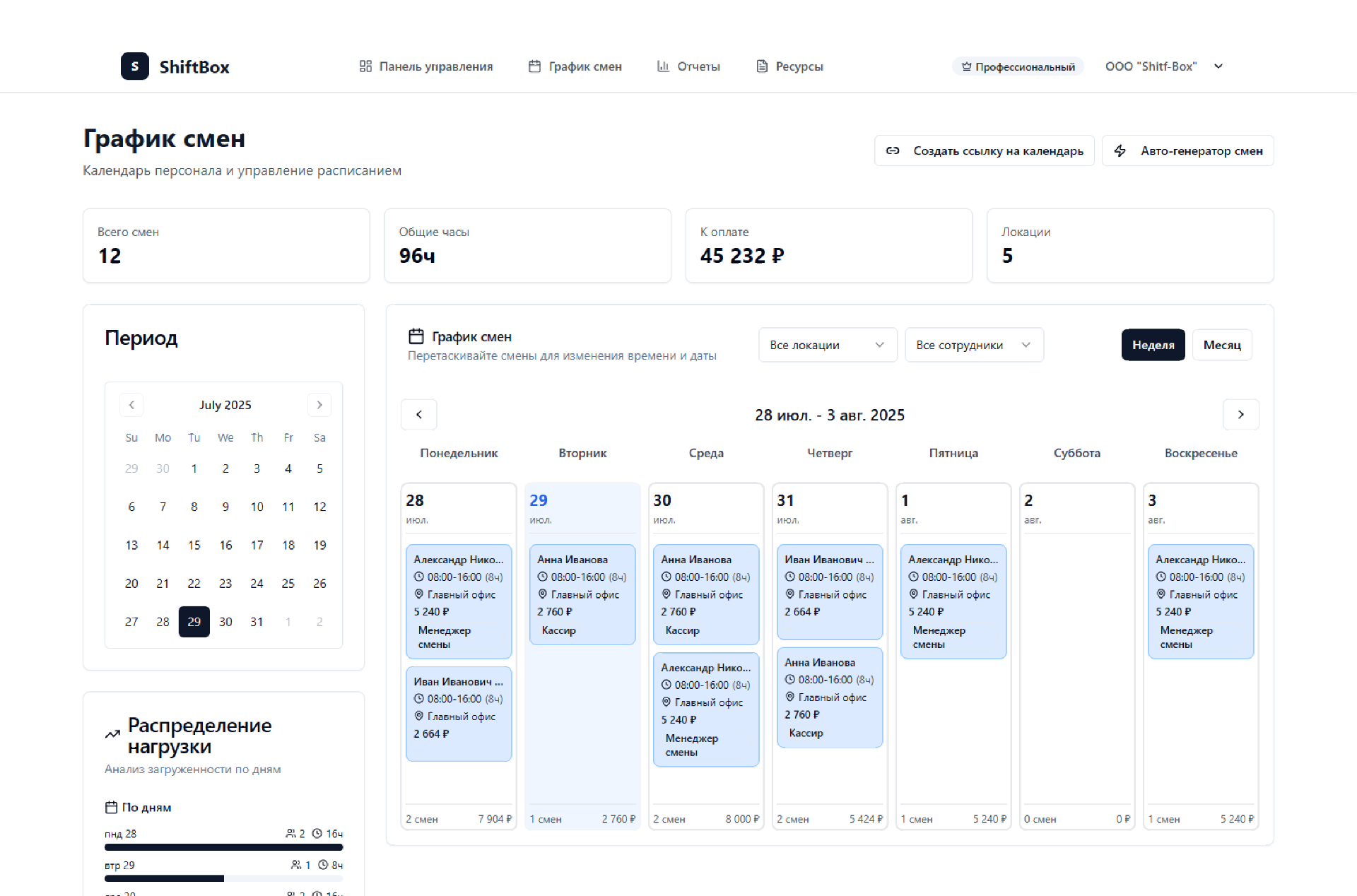
1/3 no longer lives apart from leave, sick days, and moves: everyone sees the same current shift picture.
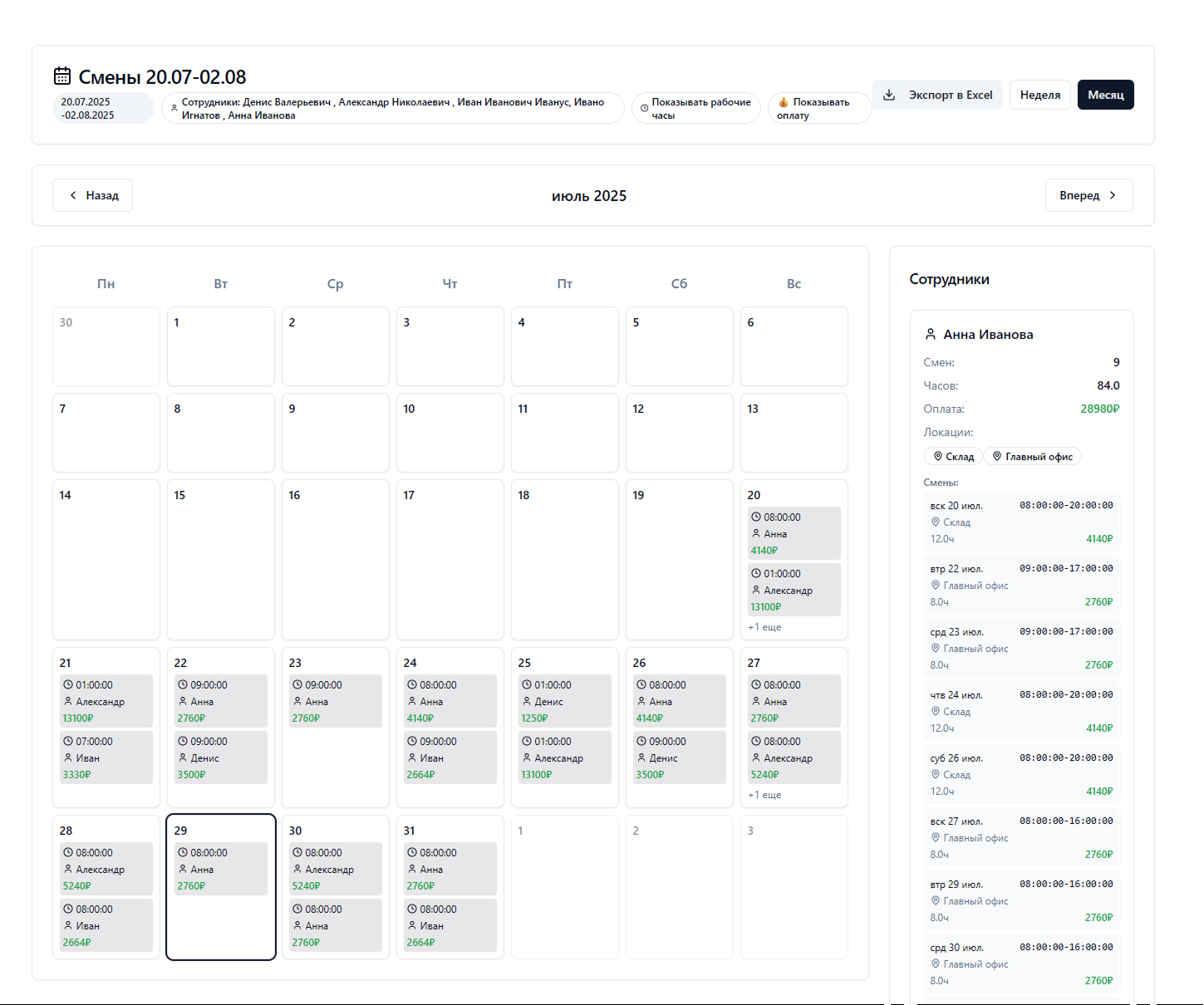
Hours per person, coverage swaps, and overload sit together so leads can decide before period close—not after.
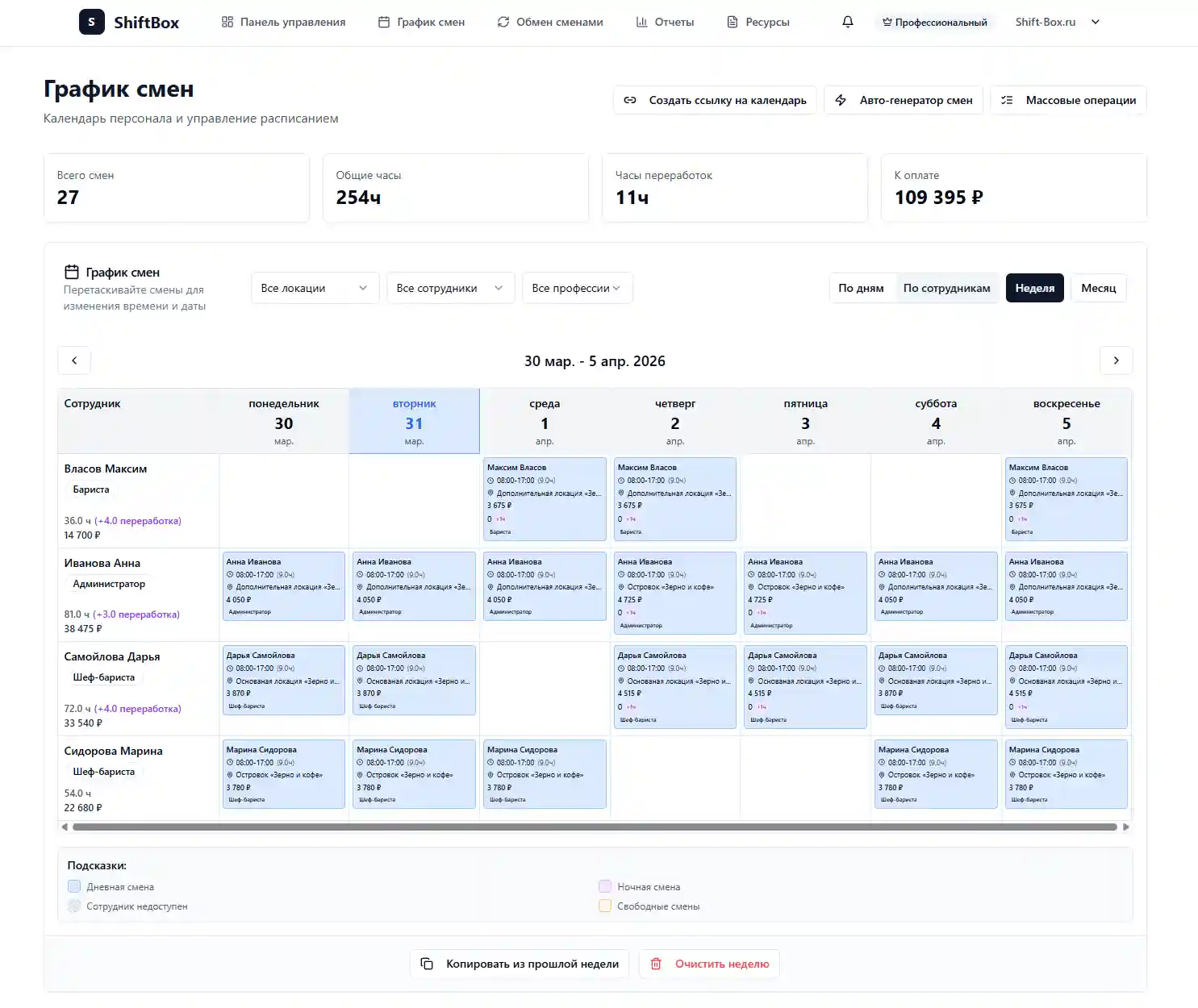
After publish, staff open the latest plan in their portal—no new file after every edit.
Calendar, people, hours, coverage, and reports share one workflow—no Excel, chat threads, and manual roll-ups.
Schichten in einer klaren Matrix planen, per Drag-and-drop zuweisen und Deckungsluecken sofort erkennen.
Ist-Stunden, Verspaetungen und Ueberstunden liegen an einem Ort — ohne Tabellen-Chaos am Monatsende.
Team oeffnet einen Browser-Link, sieht Schichten, markiert Verfuegbarkeit und beantragt Tausch ohne schweres Onboarding.
Wenn sich Schichten aendern, sieht das Team den neuen Plan im Portal — Manager erklaeren nicht jeden Edit in Nebenthreads.
On a live roster, each role needs a different slice of the same truth.
Sees people, shifts, and load without waiting for a manual end-of-period pack.
Works in one place: builds shifts, edits the board, and publishes without endless threads and file resends.
Gets a cleaner base for timesheets, hour checks, and payout prep—not scattered sources.
Day-on teams rarely break on day one—they break once real edits pile up. That is when one shared process starts saving time.
"We are sixteen people on day-long duty posts. After a few cross-site moves we used to rebuild the duty roster from chat messages. Now schedule, changes, and hours live in ShiftBox: one calendar for the manager, one published view for the crew."
Every fix meant a new sheet, a people-by-people check, and manual hour reconciliation at period end.
Template, exceptions, and shift facts stay in one process that survives each swap.
The crew stops rebuilding 1/3 by hand after every edit and shares one current picture of people, hours, and shifts.
Value shows up when schedule, exceptions, and hours share one workflow.
Any base pattern looks simple until real exceptions appear. Once moves, swaps, and deviations stack up, a manual process stops being transparent—for managers and staff alike.
ShiftBox keeps this scenario in one place: calendar, worked time, coverage, and publish act as a single loop. Edits no longer drag a new file version and a final manual roll-up behind them.
A steadier board that survives real-world changes across the week or period.
Especially useful where the pattern looks standard but every exception shifts the final picture of people and hours.
ShiftBox 14 Tage ausprobieren und sehen, wie der Turnus zusammenhält.
Schichten, Vertretungen und Stunden an einem Ort—damit der kurze Rhythmus nicht zur Dauerbaustelle wird.
Von Vorlage bis Vertretung—ohne den Vier-Tage-Takt zu verlieren
Oft ja: das Grundmuster ist knapp, die Herausforderung liegt in Ausnahmen. Sie übernehmen die Vorlage und pflegen Abwesenheiten und Tausch dort, wo später alle hinschauen.
Kurze Arbeitsblöcke bedeuten häufigere Übergaben. Zentral erfasste Änderungen verhindern, dass jede Vertretung eine eigene Tabellenlinie nach sich zieht.
Wenn Ist-Stunden und Plan im selben Bild stehen, erkennen Sie Verdichtungen früher—nicht erst, wenn die Periode schon gelaufen ist.
Über persönliche Links zur zuletzt veröffentlichten Version—ohne Installationspflicht.
Ähnliche Szenarien für lange und Nachtschichten