1
Problem Receiving windows go uncovered
Forklift operators and dock crews are planned on one sheet; the live floor runs on verbal updates until trailers wait.
Static rosters collapse the moment inbound trailers stack, pick rates spike, or night crews miss a handoff.
Forklift operators and dock crews are planned on one sheet; the live floor runs on verbal updates until trailers wait.
Picker shortages on aisle three do not show up in the pack station roster until orders backlog at cut-off.
BFCM surge lists, temp agency names, and the base week schedule live in different files—nobody agrees which version is current.
Graveyard receiving coverage agreed in a group chat never makes it back to the day dispatcher’s hour trail.
Leads chase confirmations across radios, messages, and printed rosters instead of moving people where volume demands.
Extra picker and packer hours accumulated across twelve-hour surge weeks only appear when payroll assembles the period.
Start with one zone or one shift block—no warehouse-wide freeze required
Most logistics teams pilot a single area first—receiving on day shift, or one pick module—then extend the same workflow across pack stations, forklift pools, and night crews. Dispatchers keep daily operations running while the roster matures in the background.
Add warehouse zones, roles, and crews—pickers, packers, forklift operators, receiving leads.
Build the base roster by zone and week, including standard day and night blocks.
Publish shifts to floor staff through their portal or shared link.
Record call-outs, floaters, and surge extensions without rebuilding spreadsheets.
Review hours by role and zone, then prepare peak-season and payroll data.
The same inbound volume feels very different when Excel is no longer the dispatcher’s second job
Warehouses move on throughput, not office hours. A delayed trailer, a broken conveyor, a BFCM wave, or three picker call-outs rewrite the floor plan before the sheet gets updated. Forklift operators cover receiving while pack lines wait; night crews inherit gaps nobody documented.
Operations managers, dispatchers, and zone leads see current shifts, crew assignments, and hours per area without manual reconciliation between the dock, the floor, and the back office.
Not abstract workforce software—concrete control points for dispatchers and operations managers
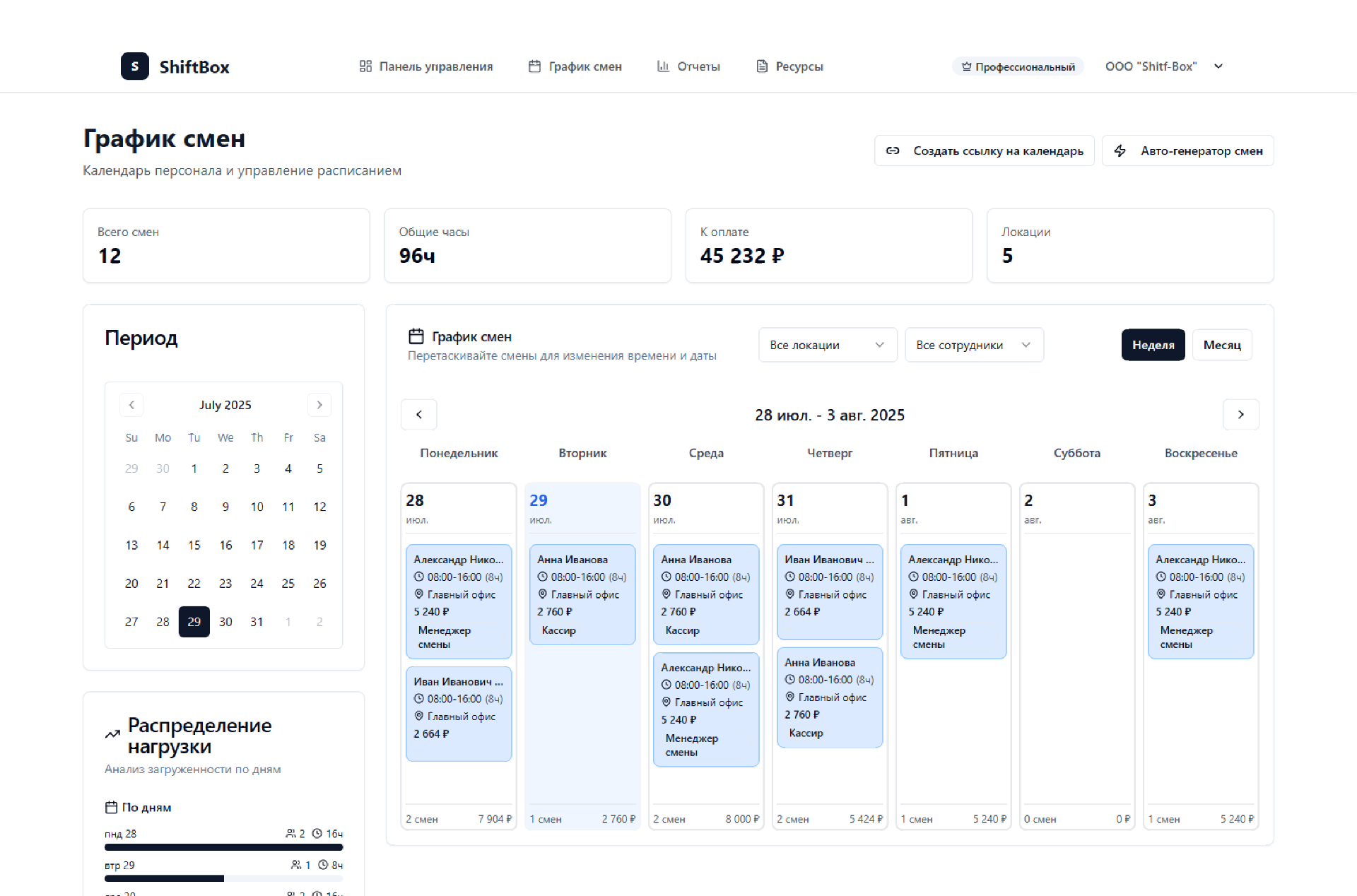
See picker density by aisle, pack station coverage, forklift operators on the dock, and receiving crew windows in one view—then move floaters where inbound volume demands without losing the hour trail.
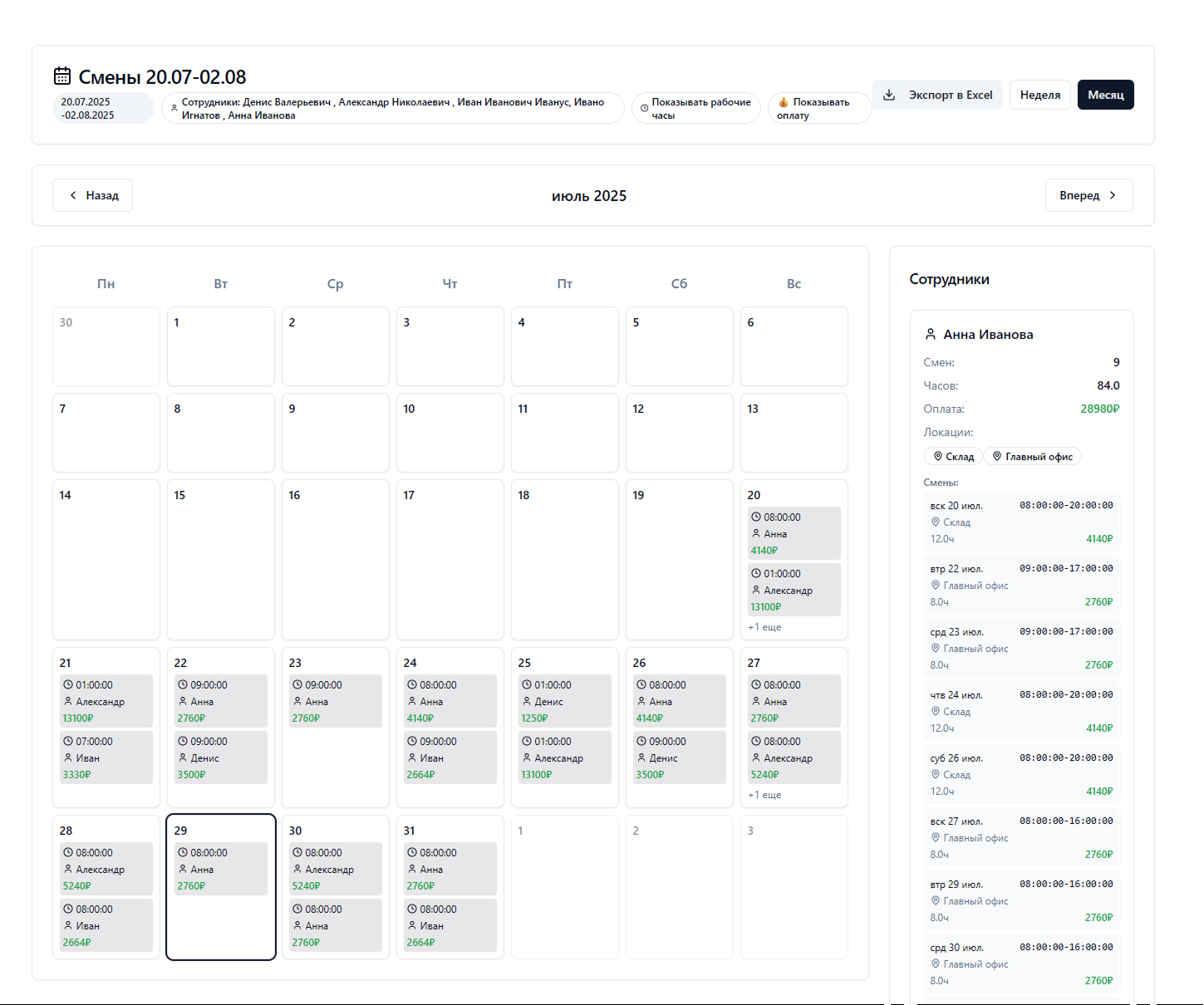
BFCM extensions, graveyard receiving blocks, and surge temps sit next to the standard week so dispatchers do not maintain a separate overtime spreadsheet for Black Friday week.
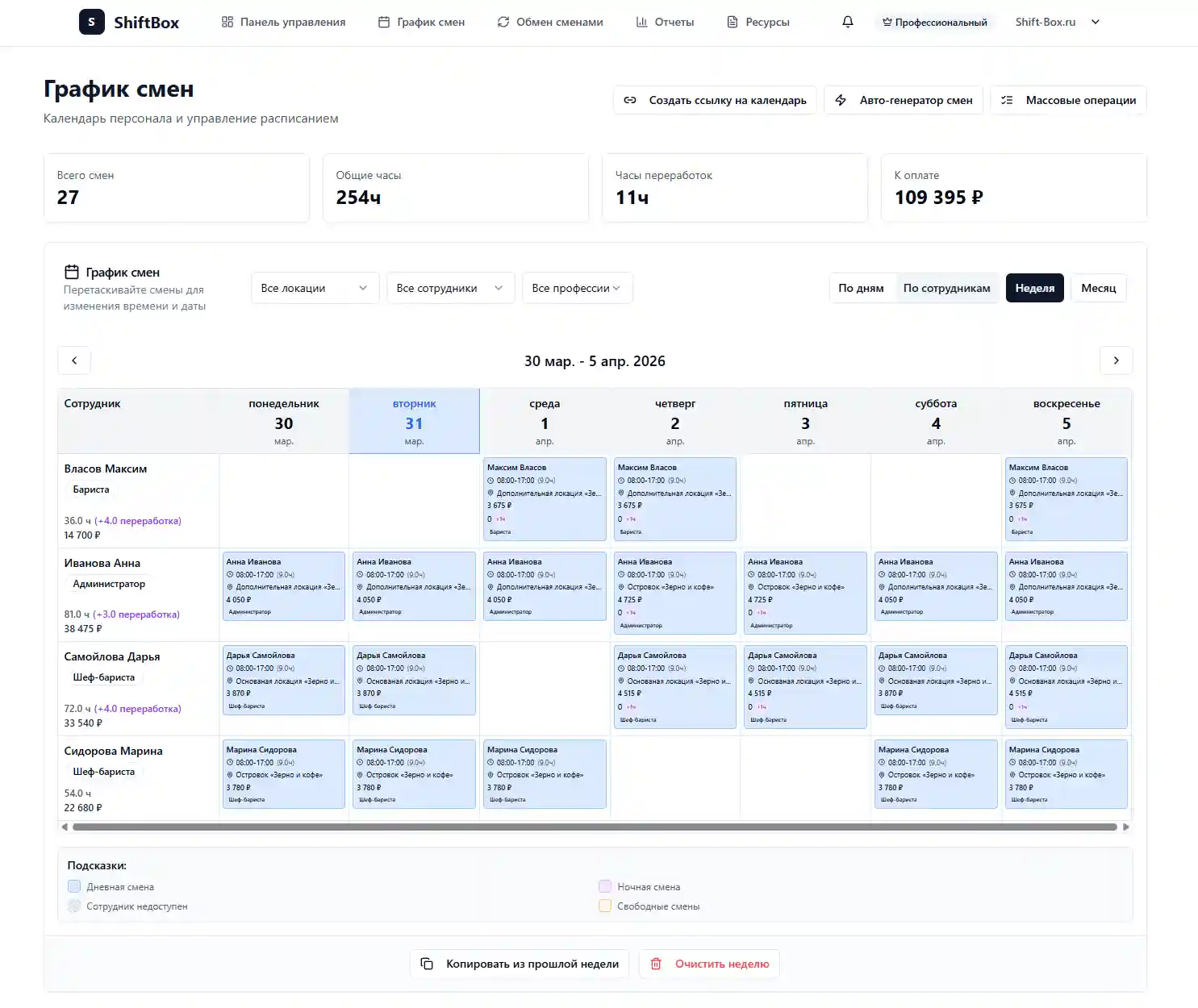
Easier to read picker and packer load by zone, spot chronic understaffing at receiving, and prepare payout data after sustained surge periods.
Calendar, zones, crews, hours, coverage gaps, and period reports share one workflow—no Excel tabs, radio confirmations, and manual hour roll-ups across pick, pack, and dock.
Build shifts in a clear matrix calendar, assign people with drag-and-drop, and immediately see coverage gaps.
Actual hours, lateness, and overtime live in one place so managers are not reconciling spreadsheets at month-end.
Staff open a browser link, see their shifts, mark unavailability, and request swaps without a heavy onboarding flow.
When shifts change, people see the new plan in their workspace—managers do not re-explain every edit in side threads.
Each role sees the slice of warehouse operations it needs to keep throughput up and hours accurate
Gets a clearer picture of zone staffing, surge headcount, and labor cost signals across day and night blocks without collecting status from three shift leads every morning.
Works with a live roster: assigns pickers to modules, covers receiving when trailers stack, and publishes floater moves without chasing confirmations in chat.
Gets cleaner hour and shift data from pickers, packers, and equipment operators instead of assembling it from zone-specific exports and agency timesheets.
Distribution teams need more than a neat weekly template—they need a roster that survives call-outs, inbound spikes, and twelve-hour BFCM blocks without splitting into parallel plans for receiving, picking, and packing.
"We run three shifts across receiving and two pick modules. Before ShiftBox, the day dispatcher, night lead, and payroll each had a different version of who was on the floor. BFCM week meant three overtime lists on top of the base sheet. Now zones, surge blocks, and floater moves live in one calendar—the receiving lead sees graveyard coverage before trailers arrive, and payroll stopped reconstructing picker hours from sticky notes."
Picker call-outs were confirmed by radio, forklift coverage on the dock lived on a whiteboard, and the final hour picture for pack lines came from separate zone exports plus agency paperwork.
Receiving, pick modules, pack stations, and night crews share one roster process that dispatchers update as the floor changes—surge temps included.
The team stops fighting staffing fires through fragmented channels and moves to predictable control of zone coverage, night handoffs, and surge-week hours.
Not only build the week plan, but keep it live when inbound spikes, call-outs, and night handoffs arrive hourly
A warehouse roster rarely survives unchanged for a single shift. Inbound trailers arrive early, a pick module loses two people to illness, pack stations need floaters after a sortation jam, and the graveyard crew inherits gaps nobody wrote down. When receiving, picking, and dispatch each maintain their own list, every adjustment becomes a chain of radio checks and message threads.
ShiftBox gathers zone assignments, night blocks, surge extensions, and actual hours in one place so dispatchers can build the plan and keep it current as the floor moves. Forklift operators on the dock, pickers in aisle zones, and packers at stations follow the same published state—finance sees the same hours the floor actually ran.
That matters most during BFCM and other peak windows when temp headcount joins the roster, twelve-hour blocks stack across the week, and overtime accumulates faster than any single spreadsheet can track. Operations directors get earlier signals on overloaded zones; payroll gets fewer surprises when the surge period closes.
A more predictable floor roster and less dispatcher time lost to manual coordination.
Especially important for fulfillment centers that must balance receiving windows, pick-path coverage, pack throughput, and night shift continuity when volume can double overnight.
Try it free and model one pick zone with a receiving handoff and a surge block.
ShiftBox helps distribution and fulfillment teams keep picker, packer, forklift, and receiving shifts in one workflow—so zone coverage survives peak season, night handoffs stay traceable, and payroll prep after BFCM is less painful.
Picking zones, receiving docks, night crews, and peak-season staffing
Yes: structure shifts by zone, role, or team so forklift coverage on the dock does not get confused with picker lines on the floor. Dispatchers see each area in one calendar instead of juggling separate sheets.
Build surge templates on top of your standard week, add temporary headcount or extended shifts, and publish updates once. Everyone—from floor leads to payroll—works from the same peak-season plan instead of a patchwork of overtime lists.
Night assignments stay visible next to day shifts, so handoff gaps—empty receiving windows, uncovered pick paths, missing forklift operators—surface before the shift starts rather than when inbound trailers arrive.
Staff open a browser link to their personal schedule. No app install is required for basic shift visibility, which suits warehouse crews who need quick access on the floor.
The calendar highlights empty coverage windows by zone and role. When a pack line loses two people to call-outs, the gap is visible immediately—dispatchers can pull floaters or adjust routes without rebuilding the roster in chat.
When published shifts and actual hours sit in one system, cumulative overtime across pickers, packers, and equipment operators is easier to track during the month—not only when finance reconciles the period.
Pages that help close neighboring scenarios for logistics and shift operations teams
When graveyard receiving, pick modules, and handoffs need dedicated coverage planning.
When surge weeks and extended picker blocks need early visibility instead of month-end surprises.
When rotating day and night crews need a repeating pattern across warehouse zones.