1
Problem Coverage lives in group chats
Someone said yes in WhatsApp three weeks ago, but the nursery still has no confirmed second helper for 9 a.m. service.
Limited admin time, rotating volunteers, and Sunday deadlines punish informal tools fastest.
Someone said yes in WhatsApp three weeks ago, but the nursery still has no confirmed second helper for 9 a.m. service.
The coordinator emails a PDF or Excel file; volunteers save it once and never see updates when swaps happen.
Greeters, worship, tech, and children’s ministry each ask the same person to “just fix the sheet” because no one else has edit access.
Onboarding is “ask Sarah”—but Sarah is on vacation the week someone new wants to serve.
Easter, Christmas Eve, and youth retreats need different team sizes, but the base rotation was never built to flex.
Community programs depend on people who come monthly or seasonally; static lists do not show who is actually signed up this week.
Without an IT project, volunteer training day, or app rollout
Most organizations start with one high-visibility need—Sunday greeters, nursery, or a weekly food distribution—set up roles and open slots, share the browser link once, then add ministries as coordinators see volunteers self-signup without constant chasing. The goal is one live board part-time admin staff can maintain between everything else they already do.
Add ministries, roles, and volunteer names—or leave slots open for self-signup.
Build the base rotation for each service time or program day.
Share the browser link by email, text, or QR—no app install.
Let volunteers claim shifts and record swaps in one place instead of chat threads.
The same Sunday morning feels different when the roster is not buried in messages and attachments
Churches and NGOs run on goodwill and irregular availability. Coordinators are volunteers too. When the schedule lives in files and chats, every swap becomes a manual hunt—and the person with the “real” list is always the busiest one on the team.
Pastors, ministry directors, and volunteer coordinators see who is scheduled for each service or program day. Volunteers open the same browser link to confirm their shift or pick up an open slot—without installing software or waiting for a file attachment.
Not enterprise HR software—practical control for people who schedule between sermons, shifts, and donor calls
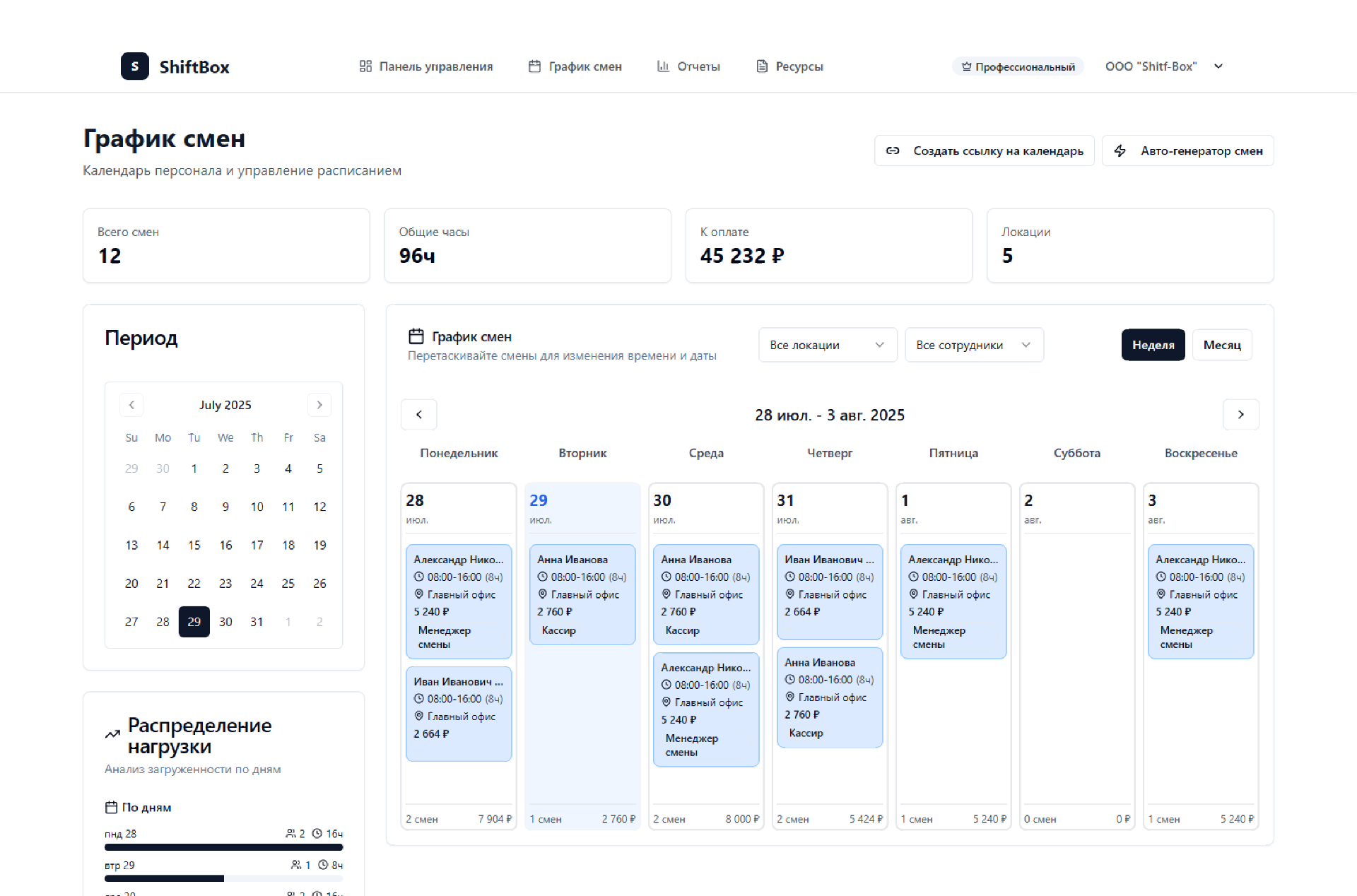
Share one URL by email, SMS, or QR code. No app store friction, no login confusion for occasional helpers who serve once a month.
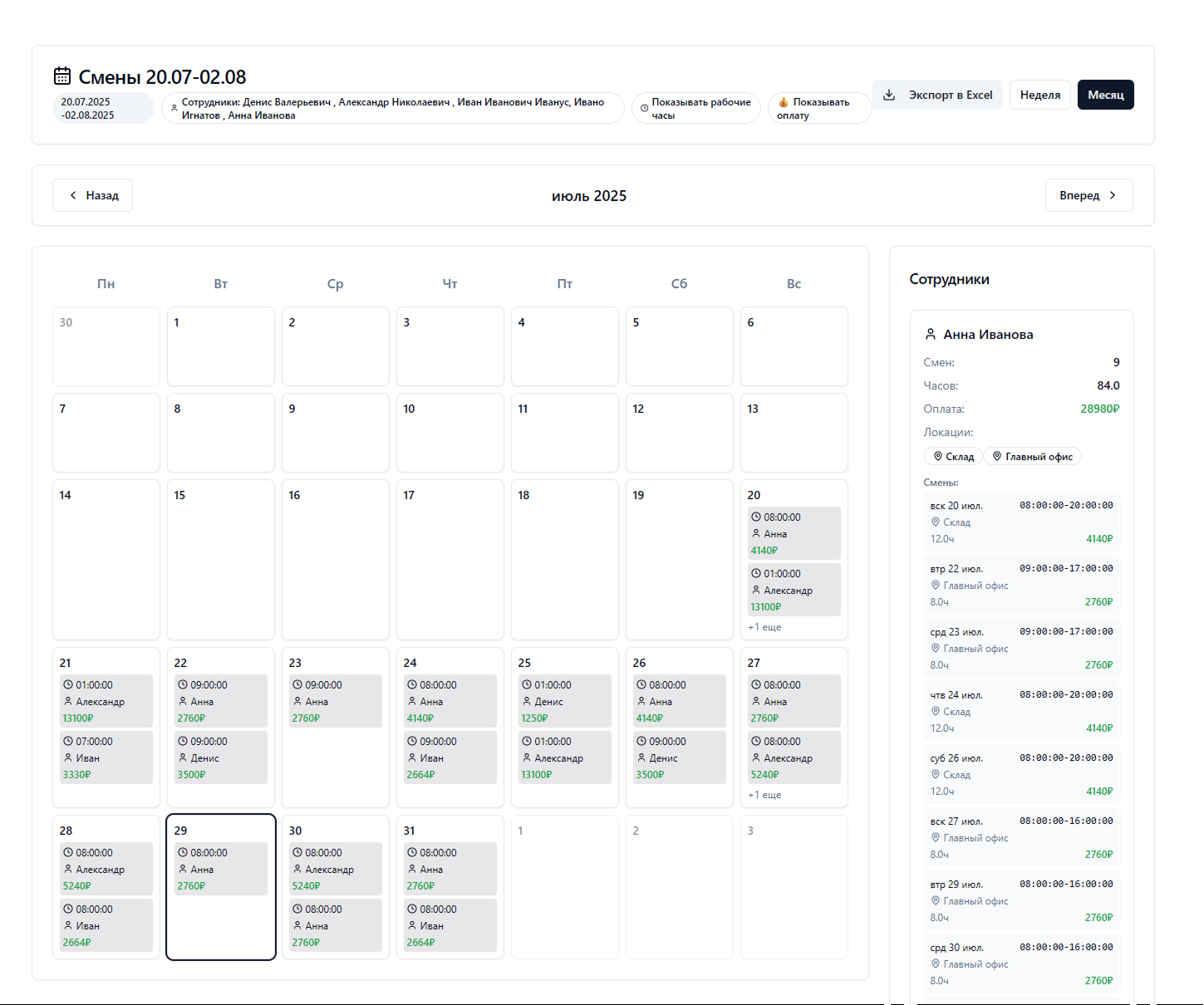
Publish open greeter, nursery, parking, tech, and outreach slots. Volunteers claim what fits; coordinators see coverage fill in real time.
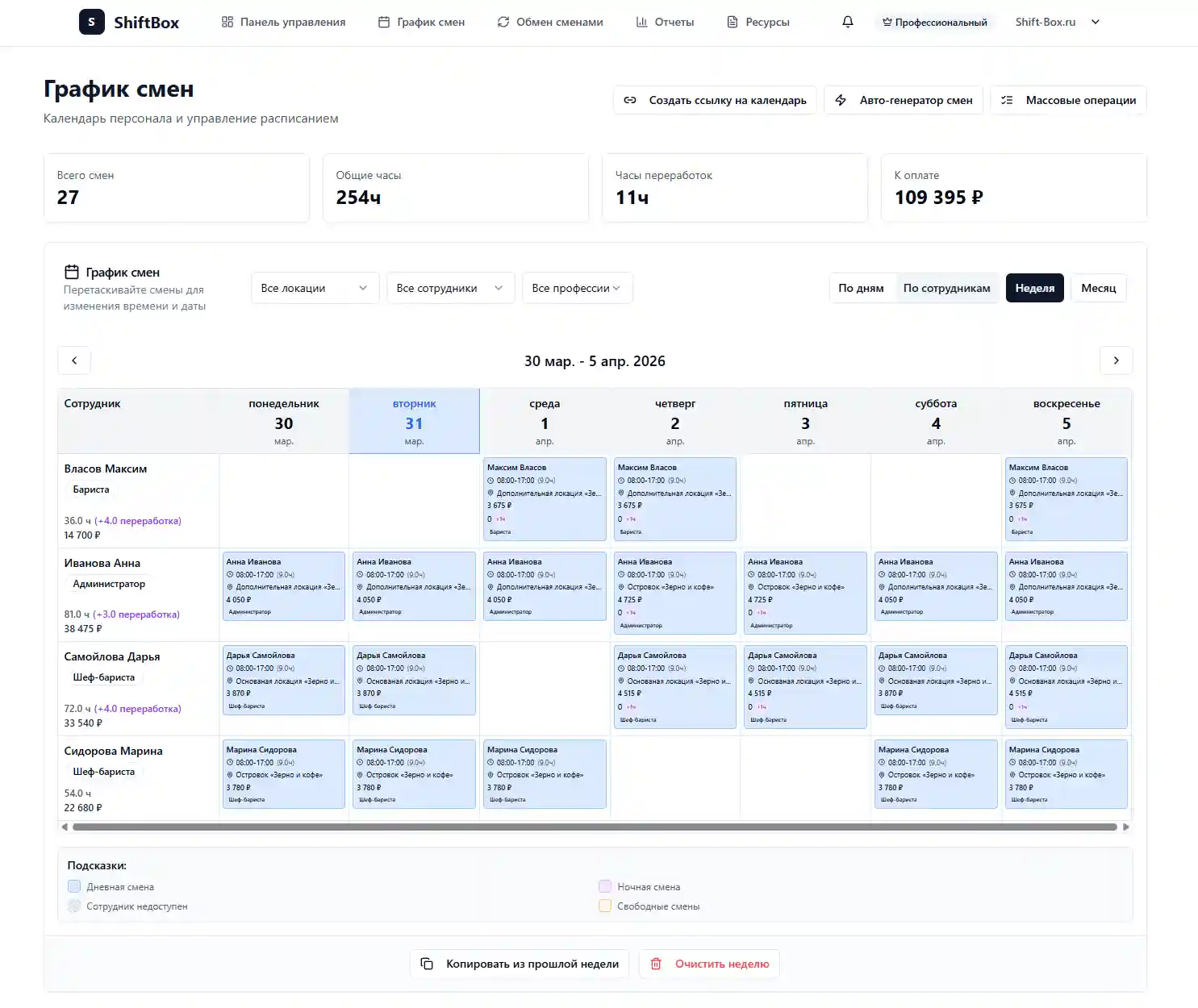
See worship, ushers, children’s ministry, and livestream together for each service time—so gaps show up before doors open.
Calendar, ministries, open slots, and volunteer access share one workflow—no Excel attachments, parallel chat truths, or “who has the latest file?”
Build shifts in a clear matrix calendar, assign people with drag-and-drop, and immediately see coverage gaps.
Actual hours, lateness, and overtime live in one place so managers are not reconciling spreadsheets at month-end.
Staff open a browser link, see their shifts, mark unavailability, and request swaps without a heavy onboarding flow.
When shifts change, people see the new plan in their workspace—managers do not re-explain every edit in side threads.
Each role sees what they need without turning one person into the full-time scheduling department
Gets a clearer picture of who is serving each week across ministries and programs—without chasing status updates from five group chats before Sunday.
Works with a live board: publishes open shifts, closes gaps, and lets volunteers self-signup without rebuilding a spreadsheet every week.
For paid part-time staff mixed with volunteers, hours and shift assignments sit in one system instead of a patchwork of sign-in sheets and side lists.
Volunteer teams need more than a printable template—they need a board that stays current when someone travels, a family gets sick, or Easter needs double the ushers and half the nursery team you planned in January.
"We have two services, six ministry areas, and one admin who works twenty hours a week. Greeters lived in a Google Sheet, nursery in a group chat, and tech had its own list on someone’s laptop. Volunteers stopped opening attachments. After ShiftBox, we sent one browser link: people sign up for open slots, team leads fix their own gaps, and I finally see Sunday coverage in one place before Saturday night panic."
Ministry schedules lived in separate files and chats, self-signup meant private messages to the coordinator, and last-minute changes never reached everyone who already saved last week’s plan.
Sunday teams, midweek volunteers, and special-event rosters live in one browser-accessible board that part-time admin staff and ministry leads can keep current without an app rollout.
The church or NGO stops treating scheduling as a hidden tax on the busiest volunteer and moves to a self-service board coordinators can maintain in minutes—not hours—each week.
Not only publish the schedule, but keep it live as availability changes through the week
A church or NGO roster rarely stays static for even a few days. A greeter travels for work, a nursery volunteer’s child gets sick, the worship team adds a musician for a special song, or a food bank needs three extra hands because a delivery arrived early. When the schedule lives in a spreadsheet attachment, every change depends on one coordinator finding time to edit, export, and resend—while volunteers continue working from the version they saved on Monday.
Volunteer organizations are not hotels or retail chains. You do not have a full-time scheduler, HR system, or mandatory app rollout. You have part-time admin staff, ministry leads who serve on nights and weekends, and helpers who appear when they can. ShiftBox fits that reality with a browser link volunteers open from email or a QR code in the fellowship hall—no app store, no device management, no “download this before you can see your shift.”
Sunday service teams are the clearest example. First service needs greeters, ushers, nursery workers, communion prep, and a livestream operator; second service repeats with a different rotation. Coordinators build templates for each block, assign team leads to their roles, and publish open slots for people who want to serve but were not on the original rotation. Self-signup turns “text me if you are free” into a visible board where volunteers claim shifts themselves and coordinators watch coverage fill in.
The same pattern works beyond Sunday morning. Youth group nights, weekday prayer meetings, community outreach, shelter meal programs, and crisis-line coverage all benefit from one place to see who is scheduled. NGOs especially mix occasional community volunteers with a small paid staff—browser access keeps the barrier low for people who are not on workplace email and will never install another application just to confirm they are on dish duty Thursday.
Because limited admin staff cannot babysit every ministry, delegation matters. A children’s ministry director manages nursery slots; a tech lead owns the livestream roster; the volunteer coordinator sees gaps across all of them without maintaining six separate files. When Christmas Eve needs triple staffing or a summer hiatus shrinks the rotation, you adjust once and republish—the link stays the same, the plan updates for everyone.
ShiftBox is not trying to replace your church management system or donor database. It solves the operational problem that burns out coordinators: keeping volunteer coverage visible, current, and easy to join. That is the difference between a roster that volunteers ignore and a board they actually use the night before they serve.
A self-signup board volunteers open in the browser—and coordinators can maintain without a second job.
Especially important for churches, faith communities, food banks, shelters, and NGOs where goodwill is abundant but admin time is not—and where asking everyone to install an app is simply not realistic.
Try it free and model a Sunday service board with self-signup greeter slots—share one browser link, no app install.
ShiftBox helps churches and volunteer organizations keep ministry rotations, Sunday service teams, and community program shifts in one browser-accessible board—so self-signup replaces chat chaos and limited admin staff can coordinate without spreadsheet fatigue.
Browser access, self-signup, Sunday teams, and light admin workflows
No. Volunteers open a browser link from email, text, or a QR code on a bulletin board—no app store account, no device policy, no onboarding call. That matters for churches where half the team uses older phones, shared family devices, or simply will not install another app. The schedule stays readable on mobile and desktop from the same link coordinators already share.
Yes. Coordinators publish open slots for greeters, nursery, parking, tech, or food-bank shifts; volunteers claim the times that fit their week. Self-signup reduces the back-and-forth in ministry group chats and stops the coordinator from being the only person who knows who agreed to cover. When someone drops out, the slot can reopen so another volunteer picks it up without a phone tree.
Build templates for each service time—first service, second service, midweek prayer—and assign ministry roles inside each block: worship, ushers, children’s ministry, livestream, hospitality. Rotations can repeat weekly or alternate teams on a pattern coordinators control. When Easter, Christmas, or a special event changes the lineup, you adjust once and republish so every team sees the same plan.
ShiftBox is designed for organizations that cannot hire a scheduling administrator. One coordinator can own the master calendar while greeter, nursery, and tech leads manage their own role groups. Leads see coverage gaps for their ministry without editing unrelated teams. That splits the work across volunteers who already lead, instead of loading everything on a single overworked admin.
Yes. Food banks, crisis lines, community kitchens, and shelter volunteer programs use the same pattern: irregular availability, part-time coordinators, and people who show up when they can. You can model weekday distribution shifts, weekend outreach, or on-call coverage blocks. Browser access keeps the barrier low for community volunteers who are not on staff email and will not install workplace software.
Mark the shift open again or assign a substitute directly in the roster. Because volunteers check the same link—not a screenshot from last week’s chat—the updated plan is visible immediately. Coordinators can message the team from their normal channels, but the schedule itself stops being the thing everyone argues about on Saturday night.
Pages that help contrast volunteer ministry workflows with other shift patterns
When outreach hours, event teams, and program days change week to week instead of following a fixed Sunday template.
Contrast volunteer Sunday teams with 24/7 commercial coverage—shelters, crisis lines, and overnight ops that never sleep.
See how full-time hospitality teams staff housekeeping and front desk around the clock—a different rhythm from volunteer ministry boards.