1
Problem Morning coverage gaps
The store should open on time, but the roster still has holes.
Promos and sick days punish static spreadsheets fastest.
The store should open on time, but the roster still has holes.
Managers, admins, and staff follow different versions in parallel.
Coverage agreed in chat never returns to the hour trail.
Without a long implementation project or a quarter-long rollout
Teams usually import one store or one shift block first, then scale the process across the network.
Add stores, roles, and people.
Build the base roster by site and week.
Publish shifts to staff in their portal.
Record swaps and changes without manual chat threads.
Review hours and prepare the period report.
The same retail process feels very different when Excel is no longer at the center
Retail moves fast: sick days, days off, traffic peaks, cross-store coverage. The sheet cannot keep up.
Leads and admins see current shifts, the team, and hours per site without constant manual reconciliation.
Not abstract automation—concrete control points for the store lead and admin
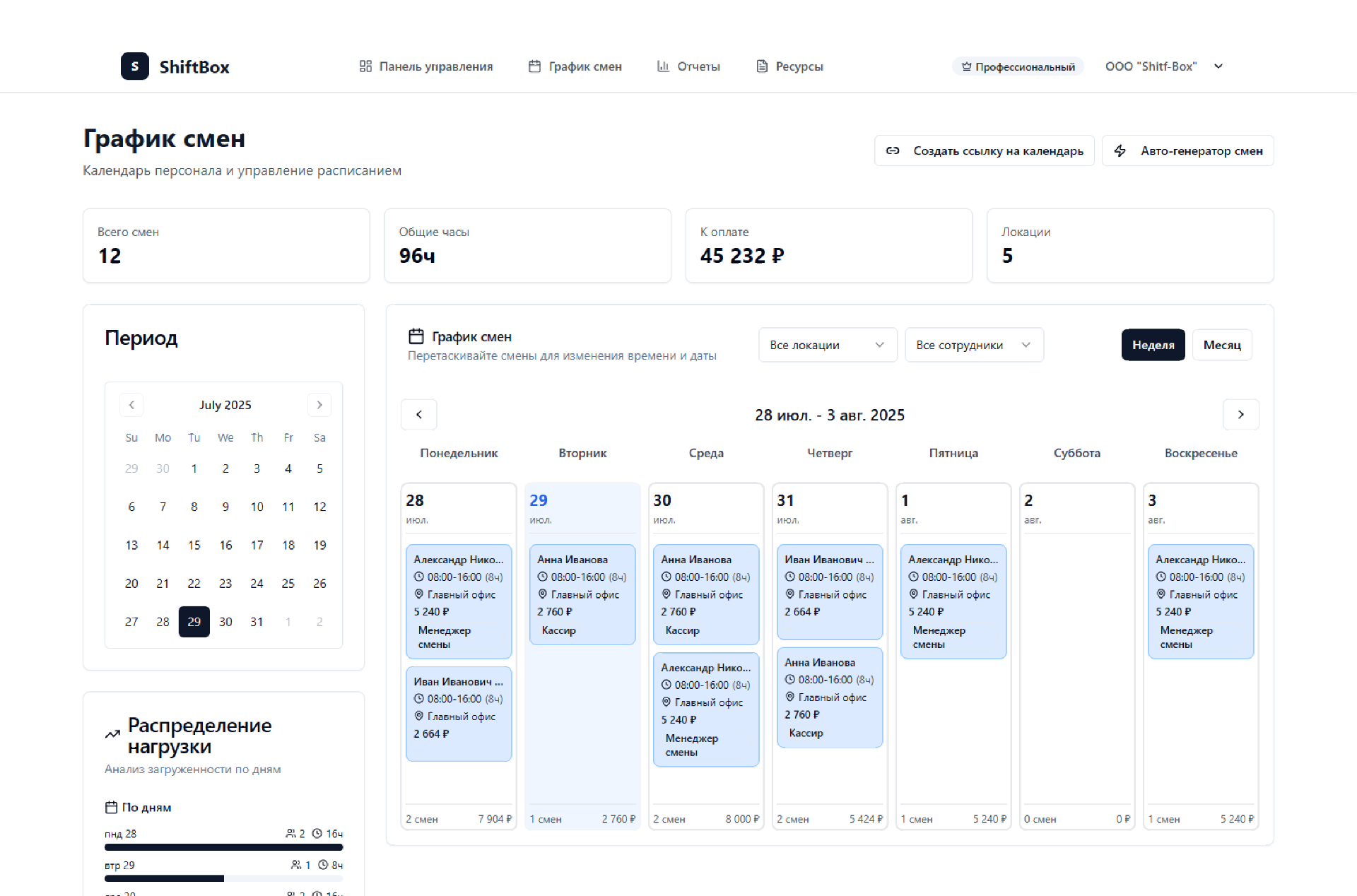
See who works at each store, where coverage is thin, and where to move someone.
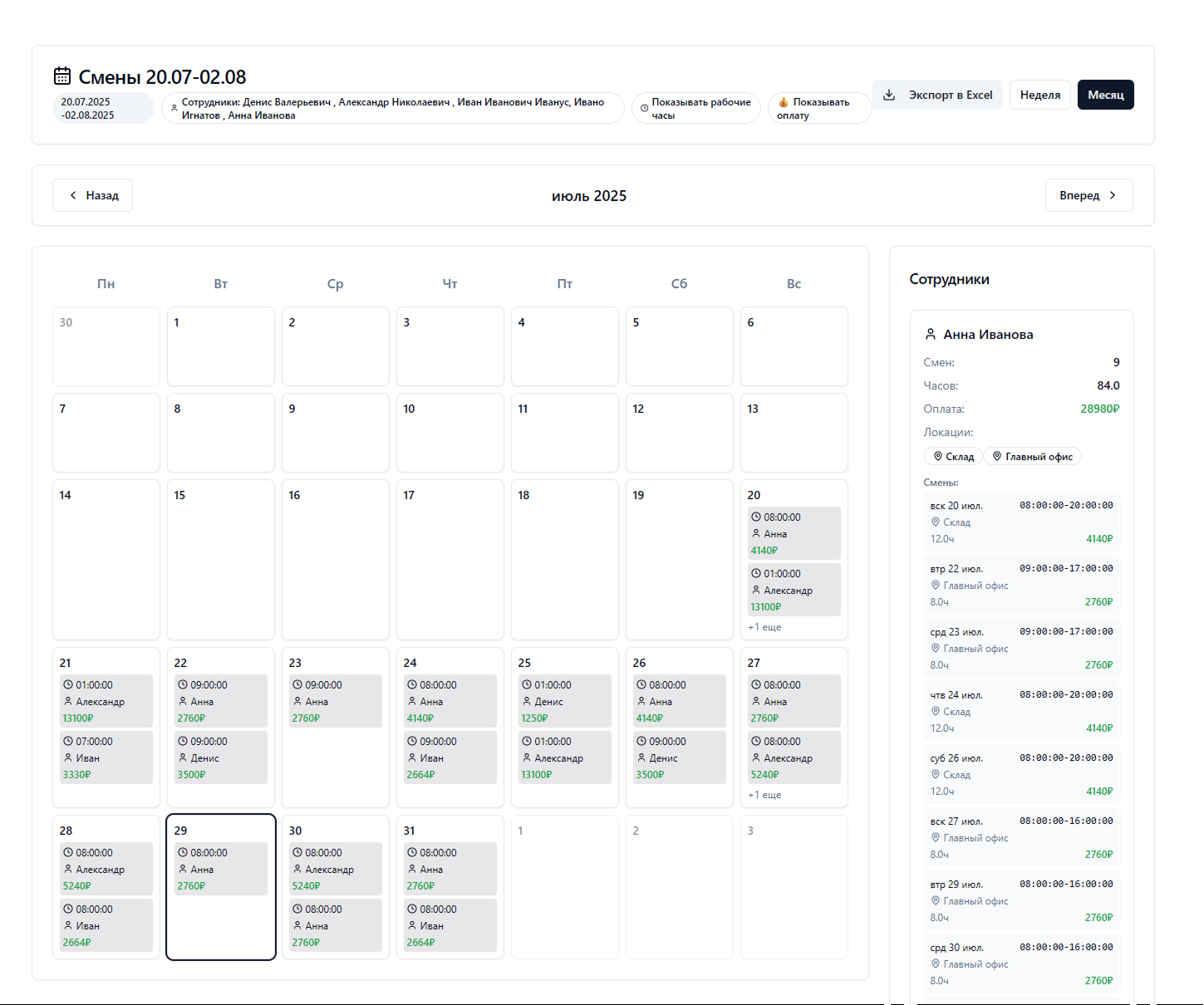
Shifts, overtime, and days off sit in one system instead of a patchwork of tables.
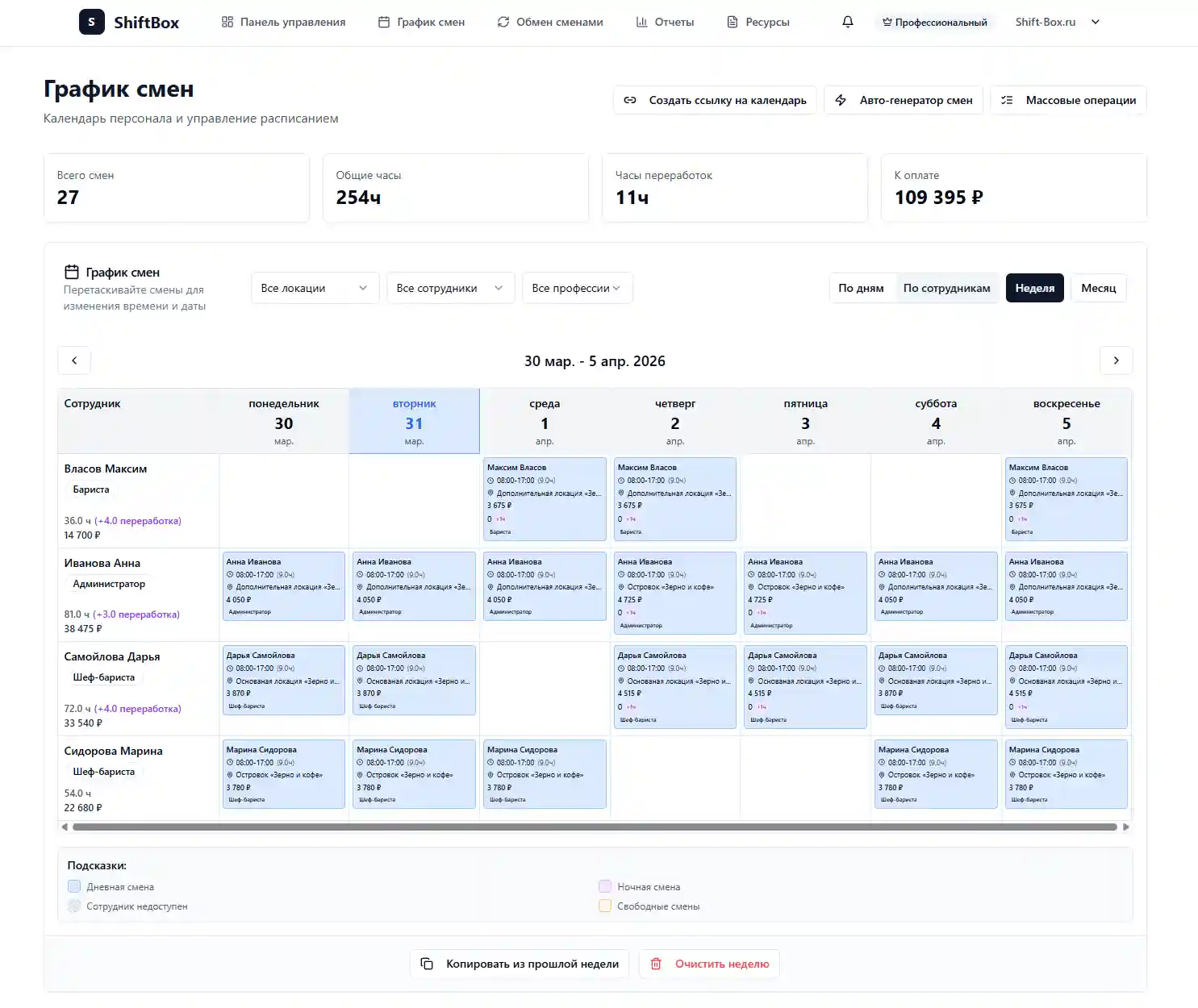
Easier to read seller load, spot weak sites, and prepare payout data.
Calendar, people, hours, coverage, and reports share one workflow—no Excel, chat threads, and manual roll-ups.
Build shifts in a clear matrix calendar, assign people with drag-and-drop, and immediately see coverage gaps.
Actual hours, lateness, and overtime live in one place so managers are not reconciling spreadsheets at month-end.
Staff open a browser link, see their shifts, mark unavailability, and request swaps without a heavy onboarding flow.
When shifts change, people see the new plan in their workspace—managers do not re-explain every edit in side threads.
Each role sees the slice of retail operations it needs to run the network
Gets a clearer picture of stores, employee load, and payouts without manual status collection.
Works with a live roster: adds shifts, closes gaps, and publishes changes without chat chaos.
Gets cleaner hour and shift data instead of assembling it from several files.
Industry teams need more than a neat template—they need to keep the process current when swaps, sick days, and people changes hit.
"We run six stores. Shifts used to diverge between admins, and swaps only surfaced at payroll. After ShiftBox, roster, changes, and hours stopped living apart: the coordinator works in one window, and the crew sees a ready, current shift plan."
People and site changes had to be confirmed by hand, and the final hour picture came from several sources.
Sites, shifts, swaps, and actual time live in one process that is easier to keep current.
The team stops fighting operational fires in spreadsheets and moves to more predictable control of roster, hours, and swaps.
Not only build the schedule, but keep it live as changes arrive
A store roster rarely stays static for even a week. Someone is sick, a day off moves, traffic spikes at one site while another needs fewer hours. When everything lives in a sheet, every change becomes a manual chain of confirmations.
ShiftBox gathers shifts, actual hours, and swaps in one place so the lead can build the plan and keep it current without constant drift between people, chats, and files.
A more predictable store roster and less daily manual work on changes.
Especially important for networks that must react fast to staffing gaps, load peaks, and cross-store coverage.
Try it free and model two stores with a cross-location swap.
ShiftBox helps retail teams keep store shifts, substitutions, and hours in one workflow so coverage is easier to guarantee and payroll prep is less painful.
Coverage, swaps, and payroll prep for store networks
Yes: model templates per location while still seeing network-wide coverage.
The calendar highlights empty coverage windows so managers can react before customers arrive.
Yes: record cross-store shifts so hours follow the person correctly.
When hours sit next to published shifts, extra load is easier to see during the month.
Pages that help close neighboring scenarios for stores and shift teams
When you need to catch extra hours early instead of reconciling at month-end.
For stores with uneven daily load and different shift windows.
When you need clearer payout math from hours and shifts.
When fulfillment peaks and cross-dock handoffs outgrow store-level rosters.