1
Problem Covers drift during service
The dining room and pass do not wait for the manager to finish editing a sheet.
Peaks, no-shows, and last-minute changes punish spreadsheet workflows.
The dining room and pass do not wait for the manager to finish editing a sheet.
The official file is outdated while everyone follows voice messages.
Extra coverage is agreed verbally and missed in totals.
Without a long project or stopping daily operations
Teams usually import roles and base shifts first, publish to the crew, then run all swaps and hours in one process.
Add the venue, roles, and people.
Build base shifts for floor, kitchen, and bar.
Publish the current roster to the team.
Record swaps and changes in the system.
Review hours and prepare payout data.
The system does not remove restaurant pace—it removes most manual work around it
A restaurant shift changes faster than a spreadsheet. The manager is always catching up.
The manager can keep the roster live without losing detail between floor, kitchen, and bar.
Useful for daily manager work and final hour control
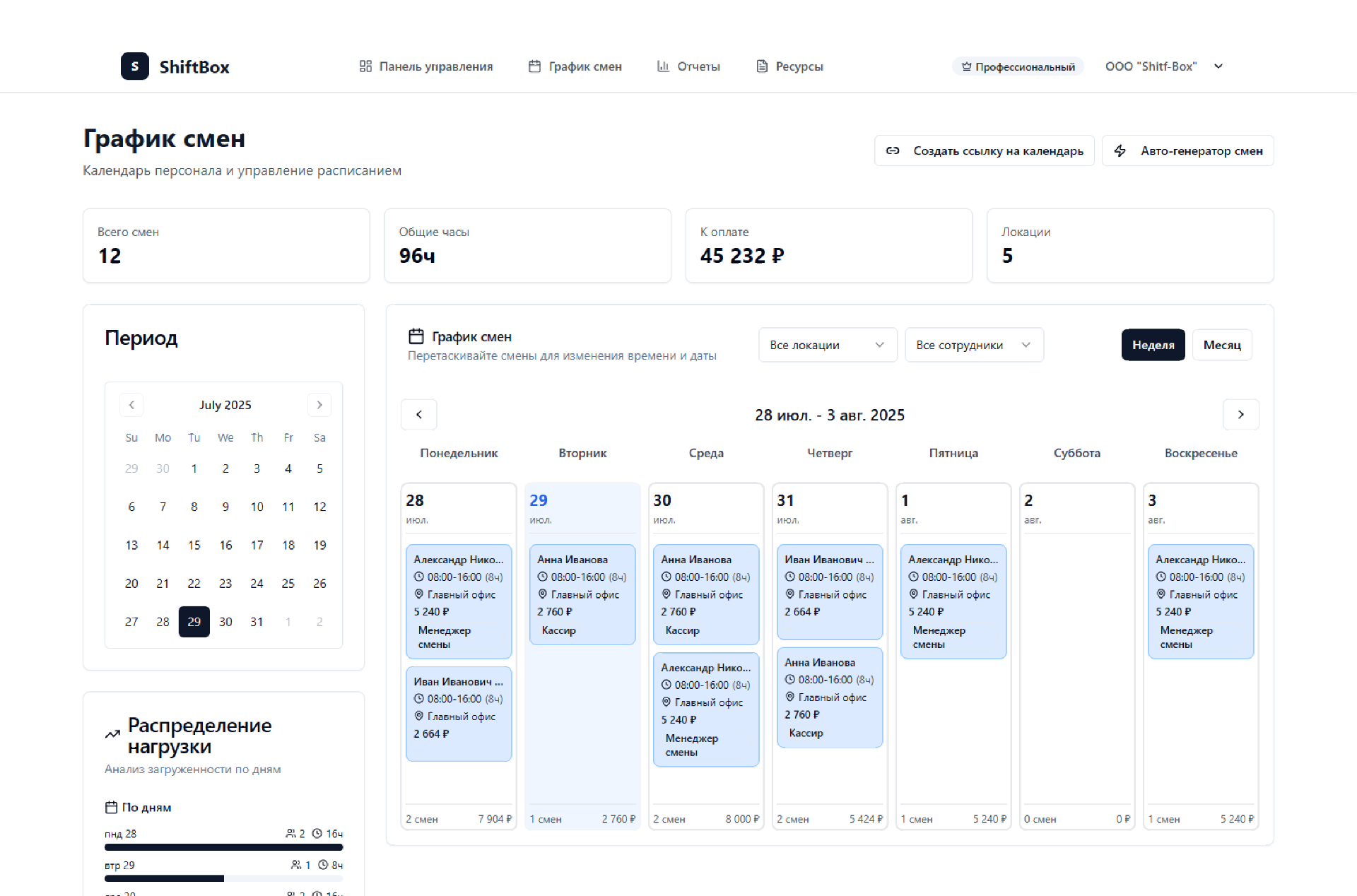
View shifts by floor, kitchen, bar, and site without losing the network picture.
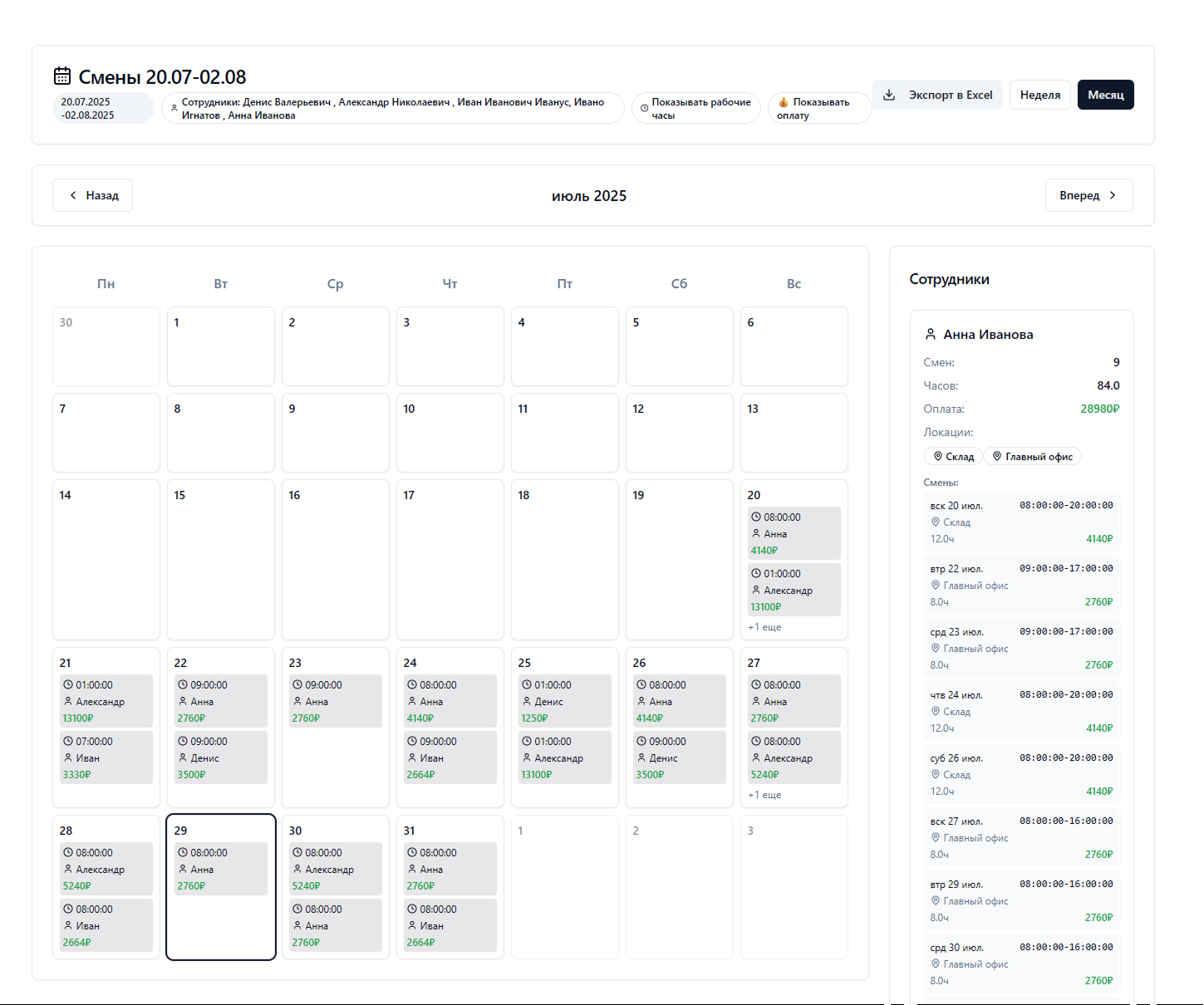
When someone changes a shift, it updates in one place—no extra manual reconciliation.
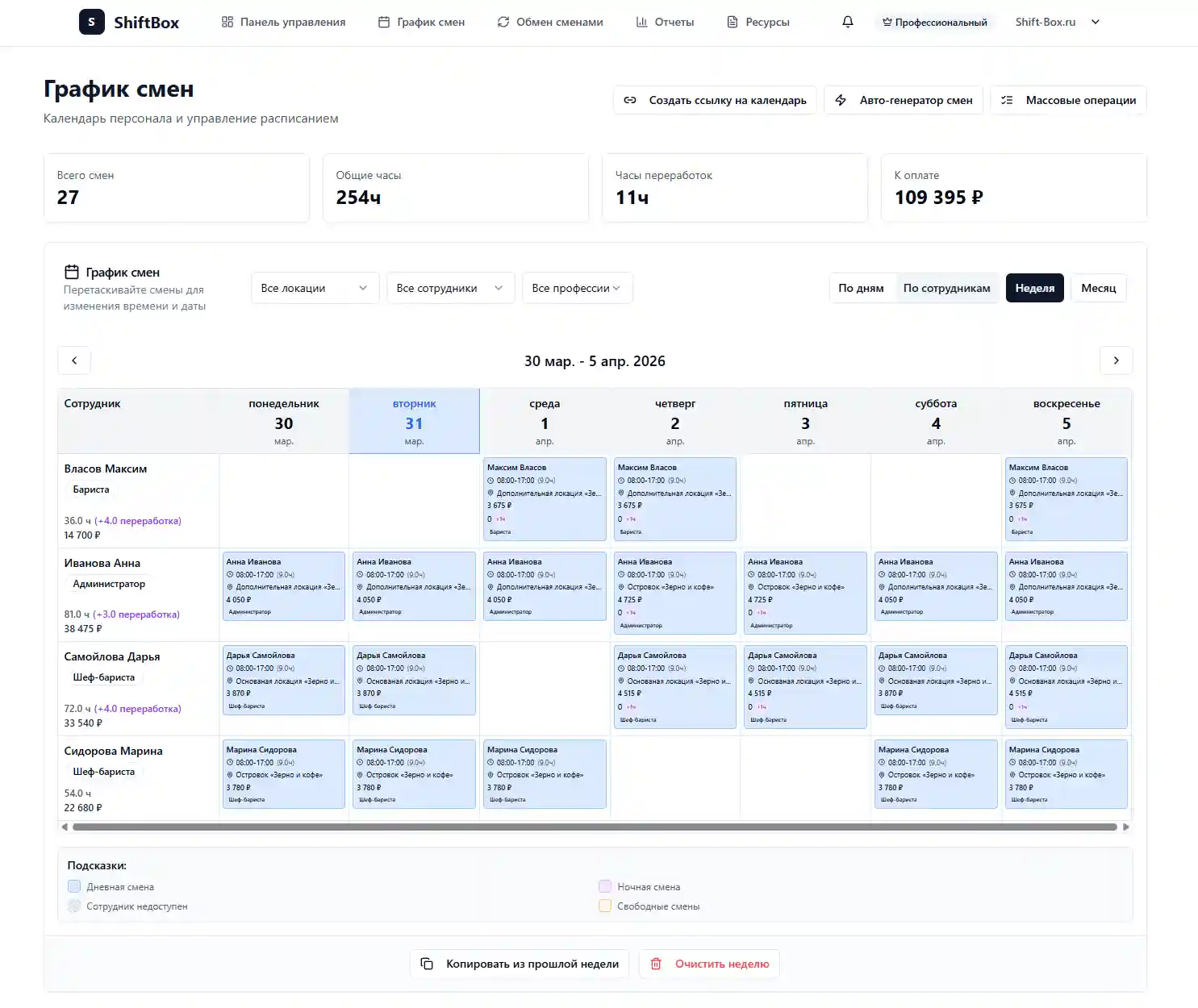
Easier to see overtime and prepare worked-time data for payout.
Calendar, people, hours, coverage, and reports share one workflow—no Excel, chat threads, and manual roll-ups.
Build shifts in a clear matrix calendar, assign people with drag-and-drop, and immediately see coverage gaps.
Actual hours, lateness, and overtime live in one place so managers are not reconciling spreadsheets at month-end.
Staff open a browser link, see their shifts, mark unavailability, and request swaps without a heavy onboarding flow.
When shifts change, people see the new plan in their workspace—managers do not re-explain every edit in side threads.
Each role gets its benefit, but everyone works in one loop—not scattered files.
Sees a clearer picture of sites, people, and load without constant status requests to managers.
Works with a live roster daily: builds shifts, applies changes, and publishes without chat chaos.
Gets a noticeably cleaner base for timesheets, hour checks, and final employee calculation.
Hospitality teams need more than a neat template—they need to keep the process current when swaps, sick days, and people changes hit.
"We run two venues. Evening swaps and service peaks used to be held together manually across kitchen, floor, and bar. After ShiftBox, roster, changes, and hours stopped living apart: the coordinator works in one window, and the crew sees a ready, current shift plan."
People and site changes had to be confirmed by hand, and the final hour picture came from several sources.
Sites, shifts, swaps, and actual time live in one process that is easier to keep current.
The team stops fighting operational fires in spreadsheets and moves to more predictable control of roster, hours, and swaps.
When roles, sites, or units multiply, the cost of manual error grows quickly.
A restaurant roster rarely stays static for even a few days. One shift change, swap, or load spike at a site, and the manual plan drifts across people, chats, and file versions.
ShiftBox gathers roles, sites, swaps, and hours in one place so you get a more predictable process that is easier to control every service—not just a static schedule.
Less manual confusion, faster reaction to changes, and a clearer picture of people and load.
Especially where the roster directly affects revenue, service quality, opening hours, or operating discipline.
Try it free and model a week for FOH and BOH together.
ShiftBox helps restaurants keep FOH and BOH shifts, swaps, and hours in one workflow so busy nights are easier to staff and easier to close financially.
Covers, swaps, and hours for hospitality teams
Yes: you can structure shifts by role and station so coverage matches how the house runs.
You republish from one place so the floor sees the latest shift, not a screenshot from chat.
Yes. Personal views focus people on their own upcoming shifts and changes.
When hours sit next to the live schedule, extra load is easier to notice during the week.
Topics shift-based HoReCa teams often need next