1
Problem One absence breaks the line
There is no bench to hide a gap during morning rush.
Thin coverage means every change is visible to guests immediately.
There is no bench to hide a gap during morning rush.
The spreadsheet stops being true by Tuesday.
People stay “just a bit longer” and it never returns to the roster.
Without heavy implementation or extra bureaucracy
Teams bring roles, people, and base shifts in first, then run substitutions and actual attendance in one process.
Add sites, roles, and employees.
Build the base roster for shifts and open/close coverage.
Publish shifts to the crew in their portal.
Run substitutions, hours, and changes in the system from there.
Hospitality ops calm down when sites, roles, and changes sit in one place
Trouble usually starts when you have to rebuild the plan fast across baristas, counter staff, and site leads—not on day one.
Roster, changes, and actual hours sit in one process so the café lead decides faster and does not lose crew detail.
Practical control points for every day—not theoretical automation
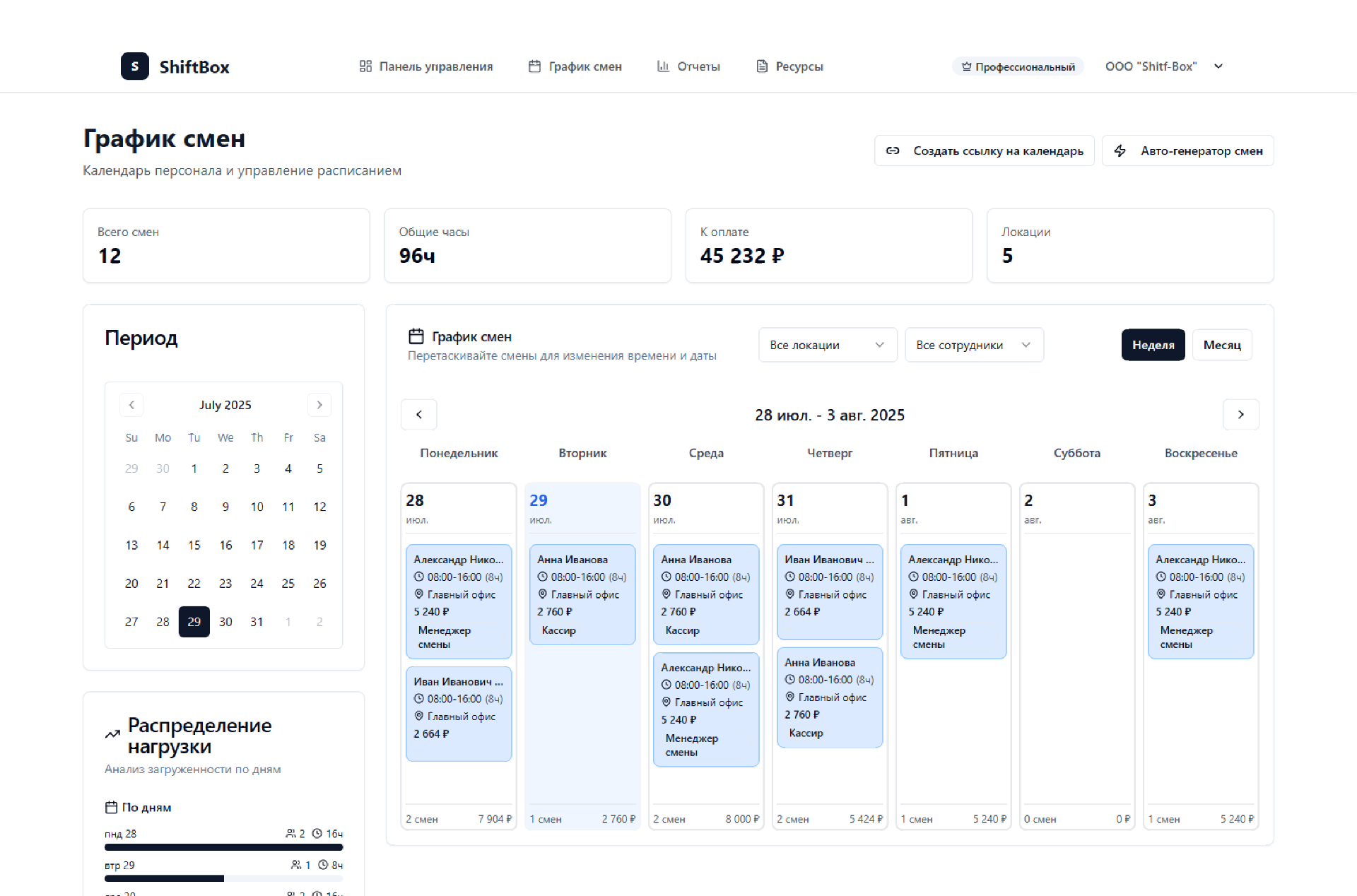
See who covers the early shift, where the site is uncovered, and how to move people without manual panic.
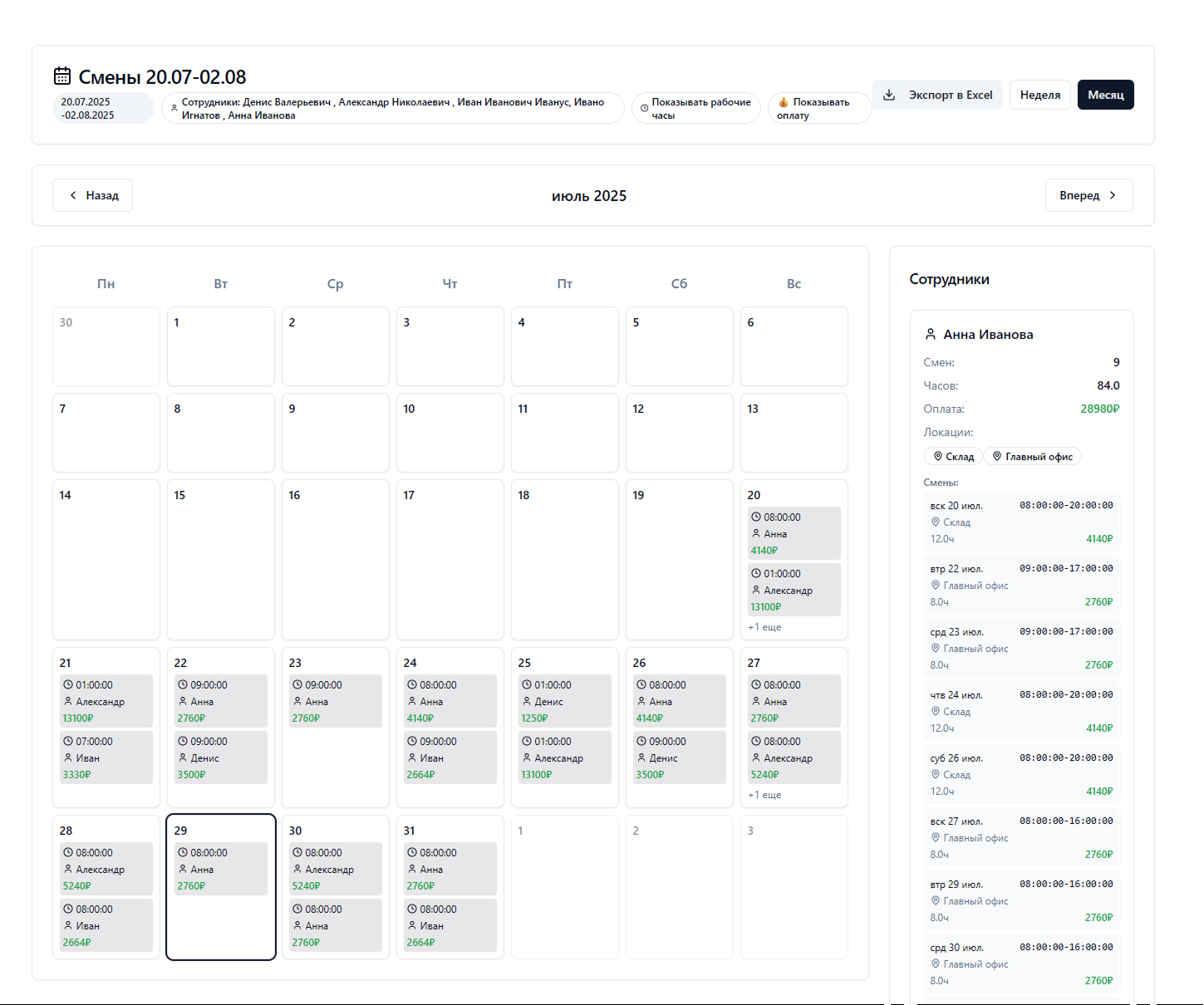
Moves and swaps land in the shared shift and hour picture instead of disappearing in chat.
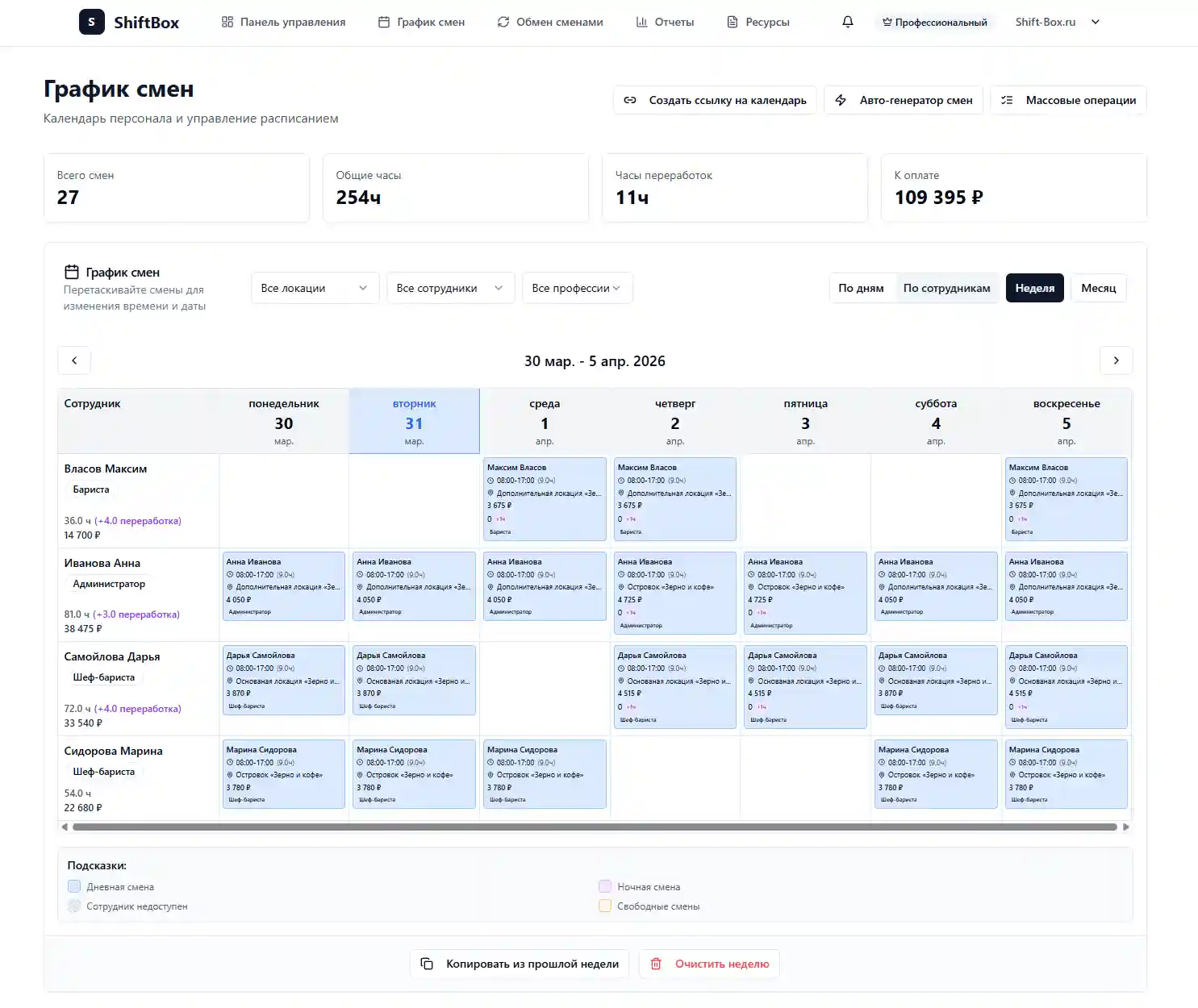
Easier hour data prep and a clearer view of where the crew is actually overloaded.
Calendar, people, hours, swaps, and reports share one workflow—no Excel, chat threads, and manual roll-ups.
Build shifts in a clear matrix calendar, assign people with drag-and-drop, and immediately see coverage gaps.
Actual hours, lateness, and overtime live in one place so managers are not reconciling spreadsheets at month-end.
Staff open a browser link, see their shifts, mark unavailability, and request swaps without a heavy onboarding flow.
When shifts change, people see the new plan in their workspace—managers do not re-explain every edit in side threads.
Each role gets its benefit, but everyone works in one contour—not scattered files.
Sees a clearer picture of sites, people, and load without constantly asking managers for summaries.
Works with a live roster every day: builds shifts, applies changes, and publishes without chat chaos.
Gets a much cleaner base for timesheets, hour checks, and final employee calculations.
Industry teams need more than a neat template—they need to keep the process current when swaps, sick days, and people changes hit.
"We run four cafés. We used to close openings through chat and reconcile barista swap hours by hand. After ShiftBox, roster, changes, and hours stopped living apart: the coordinator works in one window, and the crew sees a ready, current shift plan."
People and site changes had to be confirmed by hand, and the final hour picture came from several sources.
Sites, shifts, swaps, and actual time live in one process that is easier to keep current.
The team stops fighting operational fires in spreadsheets and moves to more predictable control of roster, hours, and swaps.
A missed shift hits service immediately when the site runs at full pace
When barista schedules live in spreadsheets, the manager spends time on confirmations: who is definitely in, who can cover opening, who is already over hours. That shows up fast in cafés and bakeries with short, floating, or overlapping shifts.
ShiftBox gathers that process in one window. You see the plan, changes, and actual hours without jumping between chats, tables, and notes.
A tighter crew roster and fewer opening surprises.
Especially useful for high-turnover sites, frequent substitutions, and mixed shift lengths.
Model a peak week and see swaps plus hours in one flow.
ShiftBox helps small hospitality crews publish shifts, absorb changes, and keep hours visible so owners are not reconciling the week from memory.
Small teams, volatile demand, frequent changes
It is built for teams where change frequency matters more than headcount: one missed shift is a big part of the day.
Yes. A browser link on a phone is enough for most daily use.
You can model shorter windows and floating coverage instead of forcing a rigid template.
When everyone covers gaps, hours creep fast—keeping totals next to the schedule surfaces that early.
Scenarios that deepen shift-team management