1
Problem The "weekend handoff" gap
Everyone assumes someone else confirmed Saturday coverage until the line rings.
Familiar cadences hide edge cases at the week boundary
Everyone assumes someone else confirmed Saturday coverage until the line rings.
A one-hour slip each day becomes a payroll conversation nobody saw coming.
Short off-periods disappear when training and call-ins borrow them.
HR has one sheet, operations another, crews a photo in chat.
Without a long rollout project or multi-week implementation
Teams usually import workdays and roles first, add statuses, then run changes in one process from there.
Add people and team roles.
Build the base 5/2 calendar.
Record leave, sick days, and other statuses.
Run changes and hours inside the same tool from there.
Even a familiar office pattern turns chaotic when changes are not recorded in one place
The issue is rarely the template—it is the constant churn around it: statuses, leave, moves, and actual load.
Roster, statuses, and hours sit together, so the lead sees a real picture of people and load.
Not abstract automation—concrete control points every day.
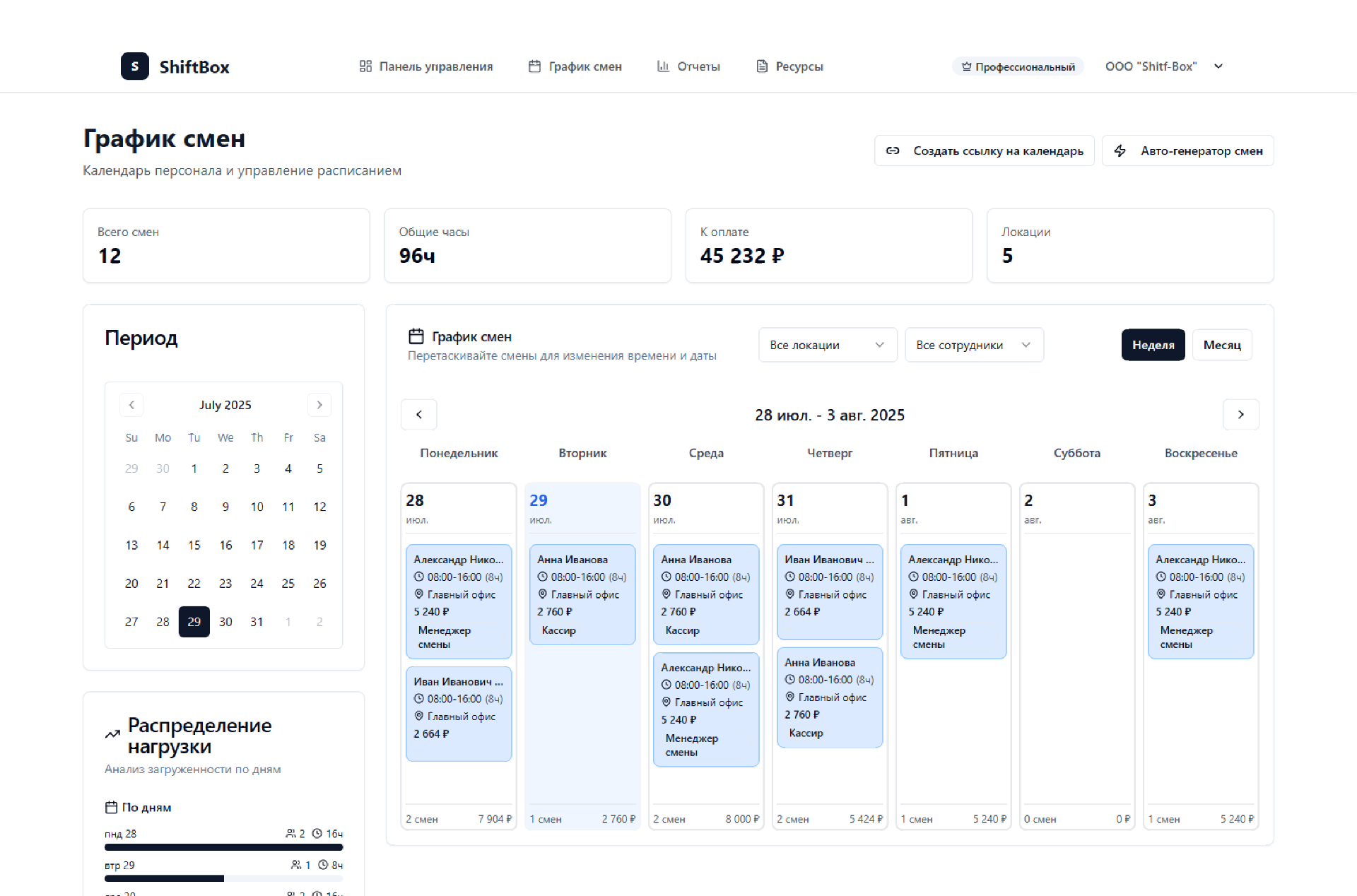
5/2 no longer lives apart from leave, sick days, and moves: everyone sees the same current shift picture.
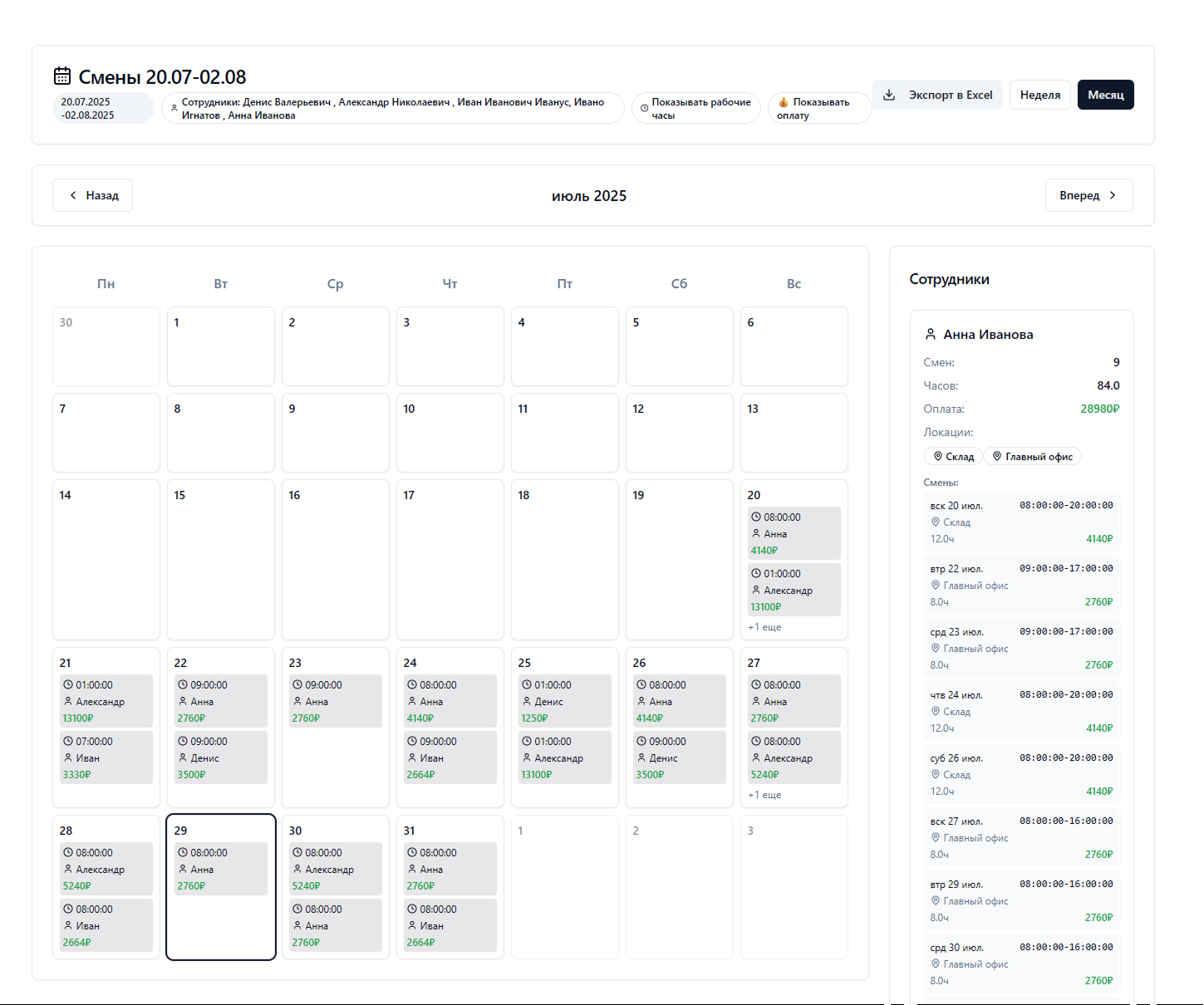
Hours per person, coverage swaps, and overload sit together so leads can decide before period close—not after.
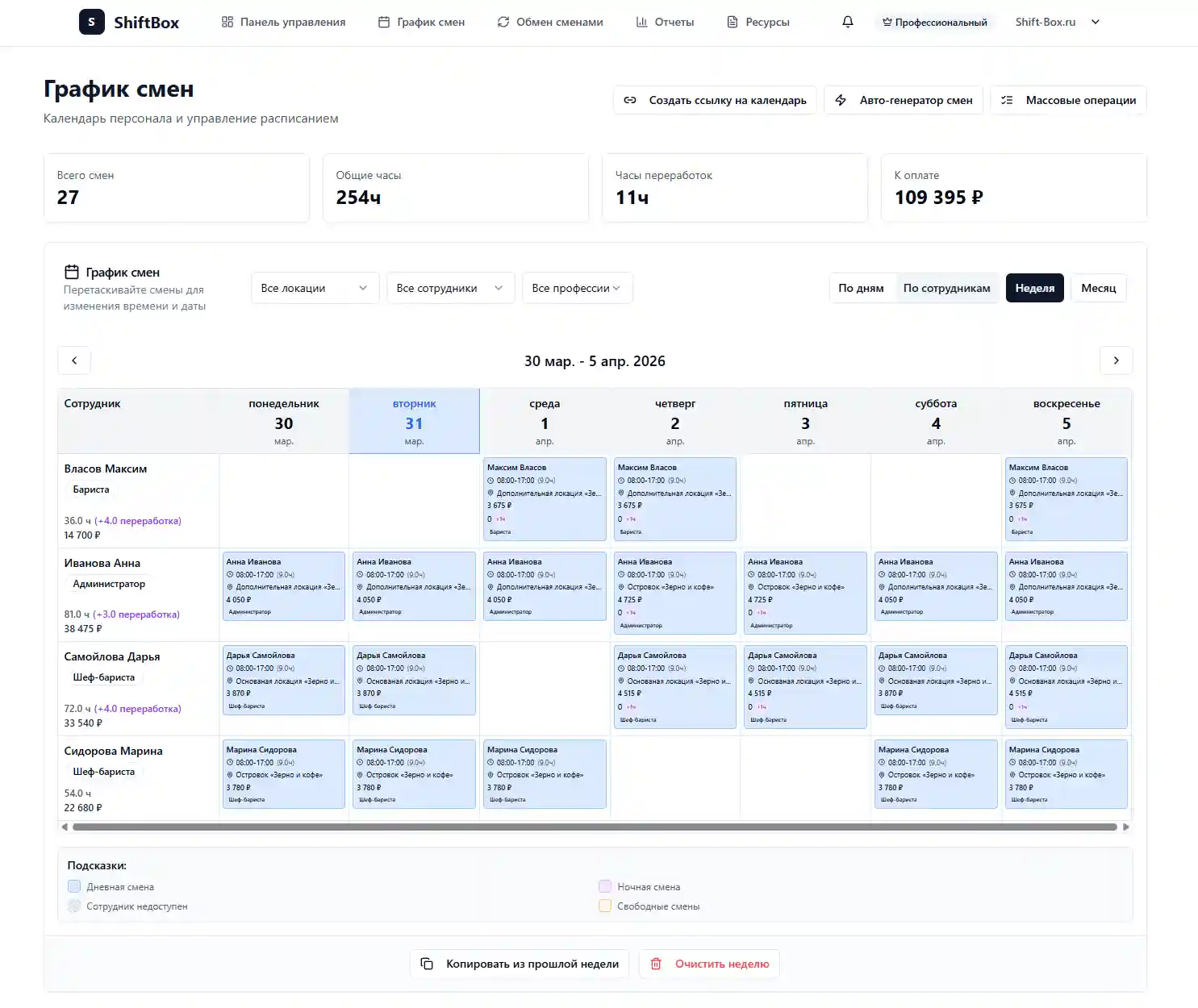
After publish, staff open the latest plan in their portal—no new file after every edit.
Calendar, people, hours, coverage, and reports share one workflow—no Excel, chat threads, and manual roll-ups.
Build shifts in a clear matrix calendar, assign people with drag-and-drop, and immediately see coverage gaps.
Actual hours, lateness, and overtime live in one place so managers are not reconciling spreadsheets at month-end.
Staff open a browser link, see their shifts, mark unavailability, and request swaps without a heavy onboarding flow.
When shifts change, people see the new plan in their workspace—managers do not re-explain every edit in side threads.
On a live roster, each role needs a different slice of the same truth.
Sees people, shifts, and load without waiting for a manual end-of-period pack.
Works in one place: builds shifts, edits the board, and publishes without endless threads and file resends.
Gets a cleaner base for timesheets, hour checks, and payout prep—not scattered sources.
5/2 teams rarely break on day one—they break once real edits pile up. That is when one shared process starts saving time.
"We are an office and operations team of twenty. After leave and swaps nobody could quickly see real load or actual days. Now schedule, changes, and hours live in ShiftBox: one calendar for the manager, one published view for the crew."
Every fix meant a new sheet, a people-by-people check, and manual hour reconciliation at period end.
Template, exceptions, and shift facts stay in one process that survives each swap.
The crew stops rebuilding 5/2 by hand after every edit and shares one current picture of people, hours, and shifts.
When schedule, statuses, and hours sit together, running the team is noticeably easier
Even a standard 5/2 pattern stops feeling simple once leave, sick days, swaps, and uneven load per person enter the picture.
ShiftBox gathers workdays, changes, and hours in one process so the lead keeps a current picture without constant manual reconciliation.
Clearer team load and less manual confusion around statuses and workdays.
Especially useful for office and frontline teams on a typical 5/2 pattern with frequent in-cycle changes.
Start free and publish a five-day plan people can trust on phones and desktops alike.
Tell us if you run staggered 5/2 teams—we can show that layout in a guided demo.
ShiftBox keeps five-day operations from quietly splitting across tools—publish once, handle the weekend edges, and keep hours tied to the shifts that earned them.
Longer weekday stacks still need disciplined change control
Yes—ShiftBox is for any repeating duty pattern. You publish the five-day expectation, then manage swaps, partial days, and leave without forking files.
Make the Sat/Sun transition explicit in the published view so substitutions inherit the same framing as weekday shifts.
Hours sit beside the roster, so you can intervene before the two-day reset is already spent covering gaps.
They use their personal link; it reflects the latest publish whenever planners adjust the board.
Related scenarios for load and hour control