1
Problem Plans are built on outdated staffing assumptions
The spreadsheet model never catches up to call-outs and swaps.
Forecasts assume stable staffing; operations lives in daily exceptions.
The spreadsheet model never catches up to call-outs and swaps.
Variance reviews start as detective work, not decisions.
You only rebalance after the expensive weeks already happened.
Build the foundation first, then decide on live data
Teams usually import current rules and shifts, then see plan, actuals, and variance in one workflow—not scattered sources.
Add people, roles, rates, or rules that matter for your scenario.
Move the current roster and base parameters into one system.
Start seeing the planned picture per person and load before final reconciliation.
Record actual hours and decisions inside the same process.
The payroll budget problem is rarely the formula—it is noticing spend too late
You build the roster first, then learn what it will actually cost.
The lead can see how the roster affects labor cost and adjust it before the period starts.
Less arguing about numbers, faster decisions for the team.
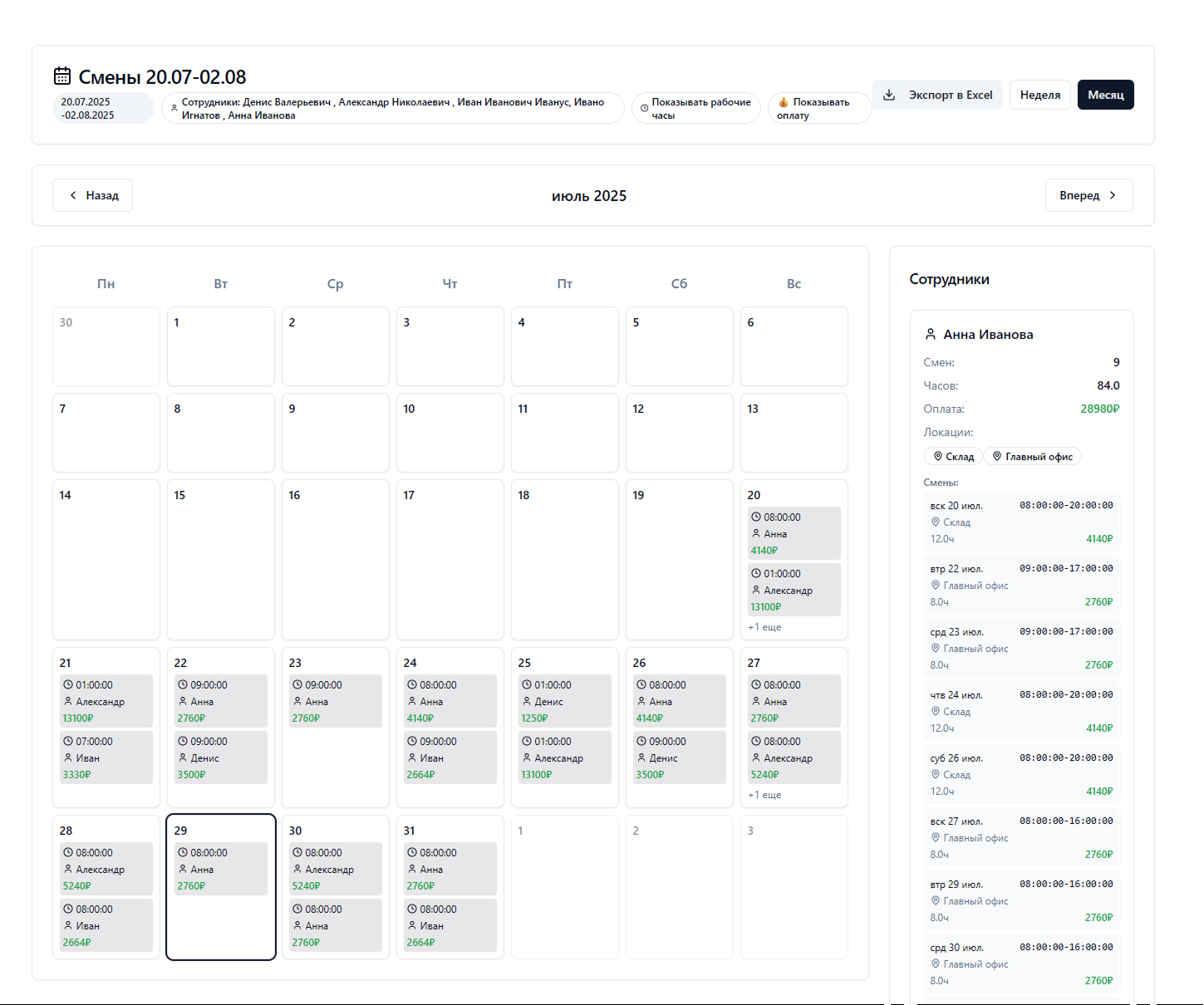
Plan, actuals, and people context sit together, so labor budget planning does not start with hunting for the right data version.
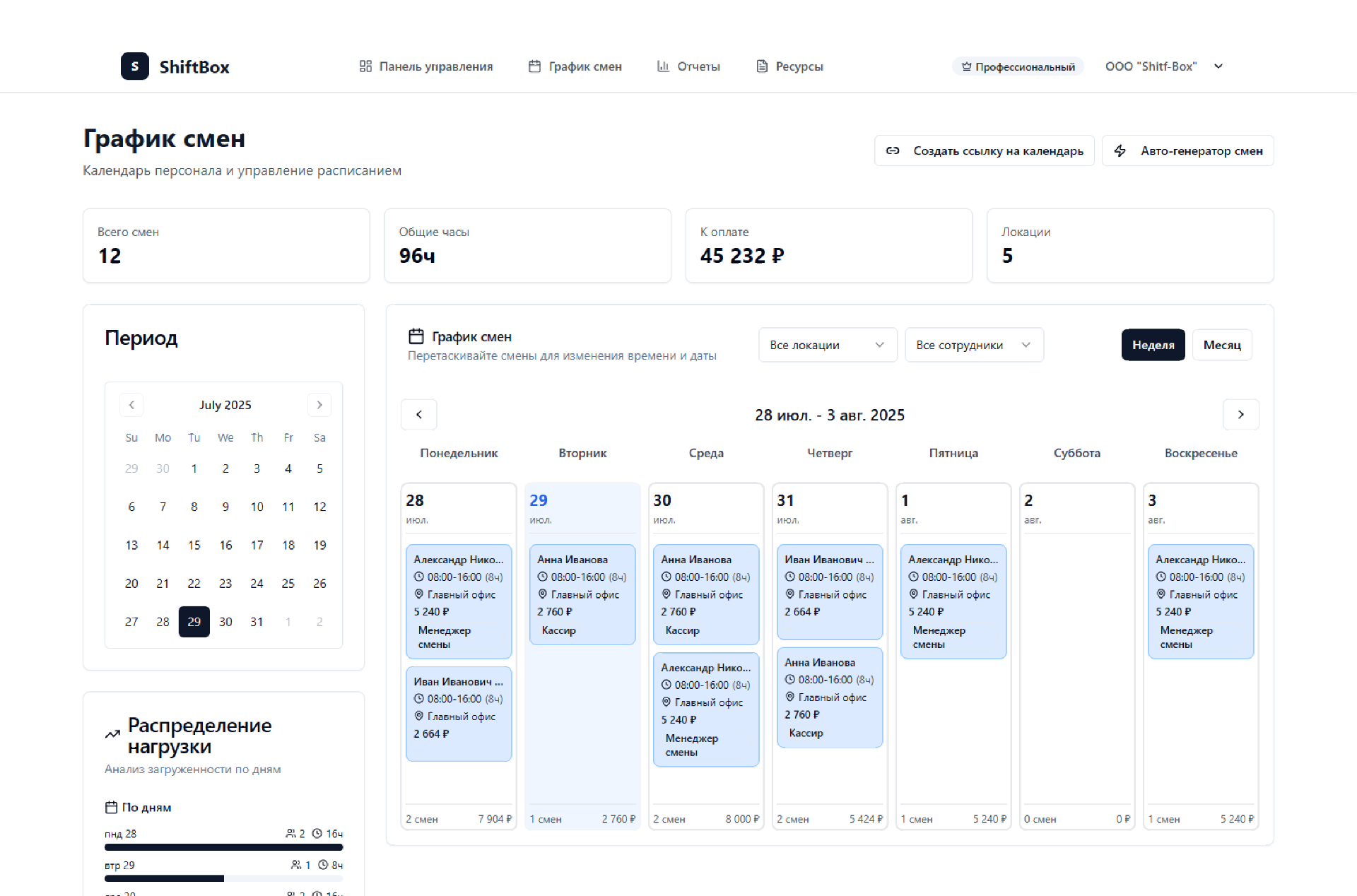
Easier to spot overload, norm drift, or costly shift patterns before they become a period-end problem.
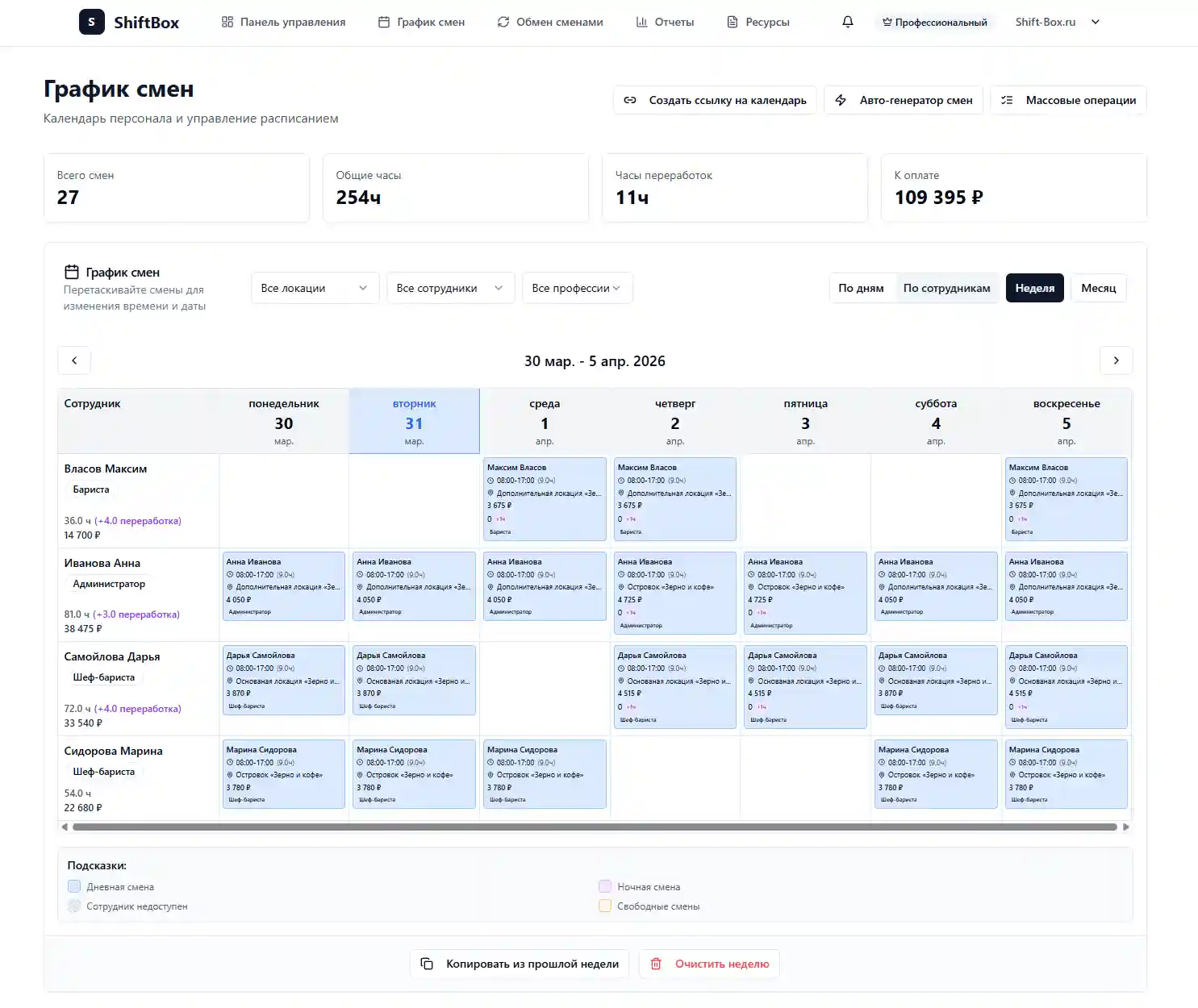
Finance, HR, and the lead get a cleaner base for reconciliation, payouts, and roster decisions.
Calendar, people, hours, coverage, and reports share one workflow—no Excel, chat threads, and manual roll-ups.
Build shifts in a clear matrix calendar, assign people with drag-and-drop, and immediately see coverage gaps.
Actual hours, lateness, and overtime live in one place so managers are not reconciling spreadsheets at month-end.
Staff open a browser link, see their shifts, mark unavailability, and request swaps without a heavy onboarding flow.
When shifts change, people see the new plan in their workspace—managers do not re-explain every edit in side threads.
When data sits in one place, every role moves faster and with less friction.
Gets an earlier, clearer picture of how shift cost, plan, and labor budget affect the business and the team.
Works in one loop: sees roster, hours, and variance without jumping between sheets, chats, and notes.
Gets a noticeably cleaner base for hour checks, payouts, plan-vs-actual review, or HR reconciliation.
These scenarios rarely break because of a formula. The issue is assembling the right picture of people, hours, and variance too late.
"We run five locations. We used to approve the roster before seeing real labor cost for the period. Now the team runs this in ShiftBox, sees variance before period close, and prepares calculation on cleaner data."
You had to assemble the right data per person and hours first, then decide or prepare the calculation.
Plan, actuals, and variance live in one process, so the lead and final calculation share one picture.
The process stops starting with manual reconciliation and moves to earlier, calmer control of people, hours, and variance.
Especially useful for networks, shift teams, and roles with different hourly cost
In many companies labor cost becomes clear too late: shifts are set, people are assigned, and rebuilding the roster is painful. People decisions then happen without visibility into the upcoming budget.
ShiftBox surfaces the link between roster and spend earlier so you can adjust before the period starts and keep labor cost under tighter control.
A more manageable labor budget and fewer surprise people-cost overloads.
Especially useful when you run several roles, rates, and changing load patterns.
Try ShiftBox free and compare a planned week to live changes.
ShiftBox helps organizations tie labor budgets to published shifts and recorded hours so variance reviews start from operational truth instead of reconstructed spreadsheets.
How operational schedules support financial forecasts
No: it strengthens the operational layer—shifts and hours—so budgets connect to what teams actually execute.
Yes: the goal is fewer surprises when the month closes and totals are reviewed.
Yes. Rollups become easier when each location publishes shifts in the same system.
When swaps update the live schedule, downstream hour views follow the latest truth.
Related pages for roster, hours, and final calculations