1
Problem Fatigue hides in informal fixes
Covering a tired shift with ad hoc texts is fast—and hard to audit later.
Longer on-shifts amplify the cost of unclear communication
Covering a tired shift with ad hoc texts is fast—and hard to audit later.
Without a structured view, people misread which sub-pattern they inherited after a swap.
Actual time worked is reconciled in another tab, so overload is invisible until payroll.
Off-blocks look empty on a grid even when call-ins and training eat them.
The base cycle becomes workable quickly; the system keeps it current after that
Teams usually import people and the 3/3 template first, then run exceptions, swaps, and hours inside the same system.
Add people and roles.
Build the 3/3 cycle.
Publish shifts to the team.
Run swaps and hours inside the same tool from there.
Even a correct 3/3 template drifts when swaps and hours stay manual
After a few live edits the base pattern stops being obvious for the lead and the crew.
Cycle, changes, and actual hours sit together, so holding the 3/3 beat is noticeably easier.
Keep the long on-period legible for both planners and crews
The published calendar carries segment context, not just colored cells.
Swap history stays anchored to the shift block it touched.
Compare planned load to actuals while the three-day window is still open.
Exceptions appear on the same timeline as the base 3/3 cadence.
Not abstract automation—concrete control points every shift.
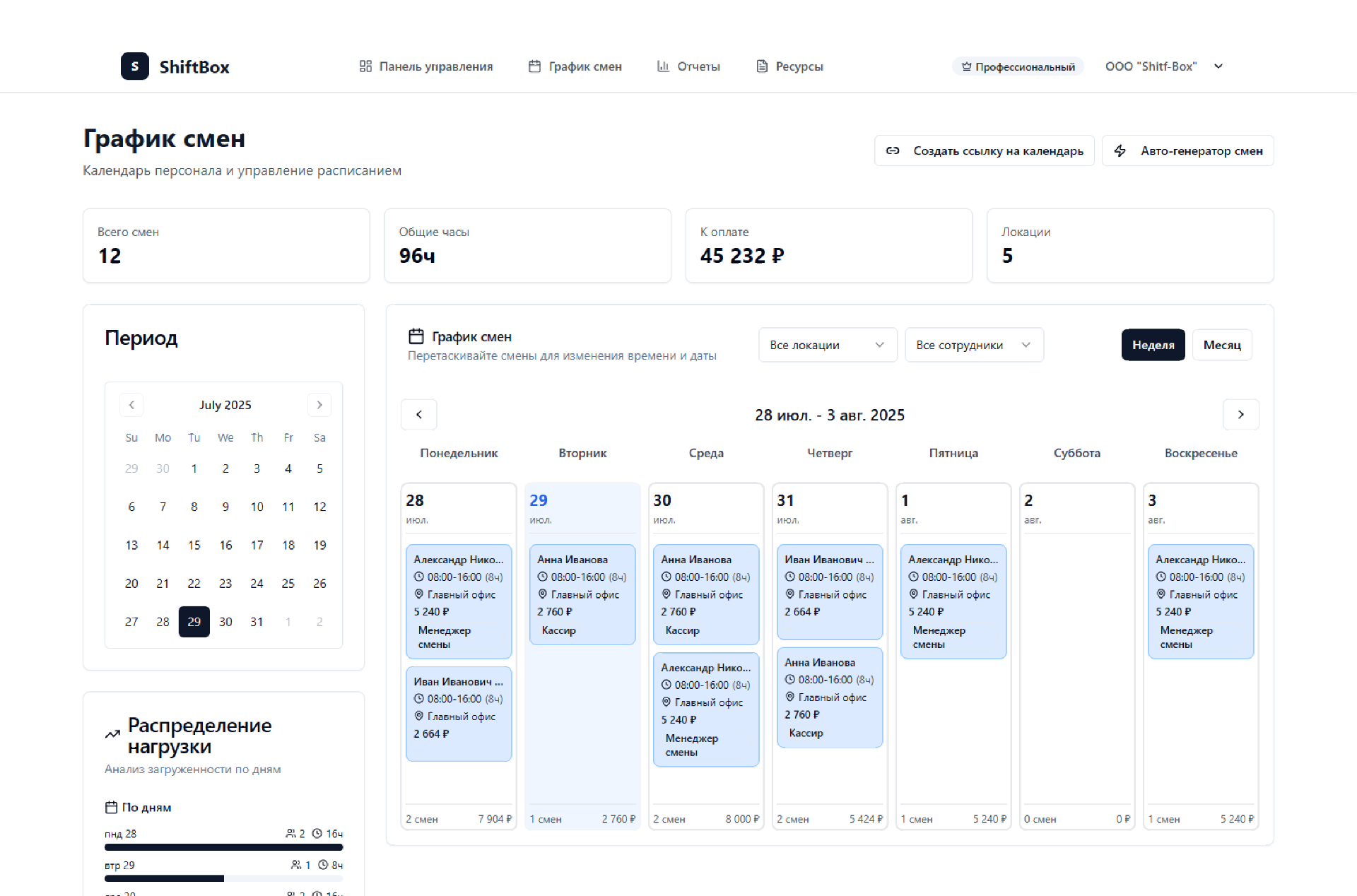
3/3 no longer lives apart from leave, sick days, and moves: everyone sees the same current shift picture.
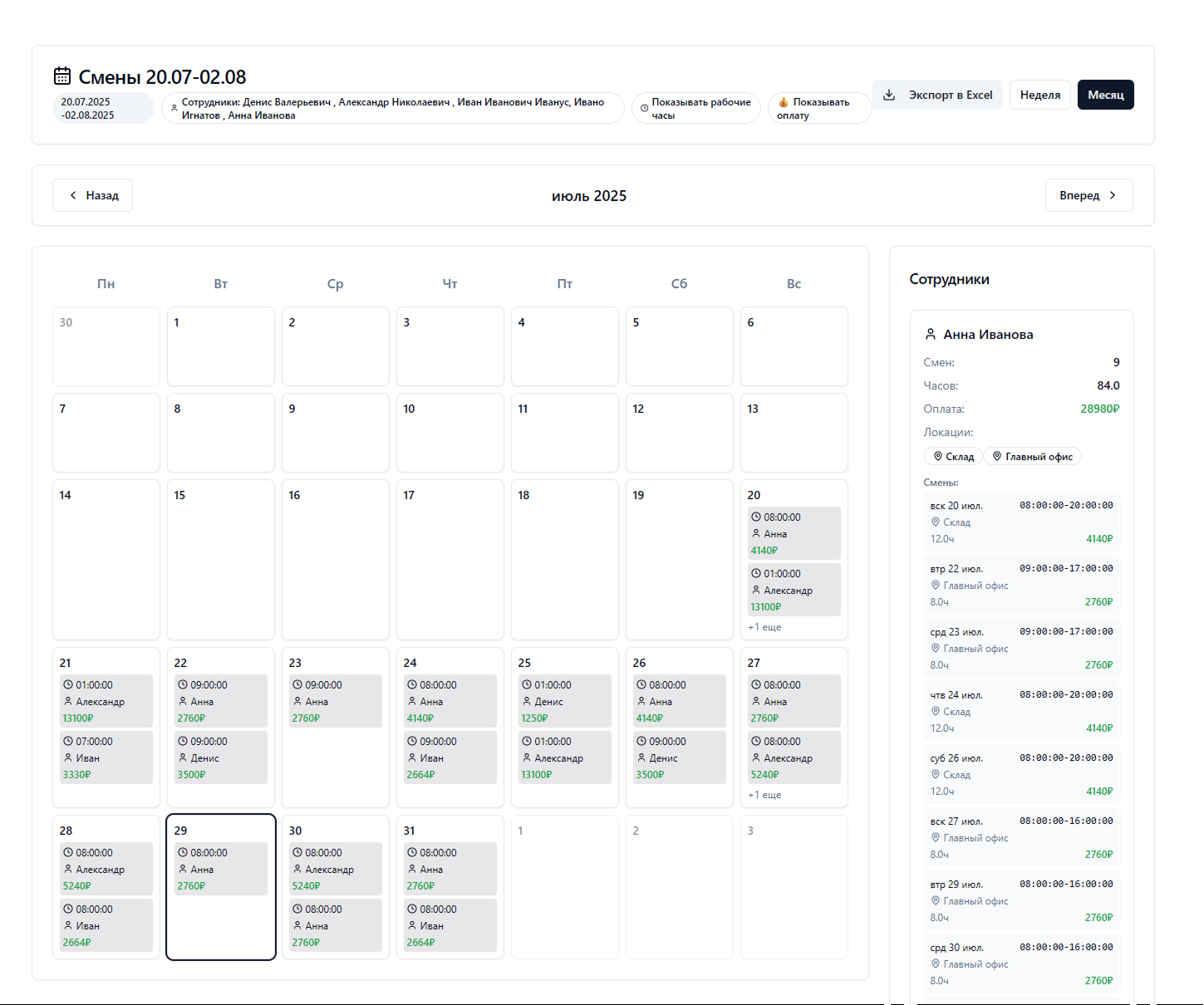
Hours per person, coverage swaps, and overload sit together so leads can decide before period close—not after.
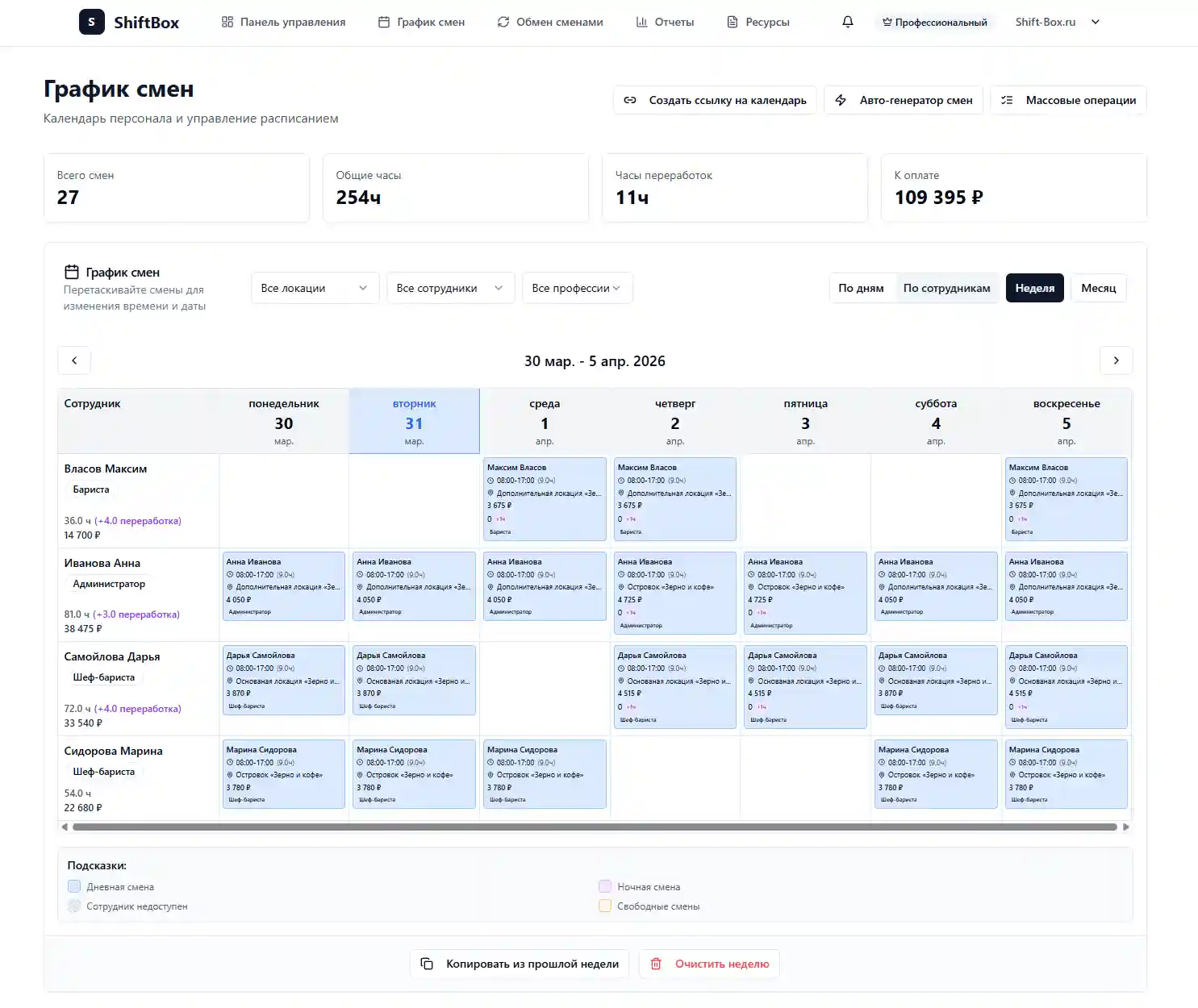
After publish, staff open the latest plan in their portal—no new file after every edit.
Calendar, people, hours, coverage, and reports share one workflow—no Excel, chat threads, and manual roll-ups.
Build shifts in a clear matrix calendar, assign people with drag-and-drop, and immediately see coverage gaps.
Actual hours, lateness, and overtime live in one place so managers are not reconciling spreadsheets at month-end.
Staff open a browser link, see their shifts, mark unavailability, and request swaps without a heavy onboarding flow.
When shifts change, people see the new plan in their workspace—managers do not re-explain every edit in side threads.
On a live roster, each role needs a different slice of the same truth.
Sees people, shifts, and load without waiting for a manual end-of-period pack.
Works in one place: builds shifts, edits the board, and publishes without endless threads and file resends.
Gets a cleaner base for timesheets, hour checks, and payout prep—not scattered sources.
3/3 teams rarely break on day one—they break once real edits pile up. That is when one shared process starts saving time.
"We are a shift team of fifteen. The 3/3 cycle used to stop making sense after a couple of live edits in the same week. Now schedule, changes, and hours live in ShiftBox: one calendar for the manager, one published view for the crew."
Every fix meant a new sheet, a people-by-people check, and manual hour reconciliation at period end.
Template, exceptions, and shift facts stay in one process that survives each swap.
The crew stops rebuilding 3/3 by hand after every edit and shares one current picture of people, hours, and shifts.
Value shows up when schedule, exceptions, and hours share one workflow.
Any base pattern looks simple until real exceptions appear. Once moves, swaps, and deviations stack up, a manual process stops being transparent—for managers and staff alike.
ShiftBox keeps this scenario in one place: calendar, worked time, coverage, and publish act as a single loop. Edits no longer drag a new file version and a final manual roll-up behind them.
A steadier board that survives real-world changes across the week or period.
Especially useful where the pattern looks standard but every exception shifts the final picture of people and hours.
Start a free trial and model your current 3/3 without maintaining parallel spreadsheets.
Request a demo if you want to map day/night stacks—we will mirror your real layout.
ShiftBox helps teams respect the intensity of 3/3—one truthful calendar, transparent swaps, and hours that stay tied to the shifts that generated them.
Longer on-periods reward disciplined change management
Yes—structure the calendar so day and night segments are explicit, then manage swaps against those segments instead of loose notes.
Publish the pattern once, share links, and let exceptions happen inside the same tool so the PDF export (if you still need one) is always secondary to the live source.
Hours sit adjacent to the schedule, which makes it easier to spot drift while the block is still in flight—not only after it ends.
Staff open their personal link in a browser; it stays current with each publish without installing an app.
Related scenarios for shift teams