1
Problème Coverage gaps hit patients first
Late discovery of holes creates stress for clinicians and managers.
Regulated environments still suffer when the live plan lives in chats.
Late discovery of holes creates stress for clinicians and managers.
Exceptions stack until nobody trusts the posted plan.
Premiums and night rules need a clean record, not reconstructed notes.
Gradually—no separate mega-project or stopping day-to-day operations.
Teams usually move one site, ward, or location into the system first, then scale across the crew. Clinics and med centers with complex duty rotas see value on the first rollout step.
Add sites, roles, teams, or locations to your structure.
Build the base roster by people and work zones.
Publish shifts to staff without emailing new spreadsheets.
Record substitutions, hours, and changes inside the system.
Review load and prepare data for payroll.
For a clinic, accuracy matters—but so does how fast you react to changes
Duties, swaps, night shifts, and mixed roles make a medical roster too complex to run by hand.
Leads and coordinators keep the roster live without losing changes between departments.
Not automation for its own sake—real control points for daily work.
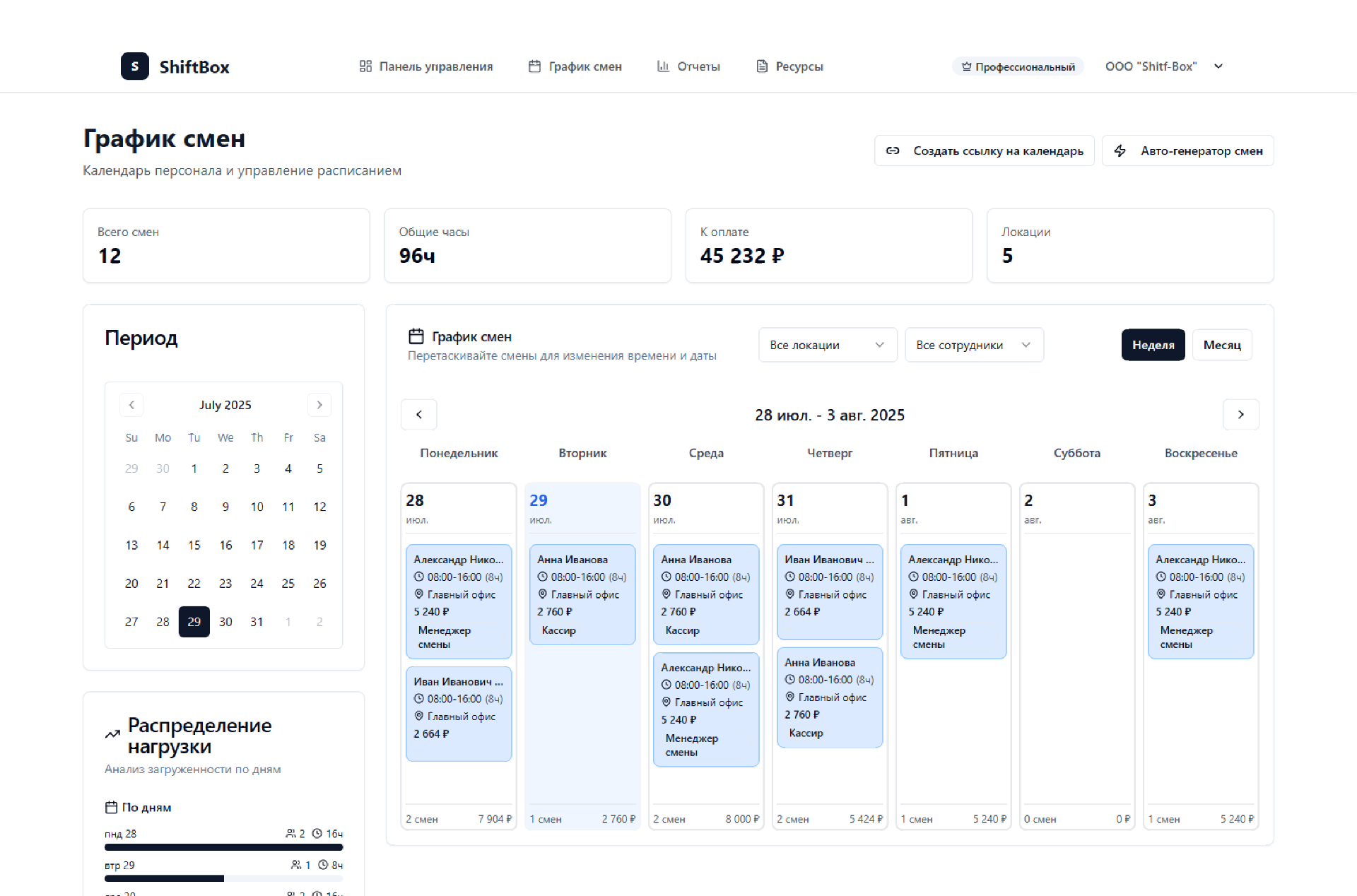
See doctors, nurses, admins, and departments at once so leads can close shifts and spot weak points early.
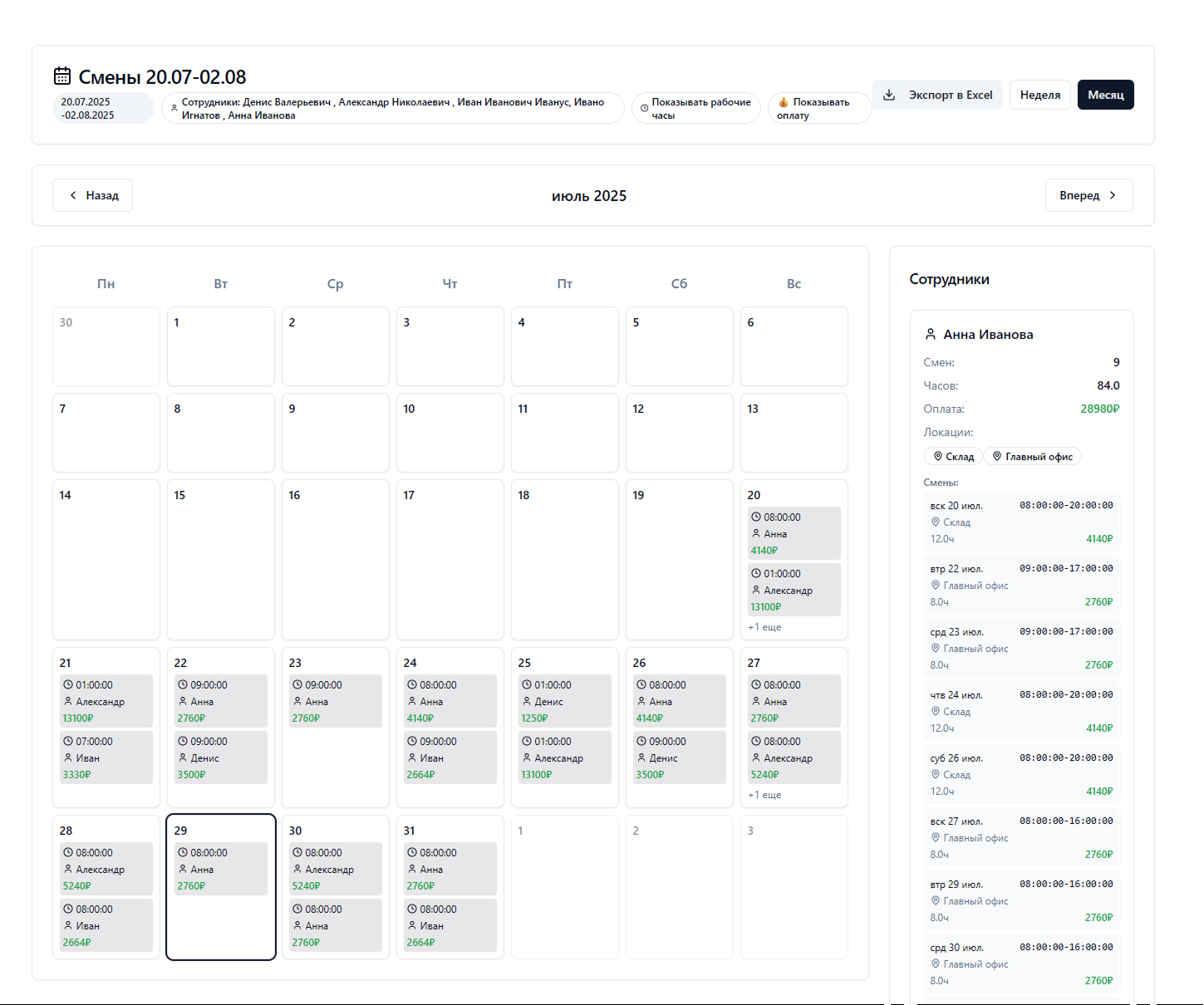
Changes no longer vanish in chats: shift fact, swaps, and load sit in one workflow.
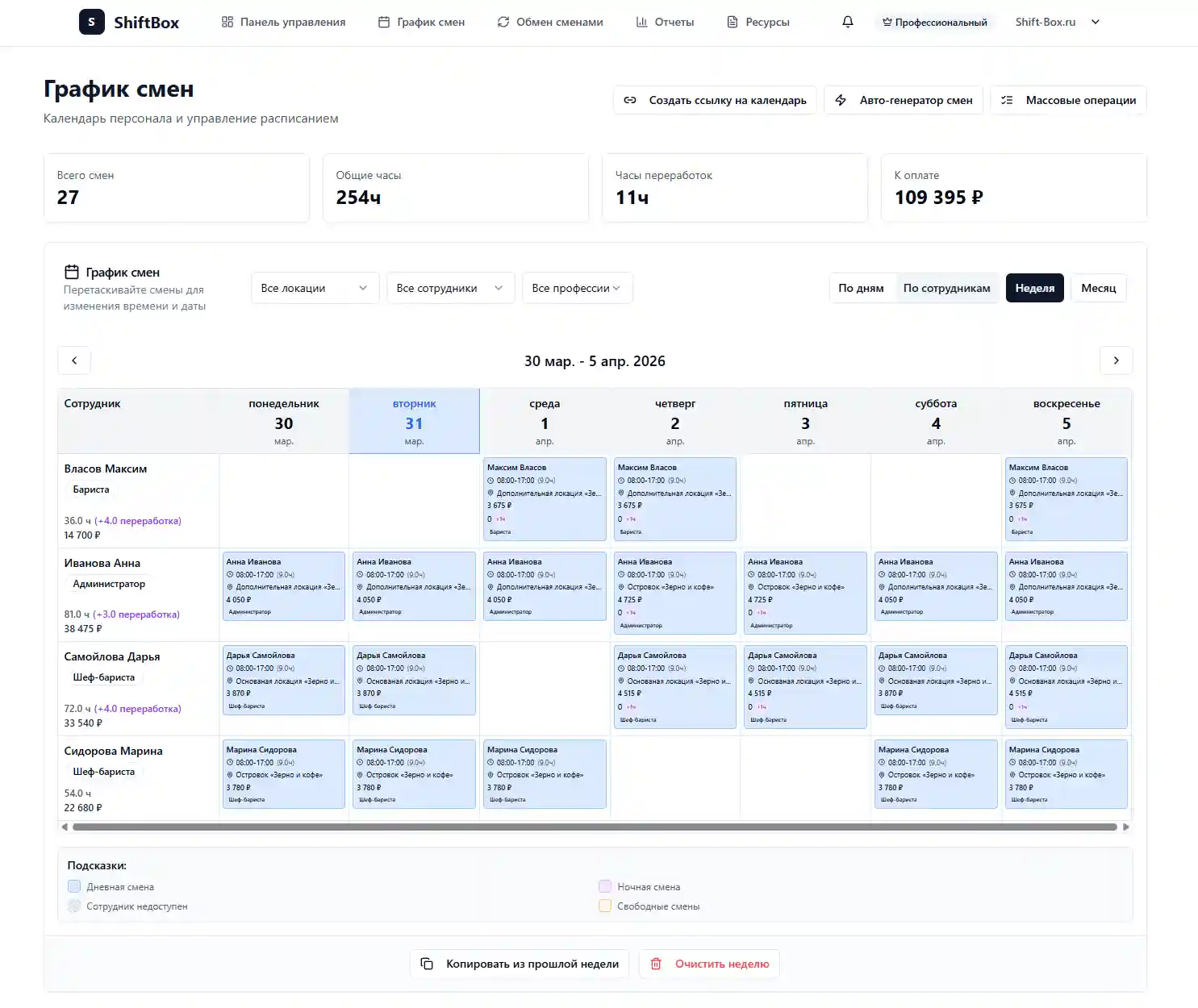
Easier to prepare payroll data, spot overload, and see where the process needs attention.
Calendar, people, hours, swaps, and reports share one workflow—no Excel, chat threads, and manual roll-ups.
Construisez les shifts dans une matrice claire, assignez en glisser-deposer et voyez tout de suite les trous de couverture.
Heures reelles, retards et heures supplementaires au meme endroit pour eviter la reconciliation de tableurs en fin de mois.
Le staff ouvre un lien navigateur, voit ses shifts, marque l indisponibilite et demande des echanges sans onboarding lourd.
Quand les shifts changent, chacun voit le nouveau plan dans son espace — les managers ne reexpliquent pas chaque modification dans des fils paralleles.
Each role gets its benefit, but everyone works in one contour—not scattered files.
Sees a clearer picture of sites, people, and load without constantly asking managers for summaries.
Works with a live roster every day: builds shifts, applies changes, and publishes without chat chaos.
Gets a much cleaner base for timesheets, hour checks, and final employee calculations.
Industry teams need more than a neat template—they need to keep the process current when swaps, sick days, and people changes hit.
"We run a clinic with four departments. Duties and medical staff swaps used to diverge between wards and spreadsheets. After ShiftBox, roster, changes, and hours stopped living apart: the coordinator works in one window, and the team sees a ready, current shift plan."
People and site changes had to be confirmed by hand, and the final hour picture came from several sources.
Sites, shifts, swaps, and actual time live in one process that is easier to keep current.
The team stops fighting operational fires in spreadsheets and moves to more predictable control of roster, hours, and swaps.
When several roles and departments share one schedule, manual setups break quickly
Medical rosters rarely stay static. Duties change, staff cover each other, and load by department can shift every week. When everything is manual, changes spread across files and message threads.
ShiftBox gathers shifts, hours, and changes in one process. That cuts manual clarifications and makes roster management calmer for both coordinators and directors.
A more manageable department roster and less manual confusion around swaps and hours.
Especially useful where several roles, night shifts, and constant moves share one plan.
Try it free and model a rotation week with nights included.
ShiftBox helps healthcare and care organizations keep rotations, nights, and substitutions in one workflow so coverage is easier to defend and hours are easier to review.
Couverture, rotation et heures
Oui : gardez des modèles et absorbez maladies et remplacements sans perdre le fil.
Les vues personnelles se concentrent sur les shifts assignés et les changements pertinents.
Garder nuits et heures ensemble facilite des revues cohérentes.
Oui, comparez la couverture entre sites sans fusion manuelle.
Pages pour approfondir des scénarios proches