1
Problem Template passt nicht mehr zur Realität
Training, Krankheit und Vertretungen brechen den Zyklus.
Rotation wirkt einfach, bis Ausnahmen der Normalzustand sind.
Training, Krankheit und Vertretungen brechen den Zyklus.
Jede Woche wird ein Puzzle ohne gemeinsame Quelle.
Lohn sieht einen Plan, den das Feld nie gefahren ist.
Gradually—no separate mega-project or stopping day-to-day operations.
Teams usually move one site or camp into the system first, then scale across the crew. Rotation teams with long cycles see value on the first rollout step.
Add sites, roles, teams, or locations to your structure.
Build the base roster by people and work zones.
Publish shifts to staff without emailing new spreadsheets.
Record substitutions, hours, and changes inside the system.
Review load and prepare data for payroll.
Rotation ops calm down when sites, roles, and changes sit in one place
Trouble usually starts when you have to rebuild the plan fast across rotation crews, coordinators, and sites—not on day one.
Roster, changes, and actual hours sit in one process so the rotation coordinator decides faster and does not lose crew detail.
Not automation for its own sake—real control points for daily work.
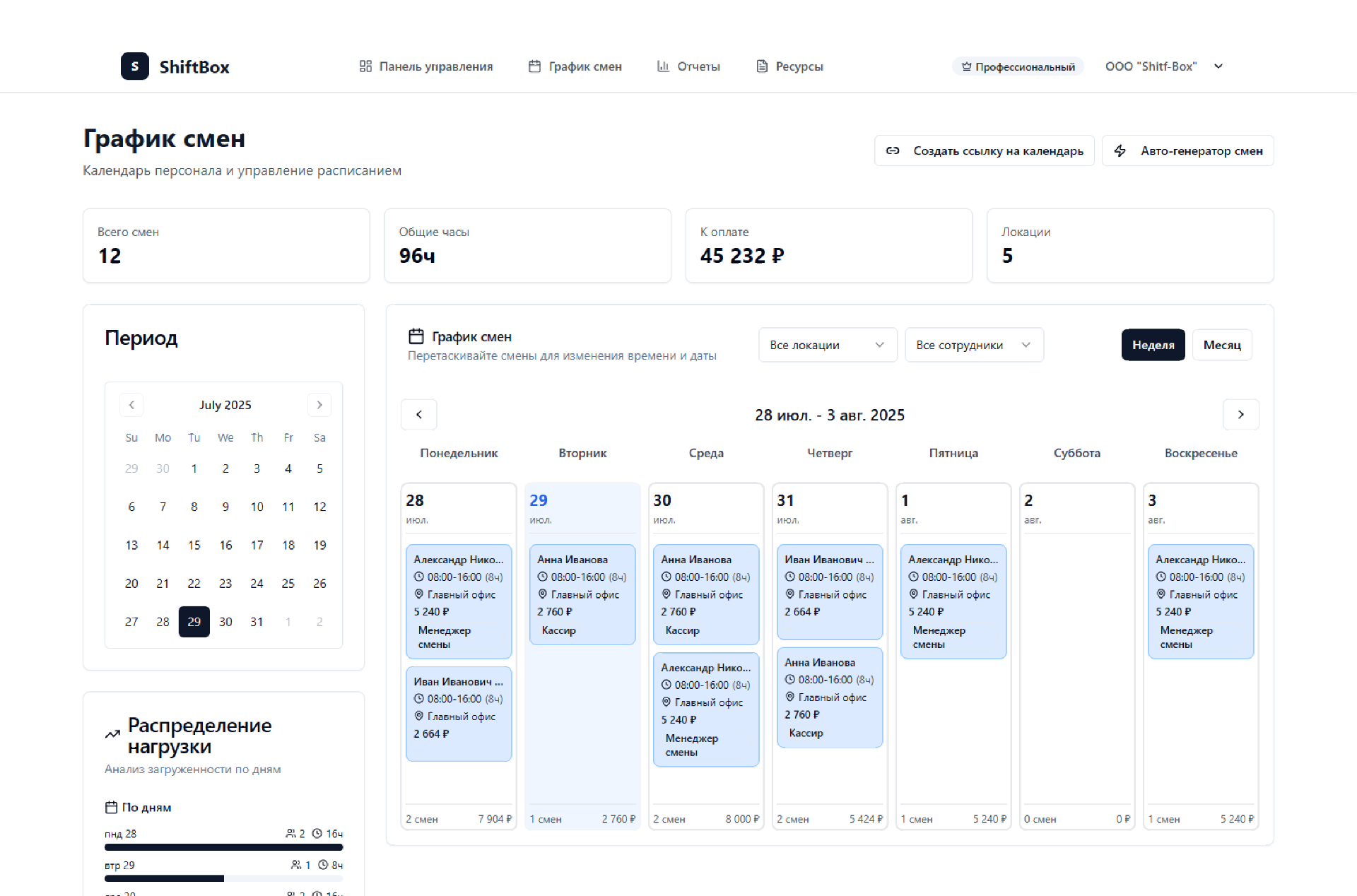
See rotation crews, coordinators, and sites at once so leads can close shifts and spot weak points early.
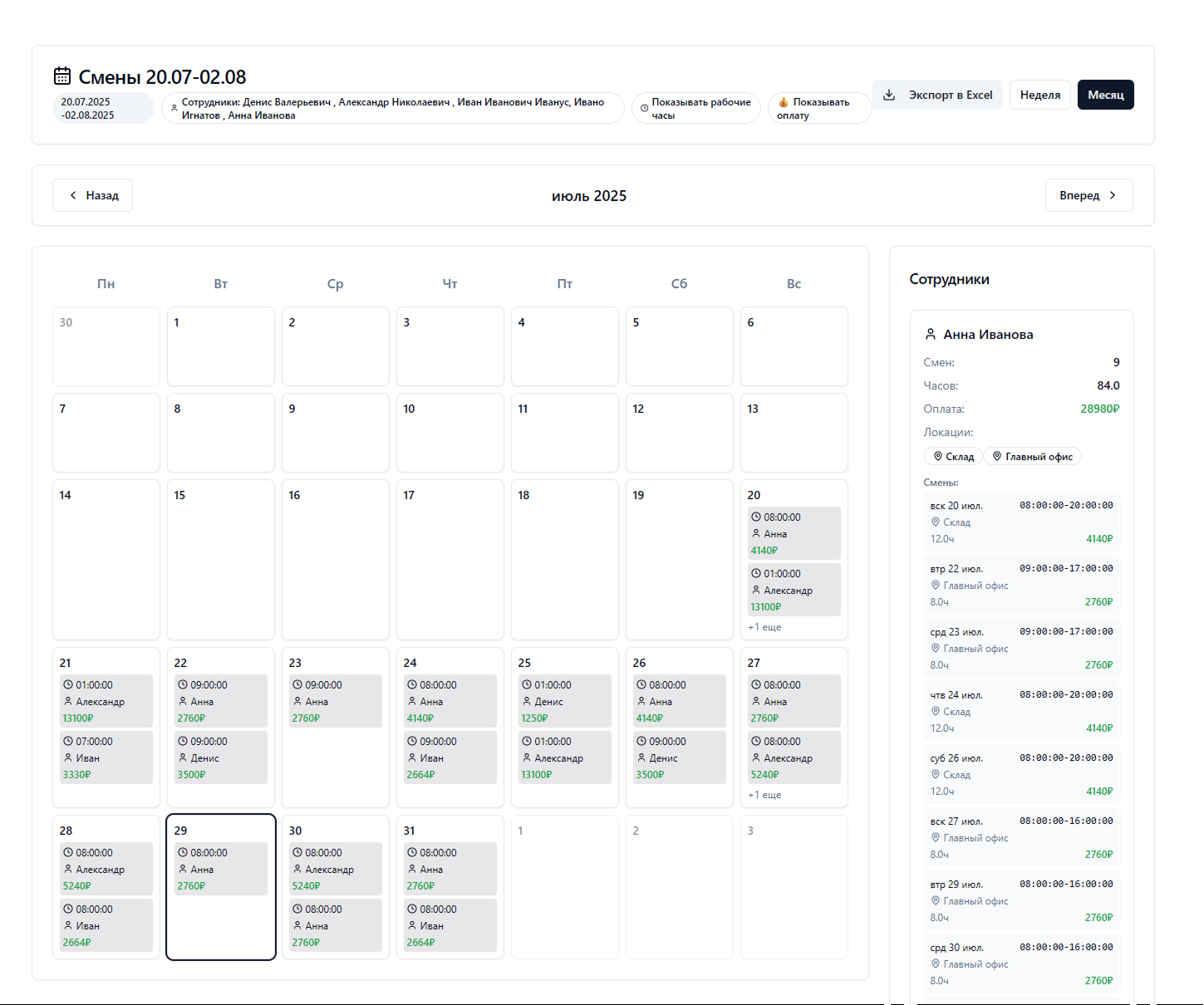
Changes no longer vanish in chats: shift fact, swaps, and load sit in one workflow.
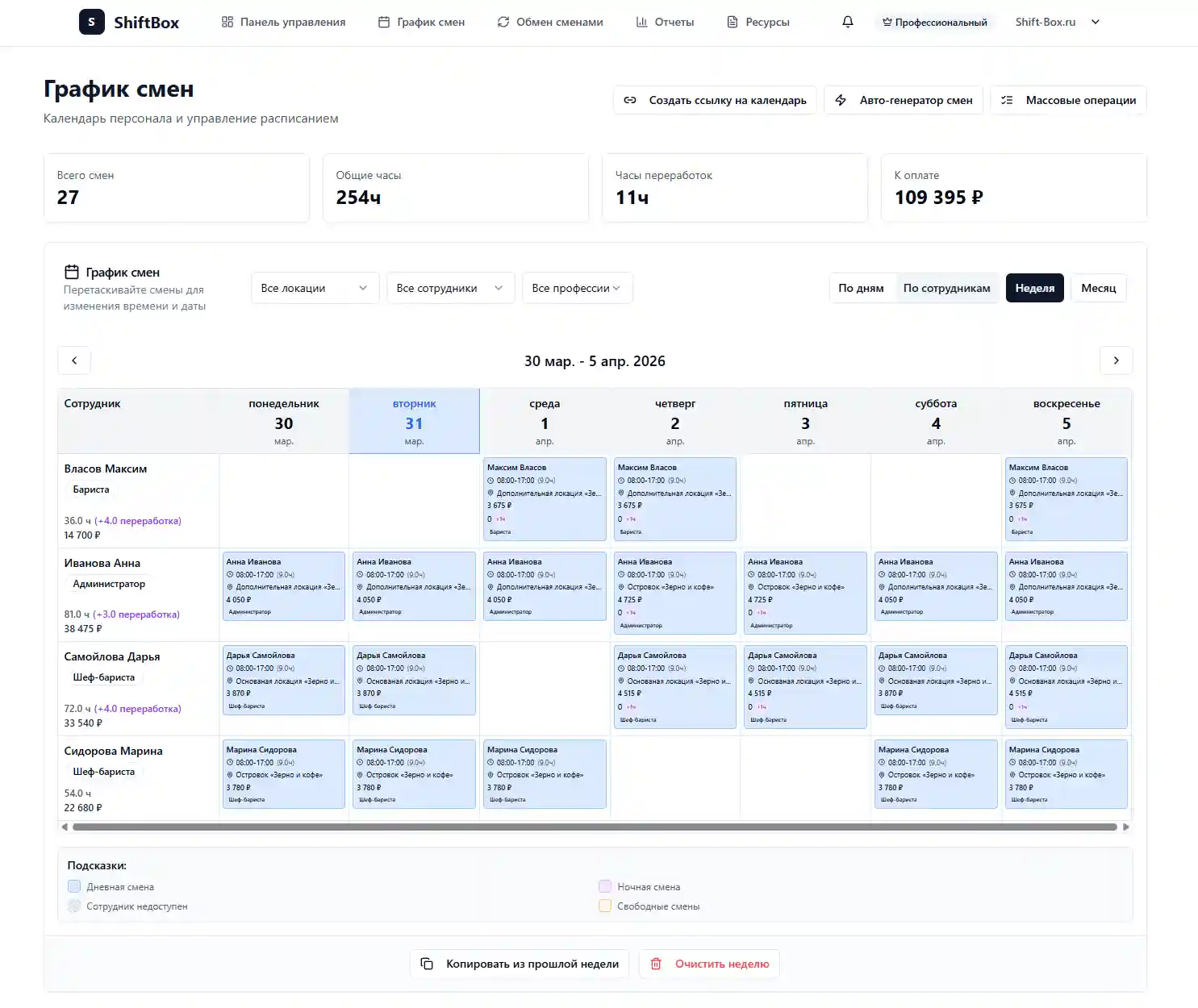
Easier to prepare payroll data, spot overload, and see where the process needs attention.
Calendar, people, hours, swaps, and reports share one workflow—no Excel, chat threads, and manual roll-ups.
Schichten in einer klaren Matrix planen, per Drag-and-drop zuweisen und Deckungsluecken sofort erkennen.
Ist-Stunden, Verspaetungen und Ueberstunden liegen an einem Ort — ohne Tabellen-Chaos am Monatsende.
Team oeffnet einen Browser-Link, sieht Schichten, markiert Verfuegbarkeit und beantragt Tausch ohne schweres Onboarding.
Wenn sich Schichten aendern, sieht das Team den neuen Plan im Portal — Manager erklaeren nicht jeden Edit in Nebenthreads.
Each role gets its benefit, but everyone works in one contour—not scattered files.
Sees a clearer picture of sites, people, and load without constantly asking managers for summaries.
Works with a live roster every day: builds shifts, applies changes, and publishes without chat chaos.
Gets a much cleaner base for timesheets, hour checks, and final employee calculations.
Industry teams need more than a neat template—they need to keep the process current when swaps, sick days, and people changes hit.
"We run a 40-person crew on a 21/14 cycle. Departures, returns, and the next employee cycle used to spread across files and people. After ShiftBox, roster, changes, and hours stopped living apart: the coordinator works in one window, and the crew sees a ready, current shift plan."
People and site changes had to be confirmed by hand, and the final hour picture came from several sources.
Sites, shifts, swaps, and actual time live in one process that is easier to keep current.
The team stops fighting operational fires in spreadsheets and moves to more predictable control of roster, hours, and swaps.
When cycles, shifts, and hours sit in one process, leads keep the rotation under control
Rotation schedules are awkward to run by hand because they last longer than a normal week and include cycles, crew moves, travel, and actual hours—not just shift blocks.
ShiftBox gathers that data in one window. That keeps the roster transparent without constant manual reconciliation by person and site.
A clearer picture of rotations, crew moves, and actual hours without manual chaos.
Especially useful for long cycles, multiple sites, and teams with constant moves.
Kostenlos testen und zwei Wochen Rotation mit Mid-Cycle-Vertretung modellieren.
ShiftBox hilft industriellen Teams, Rotationen, Vertretungen und Stunden in einem Workflow zu führen, damit Vorgesetzte weniger Zeit mit Wochen-Rekonstruktion verlieren.
Rotationen, Ausnahmen und Stundenlogik in der Industrie
Ja: Baseline pflegen und Krankheit, Schulung und Vertretungen im gleichen Fluss erfassen.
Einmal veröffentlichen — die Folgeschicht sieht denselben Plan ohne Datei-Weiterleitung.
Wenn Stunden an Zuweisungen hängen, ist Überlast vor Lohnabschluss leichter sichtbar.
Ja. Rollen und Standorte so strukturieren, wie der Betrieb wirklich läuft.
Verwandte Seiten für lange Schichten und Lastkontrolle