1
Problem Früh/spät/wechselnd
Ohne klare Quelle verläuft sich die Abdeckung über Chat und Zettel.
Sobald Schichten die „normale“ Woche komplex machen
Ohne klare Quelle verläuft sich die Abdeckung über Chat und Zettel.
Jede Abwesenheit will besetzt sein—sonst entsteht Stillstand oder Dauerzusatz.
„Stand von Dienstag“ vs. „Stand nachmittags“—niemand weiß sicher, was gilt.
Kleine Zuschläge summieren sich—Transparenz kommt zu spät.
Without a long rollout project or multi-week implementation
Teams usually import workdays and roles first, add statuses, then run changes in one process from there.
Add people and team roles.
Build the base 5/2 calendar.
Record leave, sick days, and other statuses.
Run changes and hours inside the same tool from there.
Even a familiar office pattern turns chaotic when changes are not recorded in one place
The issue is rarely the template—it is the constant churn around it: statuses, leave, moves, and actual load.
Roster, statuses, and hours sit together, so the lead sees a real picture of people and load.
Not abstract automation—concrete control points every day.
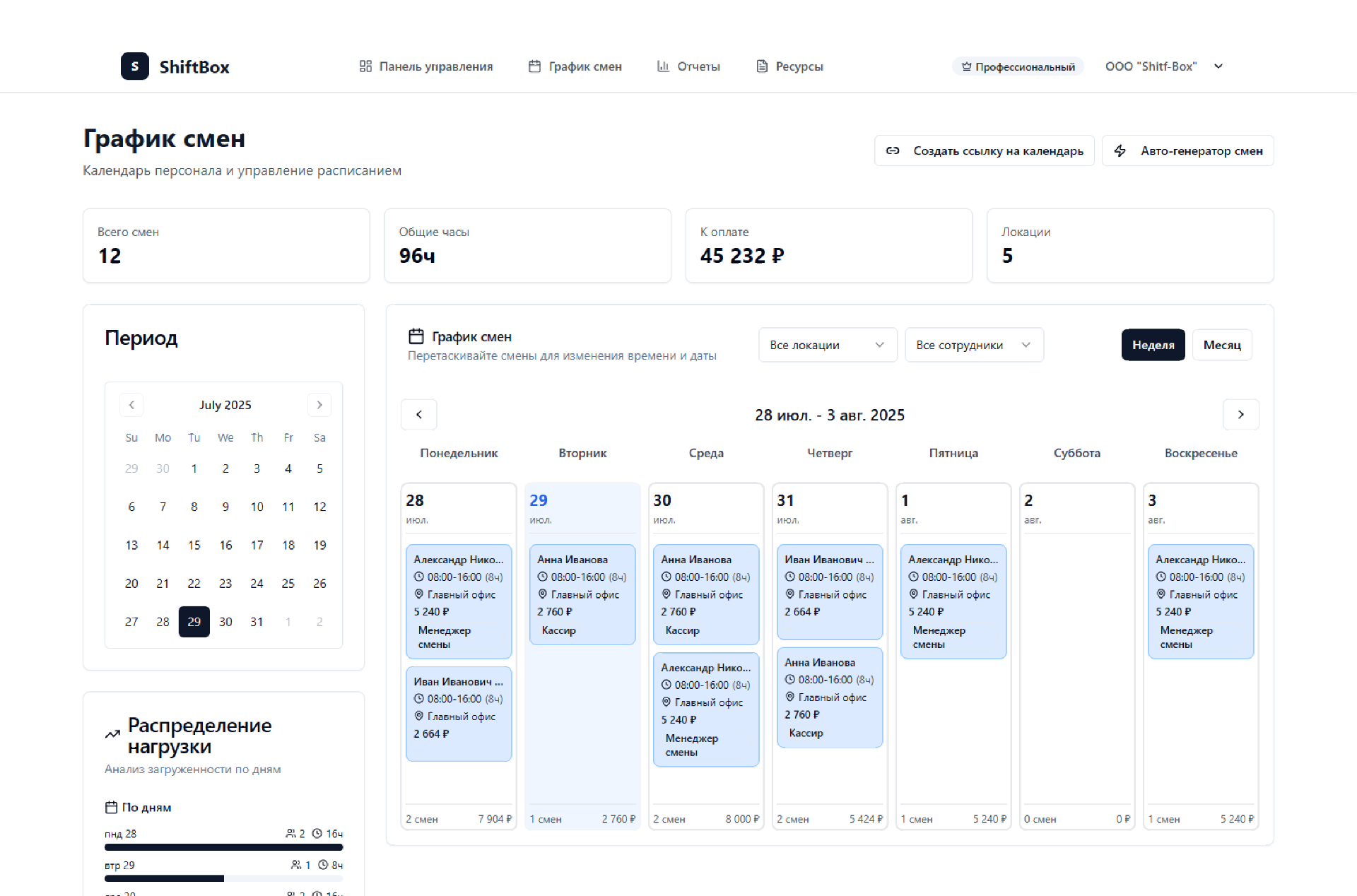
5/2 no longer lives apart from leave, sick days, and moves: everyone sees the same current shift picture.
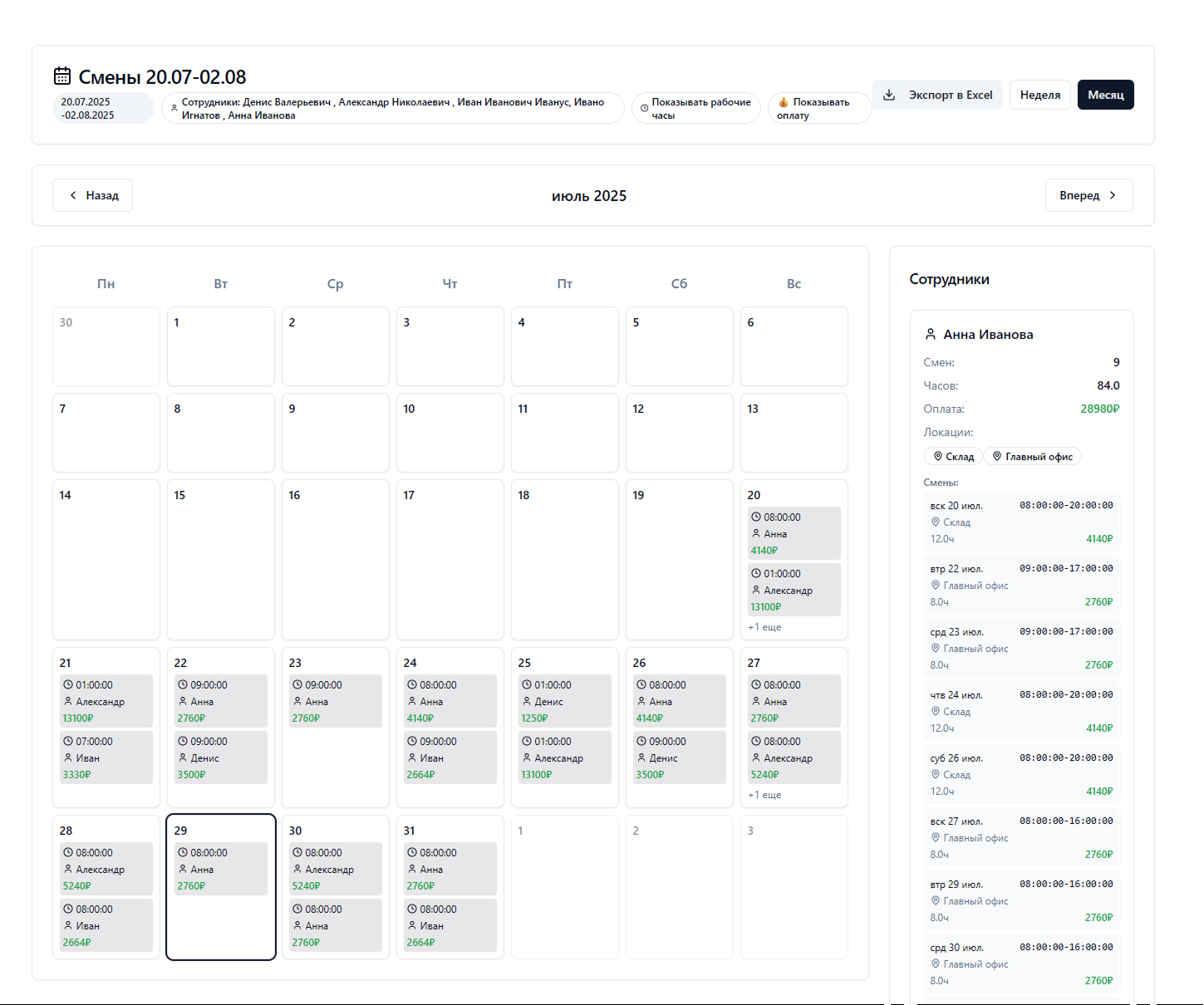
Hours per person, coverage swaps, and overload sit together so leads can decide before period close—not after.
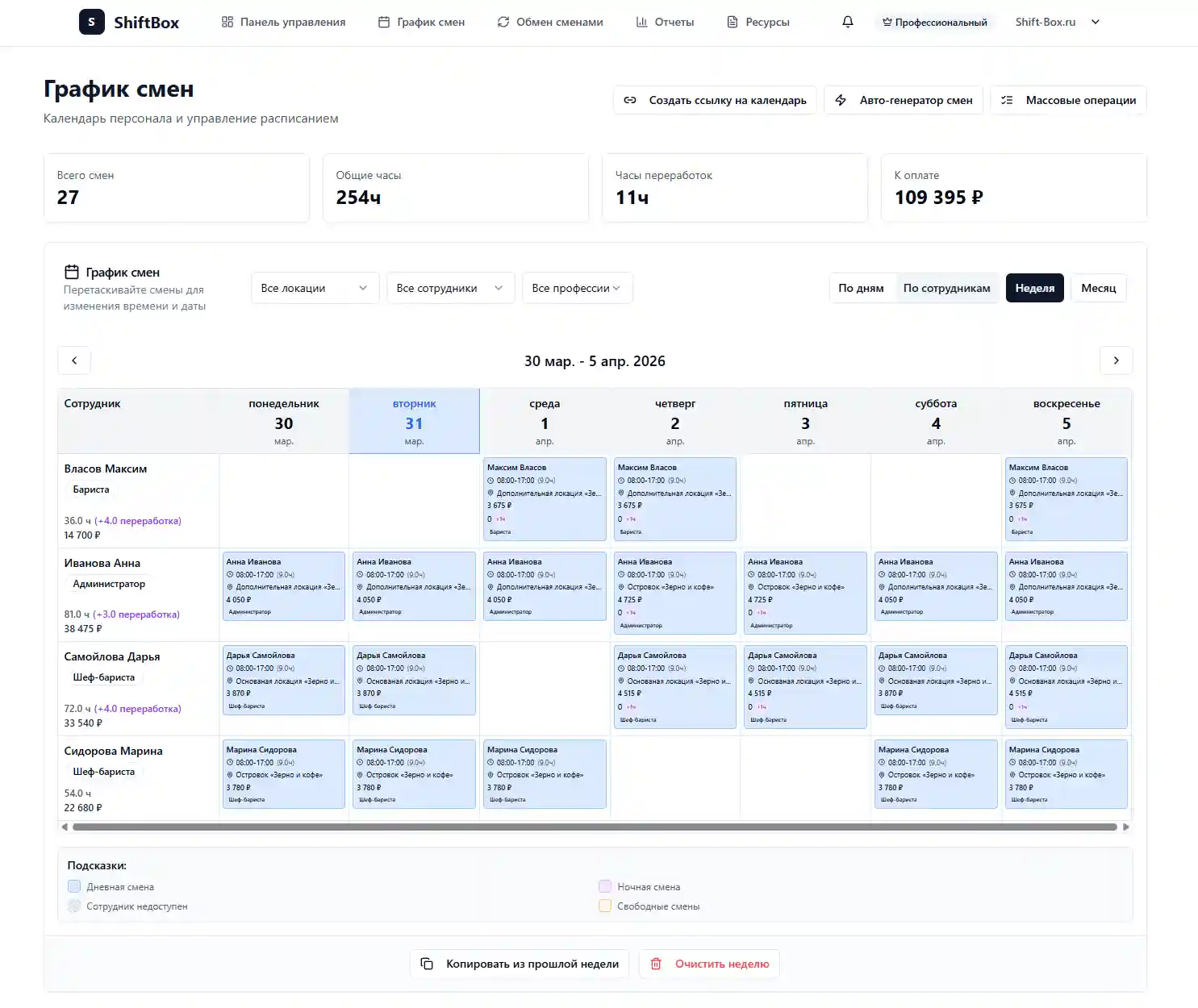
After publish, staff open the latest plan in their portal—no new file after every edit.
Calendar, people, hours, coverage, and reports share one workflow—no Excel, chat threads, and manual roll-ups.
Schichten in einer klaren Matrix planen, per Drag-and-drop zuweisen und Deckungsluecken sofort erkennen.
Ist-Stunden, Verspaetungen und Ueberstunden liegen an einem Ort — ohne Tabellen-Chaos am Monatsende.
Team oeffnet einen Browser-Link, sieht Schichten, markiert Verfuegbarkeit und beantragt Tausch ohne schweres Onboarding.
Wenn sich Schichten aendern, sieht das Team den neuen Plan im Portal — Manager erklaeren nicht jeden Edit in Nebenthreads.
On a live roster, each role needs a different slice of the same truth.
Sees people, shifts, and load without waiting for a manual end-of-period pack.
Works in one place: builds shifts, edits the board, and publishes without endless threads and file resends.
Gets a cleaner base for timesheets, hour checks, and payout prep—not scattered sources.
5/2 teams rarely break on day one—they break once real edits pile up. That is when one shared process starts saving time.
"We are an office and operations team of twenty. After leave and swaps nobody could quickly see real load or actual days. Now schedule, changes, and hours live in ShiftBox: one calendar for the manager, one published view for the crew."
Every fix meant a new sheet, a people-by-people check, and manual hour reconciliation at period end.
Template, exceptions, and shift facts stay in one process that survives each swap.
The crew stops rebuilding 5/2 by hand after every edit and shares one current picture of people, hours, and shifts.
When schedule, statuses, and hours sit together, running the team is noticeably easier
Even a standard 5/2 pattern stops feeling simple once leave, sick days, swaps, and uneven load per person enter the picture.
ShiftBox gathers workdays, changes, and hours in one process so the lead keeps a current picture without constant manual reconciliation.
Clearer team load and less manual confusion around statuses and workdays.
Especially useful for office and frontline teams on a typical 5/2 pattern with frequent in-cycle changes.
Kostenlos testen und den Wochenplan dort führen, wo alle hinschauen.
Schichten, Tausch und Stunden an einem Ort—damit der vertraute Fünf-Tage-Rhythmus im Betrieb nicht zur Informationslotterie wird.
Wenn der klassische Wochenrhythmus Schichtlogik braucht
Sobald mehrere Schichtlinien, Tausch oder verteilte Standorte dazukommen, hilft eine zentrale Quelle. Sie ersetzt nicht die Regel—aber das Versions-Chaos.
Kurzfristige Änderungen werden zentral erfasst und veröffentlicht—Mitarbeitende sehen den letzten Stand über ihren Link.
Wenn Plan und Stunden zusammenlaufen, erkennen Sie Muster früher—etwa wenn „nur noch kurz helfen“ zur Dauerlast wird.
Nein—der Zugriff erfolgt über persönliche Links zur veröffentlichten Version.
Ähnliche Szenarien für Last- und Stundenkontrolle