1
Problem SLA misses start as invisible gaps
Too few agents on a billing queue during a 15-minute peak erodes answer rate before anyone notices the roster hole.
Forecasts look fine on paper until queues spike, skills mismatch, or overnight coverage thins out.
Too few agents on a billing queue during a 15-minute peak erodes answer rate before anyone notices the roster hole.
Spanish support, tier-2 tech, and refunds sit in separate lists while the calendar shows only generic "agent" slots.
Supervisors pull people via chat, overtime lands in side notes, and nobody can reconstruct who covered which interval.
Night and weekend leads inherit a plan that never matched what actually happened on the previous shift.
Workforce management exports a target, operations edits a spreadsheet, and the live floor runs a third version.
Incentive pay, night differentials, and surge premiums get disputed because shifts and actual time were never aligned.
Start with one queue or one site—no multi-month WFM replacement project required
Most contact centers pilot one team, queue, or location first. Supervisors import people and skill tags, build a base week against forecasted intervals, publish to agents, then expand surge and 24/7 patterns once swaps and hours stay in one workflow.
Add sites, queues, roles, and agent skill tags.
Build the base roster against forecast intervals or shift blocks.
Publish shifts so agents see queue assignments in their portal.
Record surge overtime, swaps, and call-out coverage in the live plan.
Review hours, SLA windows, and prepare period reports for payroll.
The same contact center process feels different when the roster is tied to coverage—not a static grid
Contact centers move in minutes: marketing pushes a promo, outages spike technical tickets, flu season hits absenteeism, and a language queue falls below target. A static sheet cannot reflect interval-level needs or skills mix.
Workforce leads, team supervisors, and agents share one operational calendar where shifts, skills, swaps, and hours stay connected—so SLA risk is visible before the interval, not after the report.
Concrete control points for SLA coverage—not abstract workforce automation
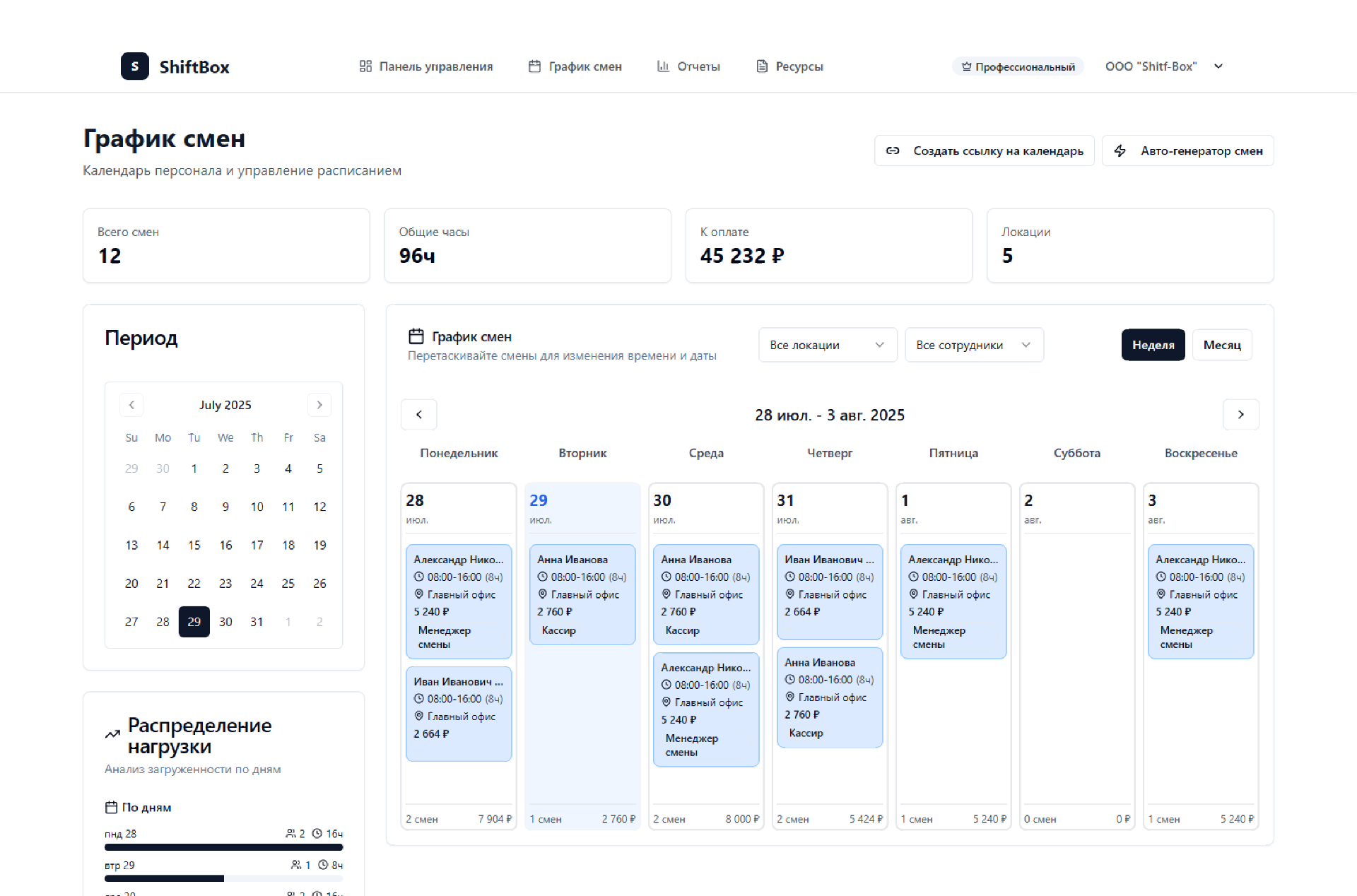
See whether enough agents are scheduled during peak answer windows and where intervals fall below target headcount.
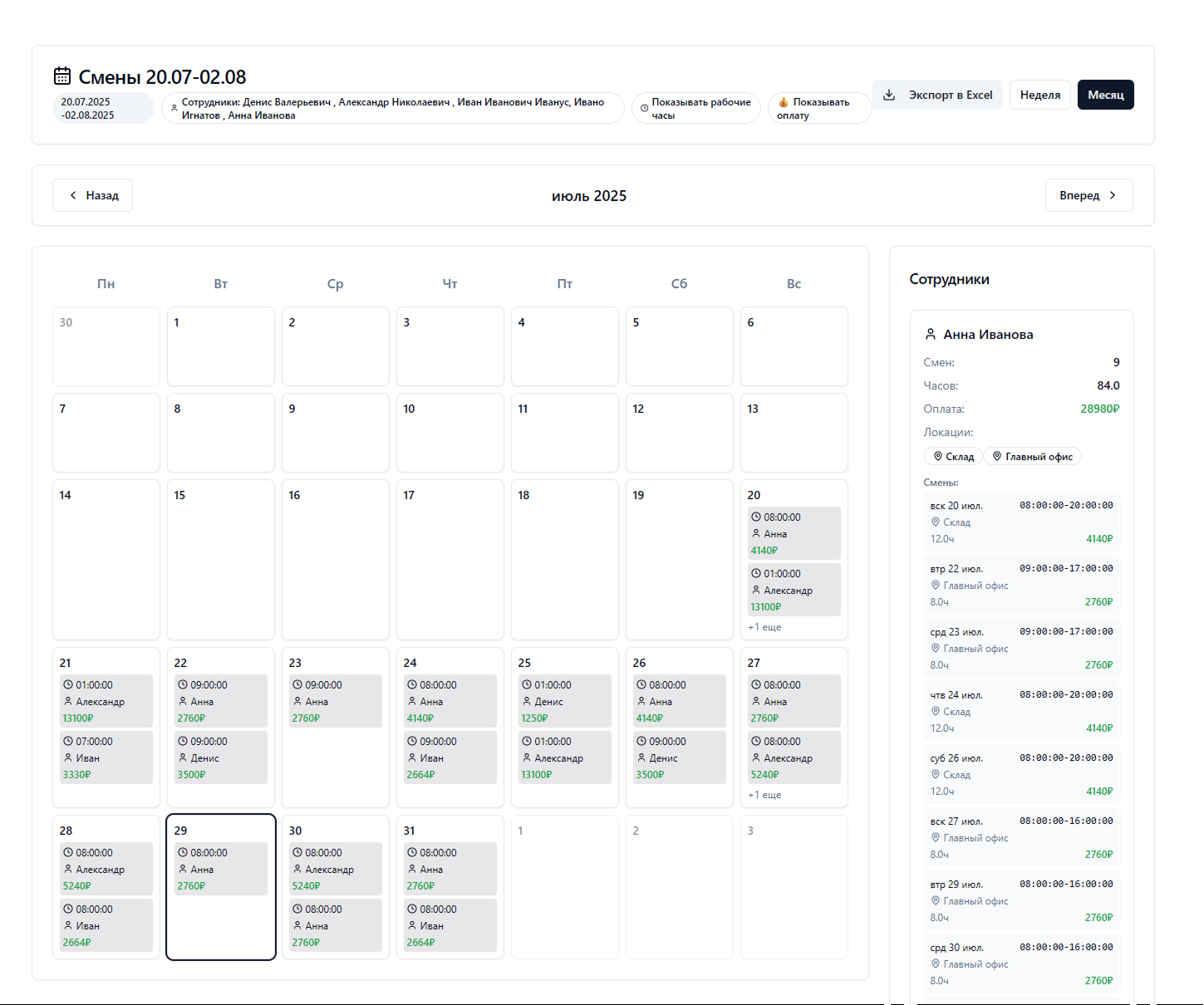
Tag agents by language, product, or tier so billing, retention, and technical queues do not share one generic slot.
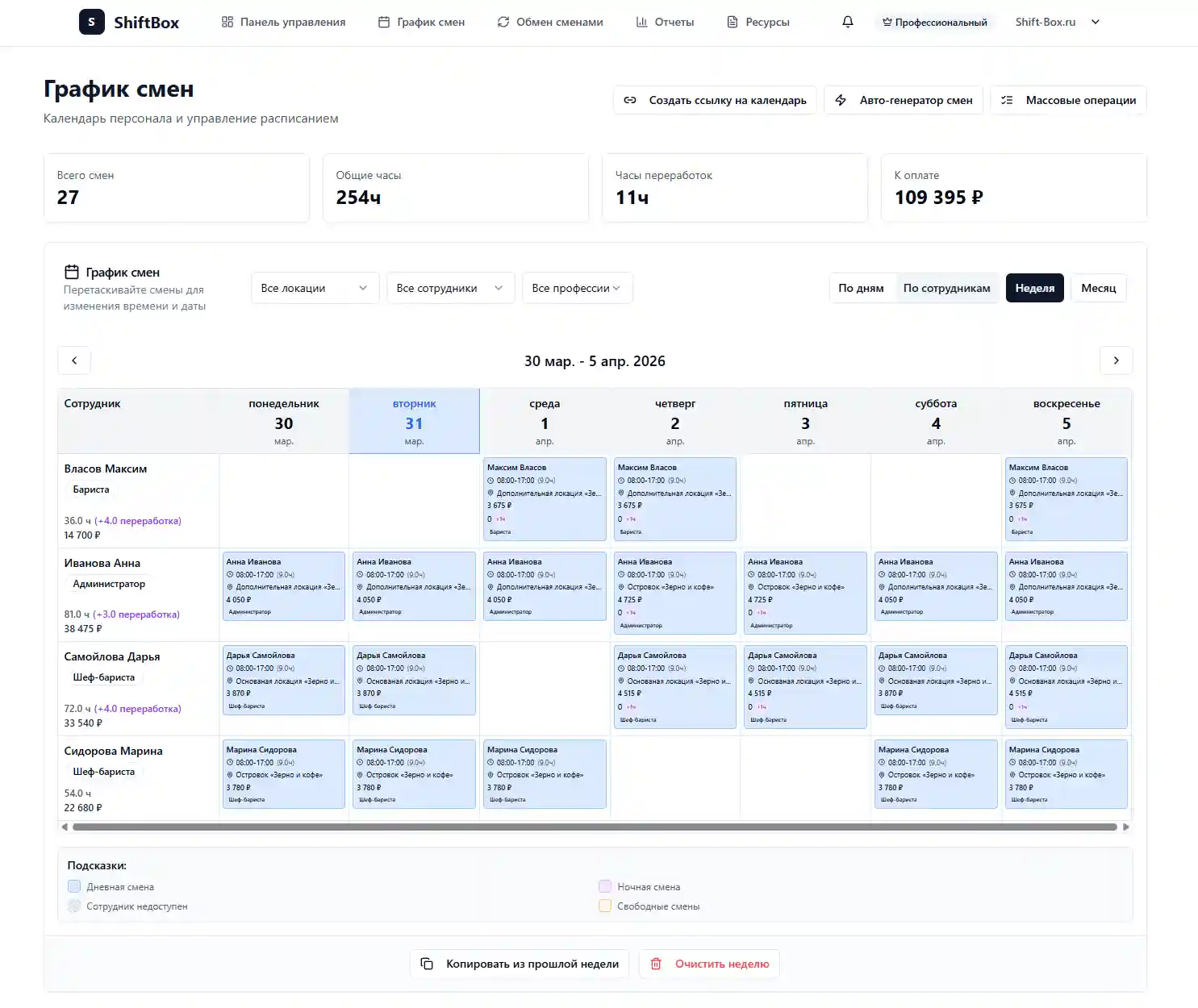
Overtime, backup shifts, and substitutions sit next to scheduled intervals instead of disappearing into chat threads.
Calendar, agents, skills, coverage windows, and reports share one workflow—no forecast export, chat surge threads, and manual hour roll-ups fighting each other.
Build shifts in a clear matrix calendar, assign people with drag-and-drop, and immediately see coverage gaps.
Actual hours, lateness, and overtime live in one place so managers are not reconciling spreadsheets at month-end.
Staff open a browser link, see their shifts, mark unavailability, and request swaps without a heavy onboarding flow.
When shifts change, people see the new plan in their workspace—managers do not re-explain every edit in side threads.
Each role sees the slice of contact center operations needed to protect SLA and control labor cost
Gets a clearer picture of 24/7 coverage, queue load, and labor spend without collecting status from every shift lead by hand.
Works with a live roster tied to intervals and skills: adds shifts, closes queue gaps, and publishes surge coverage without chat chaos.
Gets cleaner shift, overtime, and night-premium data instead of assembling incentives from disconnected sources.
BPO and in-house support teams need more than a neat template—they need a roster that survives promo spikes, flu-season absenteeism, and overnight handovers without losing SLA visibility. ShiftBox focuses on keeping the operational plan current when intervals, skills, and surge staffing change faster than a spreadsheet can be emailed.
"We run billing and technical queues 24/7. Forecasts lived in one tool, surge fixes in chat, and payroll asked for proof nobody could produce. After ShiftBox, queue assignments, surge overtime, and agent swaps stopped living in three places: supervisors work in one window, agents see a current plan, and finance gets a cleaner hour trail."
Interval targets were checked manually, skills sat outside the roster, and surge staffing was confirmed by phone—not reflected in the official schedule.
Queues, skills, shifts, surge edits, and actual time live in one process that supervisors can update before SLA slips—not after the report.
The team moves from reactive surge firefighting to earlier visibility of queue gaps, cleaner 24/7 handovers, and less disputed hour data at period close.
Not only build the schedule against forecast—keep it live when volume, skills, and surge needs change
A contact center roster rarely survives a week unchanged. A campaign doubles billing calls, an outage floods tier-2, three agents call in sick on the night shift, and a language queue drops below minimum while the spreadsheet still shows green totals for the day. When planning lives in exports and fixes live in chat, every interval becomes a manual reconciliation exercise—and service level pays the price before anyone finds the gap.
ShiftBox gathers shifts, skills, surge overtime, and actual hours in one place so workforce planners can build against forecasted demand and supervisors can adjust coverage in real time without losing the thread. Queue tags, night patterns, and backup assignments stay visible across 24/7 operations, so handovers start from a published plan instead of verbal catch-up.
That matters for teams measured on answer rate, occupancy, and adherence. When the roster reflects who is actually scheduled on each queue—and swaps update the live plan—SLA risk surfaces earlier, surge staffing stays auditable, and payroll prep stops depending on reconstructed chat logs. ShiftBox does not replace your full WFM forecasting engine, but it gives operations a dependable operational calendar where coverage, skills, and hours stay connected day to day.
A roster that tracks SLA coverage, skills mix, and surge staffing—not just names on a grid.
Especially important for 24/7 inbound, blended queues, and BPO sites where interval-level staffing and traceable overtime directly affect service level and labor cost.
Try it free and model one queue week with skills, a surge block, and a night handover.
ShiftBox helps call center and BPO teams keep agent rosters, skills-based coverage, surge staffing, and hours in one workflow so SLA targets are easier to defend and payroll prep is less painful.
SLA coverage, skills, surge events, and hour control for agent teams
Yes: build rosters by interval or shift block so supervisors see whether enough agents are scheduled during peak answer windows—not only at day level.
Assign roles, queues, or skill tags to people and shifts so coverage gaps for billing, technical, or language queues show up before the interval starts.
Add overtime or backup shifts in the live roster, publish updates to agents, and keep the change in the hour trail instead of a separate surge spreadsheet.
Yes: model night, weekend, and split shifts across time zones in one calendar so handovers and minimum staffing are visible to every shift lead.
Substitutions update the published plan immediately, so supervisors can confirm that required skills and headcount still meet SLA before approving.
Scheduled shifts, actual hours, and overtime sit together, making it easier to verify night premiums, surge pay, and interval adherence without reconstructing chat logs.
Pages that help close neighboring scenarios for 24/7 and interval-driven teams
When surge staffing and extra intervals need early visibility instead of month-end disputes.
For contact centers balancing longer shifts with coverage windows and agent preferences.
When overnight queues, handovers, and night premiums need a traceable roster.