1
Problem Four ten-hour days replace five eight-hour ones
The week compresses so staff gain a fixed day off—but only if daily length and handoffs stay disciplined. Ten-hour drift without visibility burns people out faster than a standard week.
Forty hours in four days, one weekday off, and core overlap that keeps the pattern workable—not just a poster in the break room
The week compresses so staff gain a fixed day off—but only if daily length and handoffs stay disciplined. Ten-hour drift without visibility burns people out faster than a standard week.
Monday-off and Friday-off variants are common; mixing them by person without a published rule creates coverage holes on the wrong day.
Staggered starts help coverage; overlap windows keep collaboration alive. When core hours live only in policy text, calendars fill with conflicts anyway.
Retail counters, help desks, and field dispatch cannot all take the same off-day. Planners need one view of who is on which four-day lane.
Losing one person on a ten-hour Thursday is not the same as losing an eight-hour slot. Manual grids rarely show who must extend or which floater covers the block.
Remote employees on 4/10 still depend on a single roster for overlap and off-days. Parallel chat calendars recreate the chaos compressed weeks were meant to fix.
Encode the four-day week once, mark core overlap, then operate swaps and leave on the live calendar
Most teams adopting 4/10 already know their ten-hour window, which weekday is off, and the core hours block for meetings. ShiftBox turns that into a published roster instead of a workbook that fractures after the first holiday week or coverage swap.
Add people, roles, and your ten-hour shift type.
Define which weekday is off for each crew or department.
Mark core hours overlap for meetings and collaboration.
Publish the repeating four-day week to staff.
Manage swaps, PTO, and hour checks without redrawing the grid.
Drawing four-day weeks is easy; keeping staggered starts, off-days, and hour totals honest through a year of exceptions is where manual tools fail
The four-day template is correct on launch day. Then meeting creep, PTO, and "just cover Friday this once" accumulate—and nobody agrees which ten-hour block is current or whether core overlap still holds.
The compressed week is generated once, core overlap stays visible, and exceptions update the hour picture operations and payroll share.
The pattern rewards teams that publish core hours as seriously as they publish off-days
Production may run five or seven days while front-office teams compress to four. One calendar can separate shop-floor shifts from 4/10 office lanes without duplicate files.
Counter hours and field crews often cannot share the same off-day. Structured four-day lanes with visible coverage prevent service gaps on the weekday everyone else takes off.
Ten-hour days protect focus blocks; core hours keep sprint rituals and client calls aligned. The pattern fails when meetings expand into the entire overlap window.
Billing, scheduling, and back-office teams adopt 4/10 while clinical staff stay on rotating shifts. Planners need both patterns in one operational workspace.
When demand dips on a specific weekday, aligning the off-day with slower traffic improves coverage economics—if the roster shows who is actually on the floor.
Small teams feel a fifth day immediately. Assignment-linked hours make extra days visible before they become habitual overtime.
Concrete control points for coordinators and leads—not generic HR feature lists
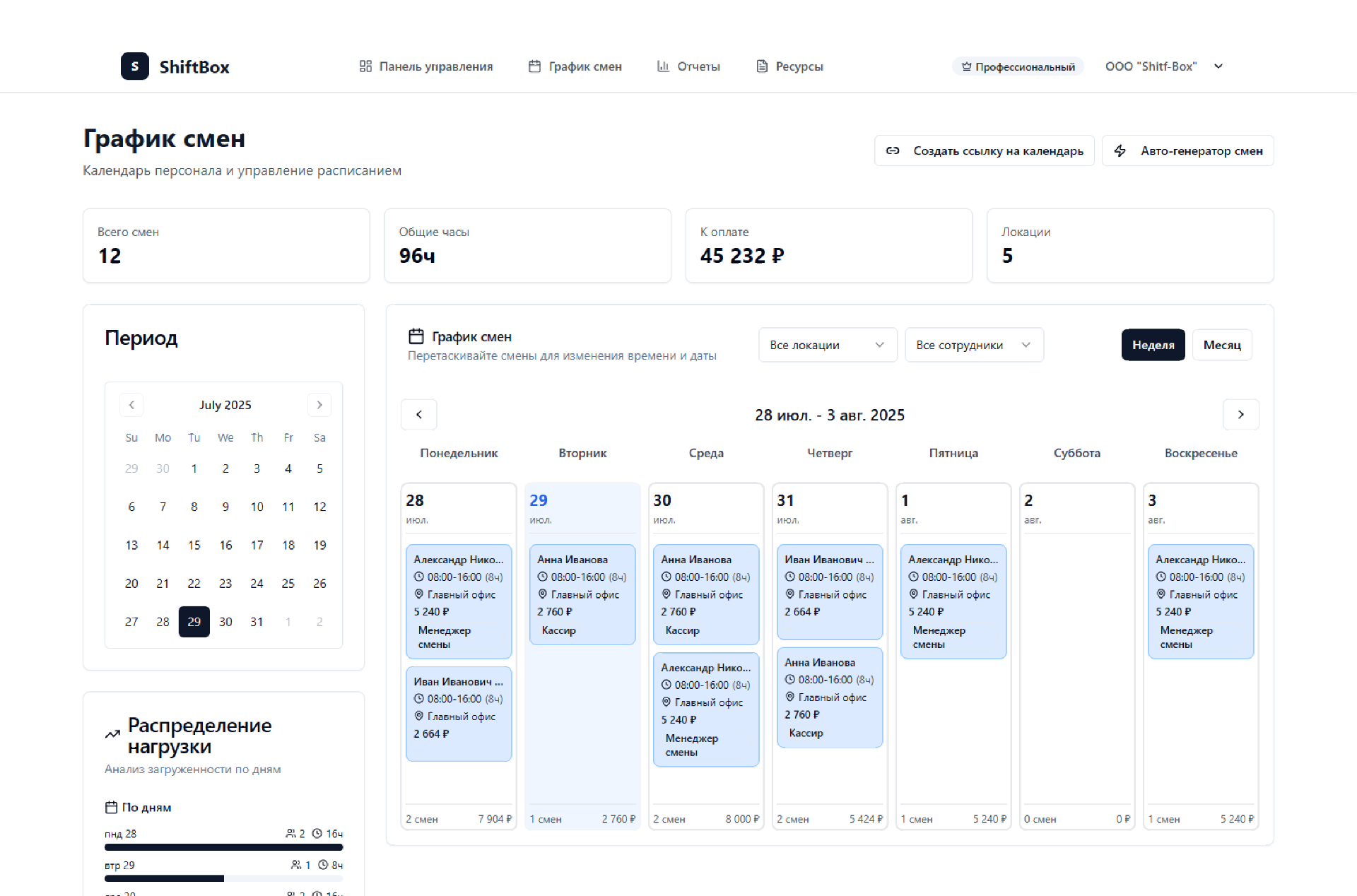
Encode ten-hour blocks and the fixed off-day once. Publish the repeating four-day week without rebuilding the grid every month or offering a static download that ignores your core-hour rules.
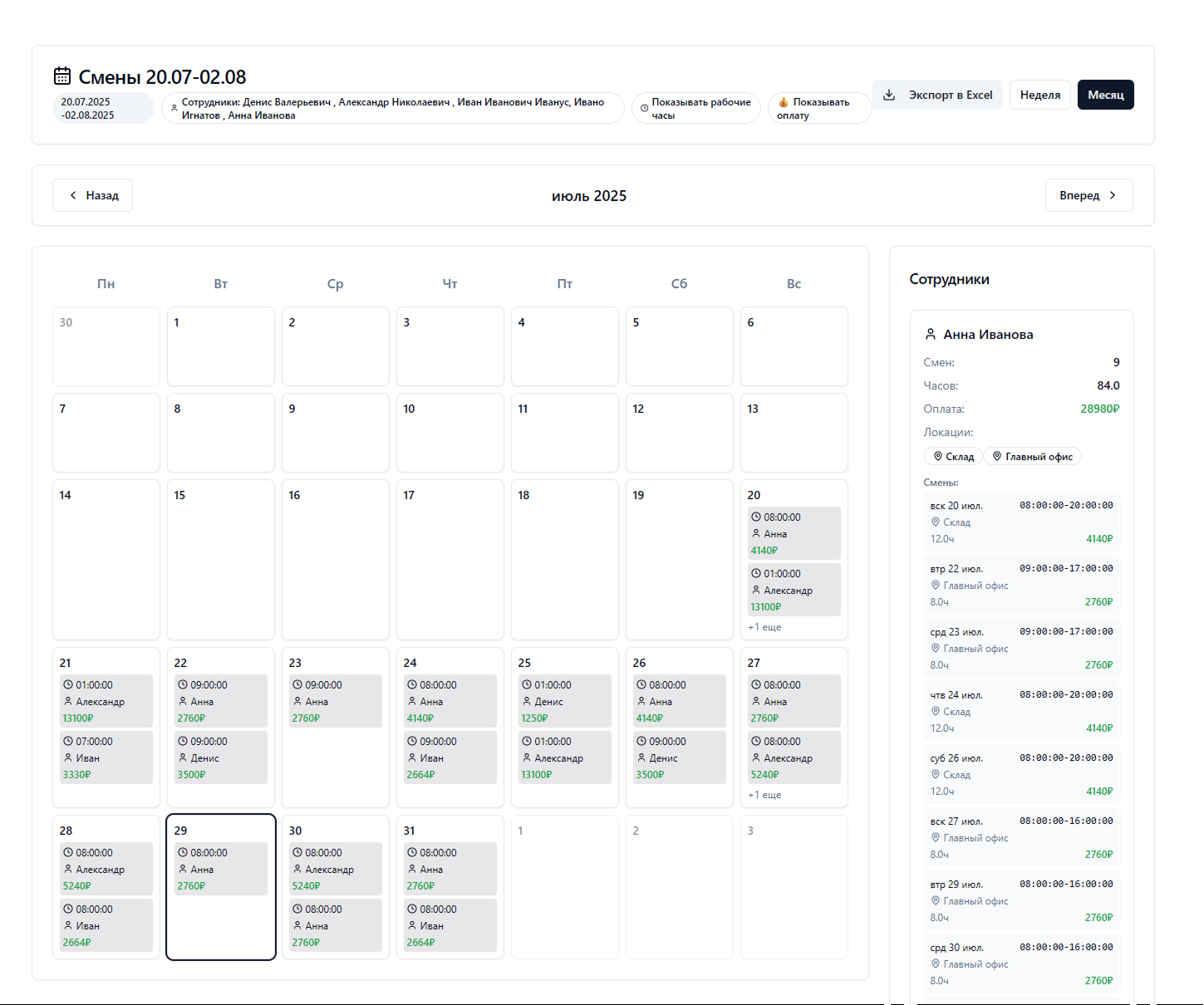
Show when everyone is expected available for meetings alongside individual start times. Reduce double-booked overlap and empty collaboration windows on compressed days.
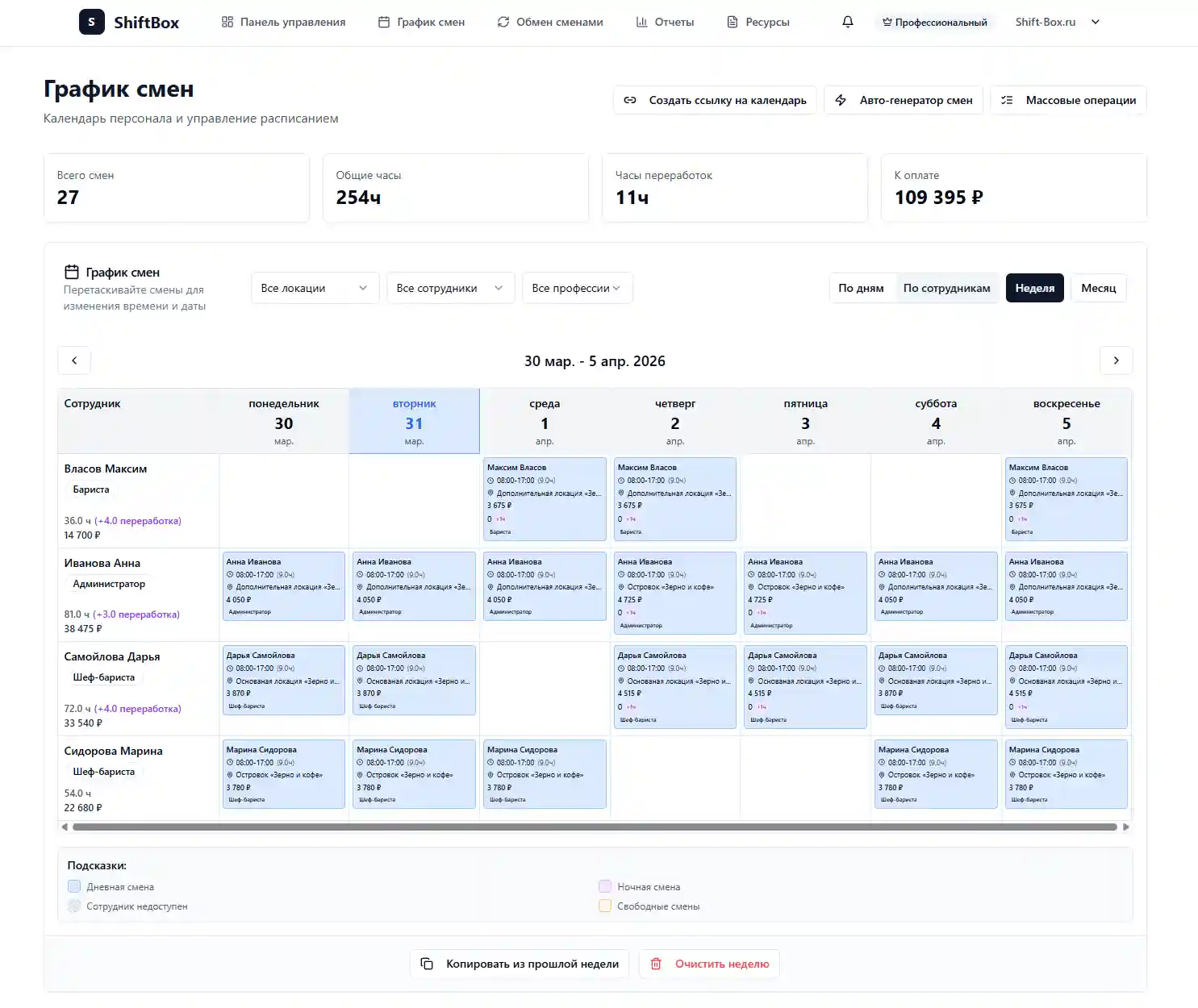
After publish, employees open the latest four-day view—ten-hour blocks, off-day, and approved swaps included—without a new email after every edit.
Calendar, ten-hour blocks, core overlap, weekly off-days, and hour reports share one workflow—no multi-tab Excel models, reply-all threads, and manual day-off toggles.
Build shifts in a clear matrix calendar, assign people with drag-and-drop, and immediately see coverage gaps.
Actual hours, lateness, and overtime live in one place so managers are not reconciling spreadsheets at month-end.
Staff open a browser link, see their shifts, mark unavailability, and request swaps without a heavy onboarding flow.
When shifts change, people see the new plan in their workspace—managers do not re-explain every edit in side threads.
On a compressed four-day week, each role needs the same pattern seen from a different angle
Sees whether coverage holds on the shared off-day and whether fifth-day fill-ins are creeping into habitual overtime.
Operates from a generated 4/10 base: records PTO, meeting holds, and floater coverage without manually re-marking off-days after every change.
Gets assignment-linked forty-hour weeks—with early signal when someone picks up a fifth day or training runs beyond the ten-hour block.
4/10 teams rarely fail on day one—they fail when meeting creep, client emergencies, and PTO stack on the same ten-hour day. That is when one live roster starts saving coordinators hours every week.
"We moved the back office to Monday–Thursday, ten hours, Friday off. Core hours were ten to two for meetings—great on paper. Within a month, half the team started at seven and the other half at eight, and nobody knew when everyone was actually online. Client calls landed on Fridays because the shared calendar still showed five-day weeks. Now the four-day pattern is generated in ShiftBox, core overlap is on the same page as shifts, and Friday coverage is explicit when someone has to work."
Off-days lived in HR policy, core hours in a wiki, and the "real" schedule in a spreadsheet nobody trusted after the first swap.
The 4/10 week, core hours, swaps, and hour totals live in one process that survives a full quarter of exceptions.
The team stops rebuilding four-day weeks by hand after every edit and shares one current picture of ten-hour blocks, off-days, and meeting overlap.
Value appears when the four-day week, core overlap, and hours share one workflow through every ten-hour block and weekly off-day
The 4/10 work schedule is one of the most recognizable compressed patterns in North American workplaces: four ten-hour days, forty hours total, one weekday off every week. Employees gain a predictable long weekend or midweek break; employers gain longer uninterrupted blocks for production, field work, or deep office tasks. The trade is daily intensity—ten hours require real fatigue management—and collaboration risk when start times stagger without a published overlap window.
Core hours solve the collaboration problem if teams treat them as operational fact, not HR decoration. A common design might run ten-hour days from seven to five for some staff and eight to six for others, with core hours from ten to two when everyone is expected available for meetings, standups, and client calls. Without that overlap on the same calendar as shifts, compressed weeks devolve into async-only work: the policy says collaboration exists, but the lived schedule says otherwise. ShiftBox puts core-hour windows next to published ten-hour blocks so coordinators and employees share one truth.
Coverage on the off-day is the second failure mode. Not every role can take Friday off when customers expect Friday service. Manufacturing plants often run 4/10 for office staff while the floor stays on rotating shifts. Municipal departments stagger Monday-off and Friday-off lanes so counters stay open. A spreadsheet that assumes one off-day for everyone creates silent gaps—then "temporary" fifth-day coverage becomes permanent overtime because nobody updated the master plan.
Compared to 9/80, the 4/10 pattern trades biweekly long weekends for weekly predictability. There is no forty-four-hour week-one trap inside a two-week pay period; a standard four-by-ten design totals forty hours each week. Overtime risk still appears when emergencies add a fifth day, training exceeds the block, or floaters cover without hour visibility. Keeping assignments and worked time in one system surfaces that drift before it hardens into payroll surprises.
ShiftBox treats 4/10 as a living pattern—not a fake Excel download. You generate the four-day week, mark off-days by crew or role, publish core overlap, and manage PTO, swaps, and coverage fill-ins on the live calendar. Staff open one roster for ten-hour blocks and off-days; leads see whether Friday coverage is staffed; payroll gets assignment-linked hours without reconstructing approvals from three exports. The goal is not to oversell automation—it is to give small and mid-sized teams an honest workspace for a compressed week that actually survives the quarter.
A 4/10 roster that survives real exceptions—not just week one on a poster.
Especially useful where ten-hour blocks, fixed off-days, and core-hour overlap are fixed constraints—and manual grids keep breaking after the first holiday week.
Model four ten-hour days, mark the weekly off-day, and keep core hours visible for meetings—without a static template that drifts.
Ask for a walkthrough if you run mixed 4/10 office lanes alongside shift workers—we can map both patterns together.
ShiftBox helps teams generate and operate the 4/10 work schedule—four ten-hour days, a fixed weekday off, core hours for meetings, and one workflow instead of a policy PDF and a broken spreadsheet.
Four ten-hour days, a weekly day off, and the core-hour overlap that keeps compressed weeks collaborative
A compressed workweek where employees work four ten-hour days—forty hours total—with one fixed weekday off each week. Common variants run Monday through Thursday with Friday off, or Tuesday through Friday with Monday off, depending on operational coverage needs and customer-facing windows.
When start times stagger—someone opens at seven, another at eight—ten-hour days can fragment collaboration. Core hours mark the window when everyone is expected available for meetings, standups, and cross-team work. Without published overlap, compressed schedules quietly become async-only weeks.
Yes: define your ten-hour blocks, mark the fixed off-day, optionally note core-hour windows, and publish the repeating weekly calendar. PTO, swaps, and coverage fill-ins layer on the generated base instead of redrawing four-day weeks by hand.
4/10 compresses each individual week into four days with one weekday off every week. 9/80 spreads eighty hours across nine days in two weeks and delivers every-other-Friday off. Teams pick 4/10 when they want weekly predictability and meeting overlap; 9/80 when biweekly long weekends matter more.
A standard four-by-ten design totals forty hours—no automatic weekly spike like 9/80 week one. Risk appears when someone picks up a fifth day, training runs long, or call-out coverage adds hours without updating the published plan. Keeping assignments and hours together surfaces drift early.
No install is required. Staff open a browser link to the published roster and see their ten-hour blocks, weekly off-day, and any approved swaps—important when hybrid staff bookmark the schedule on mobile.
Neighboring schedules for compressed and flexible workweeks