1
Problem Eighty hours compressed into nine workdays
Instead of ten eight-hour days across two weeks, the pattern clusters longer days so one Friday can stay off every other cycle. Planners must track both daily length and biweekly totals.
Nine-hour days, one eight-hour anchor, and Fridays that alternate between work and rest—simple on a poster, fragile in a spreadsheet
Instead of ten eight-hour days across two weeks, the pattern clusters longer days so one Friday can stay off every other cycle. Planners must track both daily length and biweekly totals.
Staff remember the long weekend but forget which Friday is work this cycle. A static template that does not flip the off-day flag creates recurring no-shows or accidental overtime fill-ins.
Four nine-hour days plus one eight-hour day land inside a single calendar week. That is the classic 9/80 overtime trap—four hours above a naive forty-hour assumption before week two balances the period.
Eight nine-hour days in the second week can lull managers into thinking the pay period is even. Finance discovers the week-one spike only when hours are already locked.
Compressed days only work if teams share enough overlap for standups, client calls, and cross-functional reviews. When start times drift, the schedule's benefits erode into isolated nine-hour silos.
A vacation day in week one does not remove the forty-four-hour risk—it reshuffles which nine-hour block someone else must cover. Manual grids rarely show the knock-on effect across both weeks.
Encode the biweekly cycle once, mark alternating Fridays, then operate swaps and leave on the live calendar
Most teams adopting 9/80 already know their nine-hour window, which day carries eight hours in week one, and the anchor date for the first off-Friday. ShiftBox turns that into a published roster instead of a workbook that fractures after the first unplanned absence or holiday adjustment.
Add people, roles, and your nine-hour / eight-hour shift types.
Define the week-one and week-two day lengths in the 9/80 pattern.
Mark alternating Friday-off blocks for the full biweekly cycle.
Publish the generated calendar so staff see which Friday is off.
Manage swaps, PTO, and hour checks without redrawing the compressed grid.
Drawing the biweekly pattern is tedious; keeping week-one forty-four-hour weeks honest through a year of swaps is where manual tools collapse
The two-week template is correct on launch day. Then PTO, meeting moves, and "just this once" nine-hour swaps accumulate—and nobody agrees which Friday was supposed to be off or whether week one already crossed forty-four hours.
The biweekly pattern is generated once, alternating Fridays stay marked in one calendar, and exceptions update the hour picture operations and payroll share.
The schedule rewards teams that treat alternating Fridays and week-one hours as operating facts, not HR footnotes
Many agencies use 9/80 to offer every-other-Friday off while keeping service windows staffed on the working Fridays. Visibility prevents counter desks from going dark on the wrong off-day.
Longer uninterrupted blocks help deep work; alternating Fridays give recovery without losing monthly hour totals. The pattern fails when meeting creep eats the nine-hour days.
Operations centers may stay 24/7 while support staff run 9/80. Planners need one calendar that separates compressed office crews from shift workers.
When pay periods match the two-week 9/80 window, finance can reconcile eighty hours cleanly—if week-one spikes are visible before approval, not after close.
Organizations with strict weekly overtime thresholds need week-one forty-four-hour weeks flagged in real time, not discovered in a spreadsheet audit.
Remote staff on 9/80 still need shared overlap windows. Publishing core hours alongside compressed blocks keeps collaboration from dissolving into async-only weeks.
Concrete control points for schedulers and payroll—not generic workforce feature lists
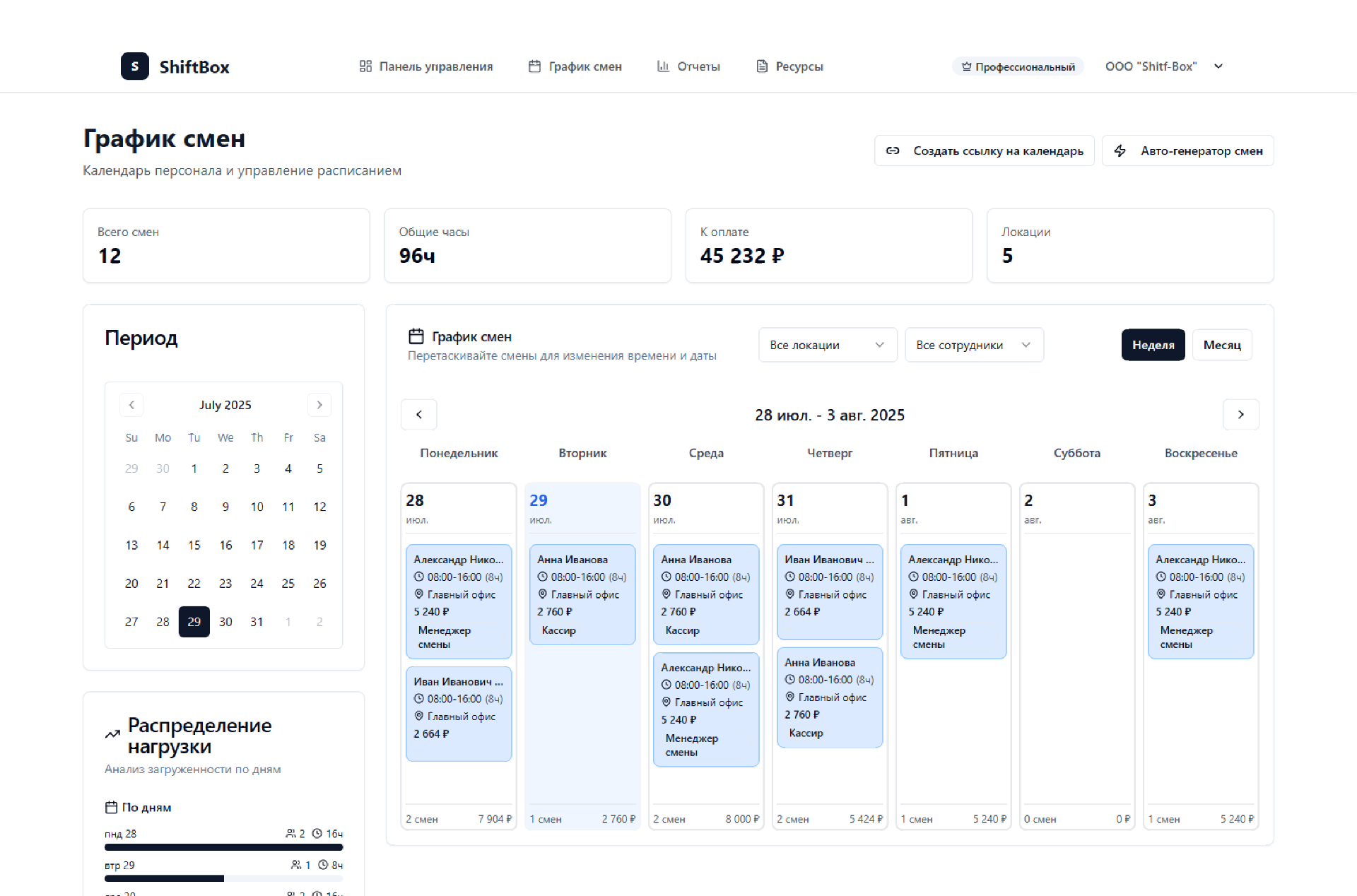
Encode nine-hour days, the week-one eight-hour block, and alternating Friday-off flags once. Publish the repeating biweekly calendar without rebuilding the grid every cycle or pretending a static file will flip Fridays automatically.
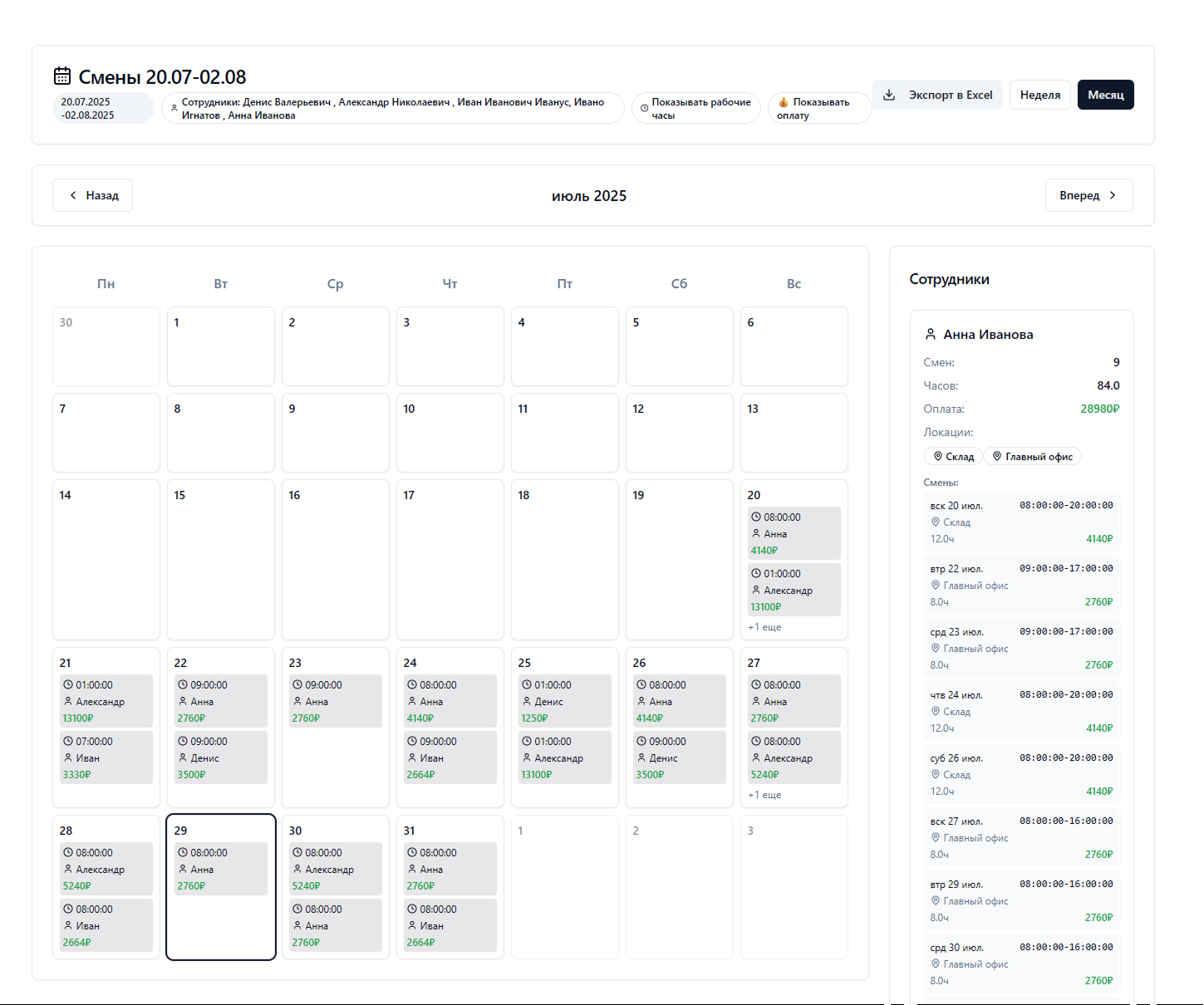
See when a calendar week inside the pay period totals forty-four scheduled hours before managers approve another nine-hour swap. Compare planned blocks to worked time before premiums harden.
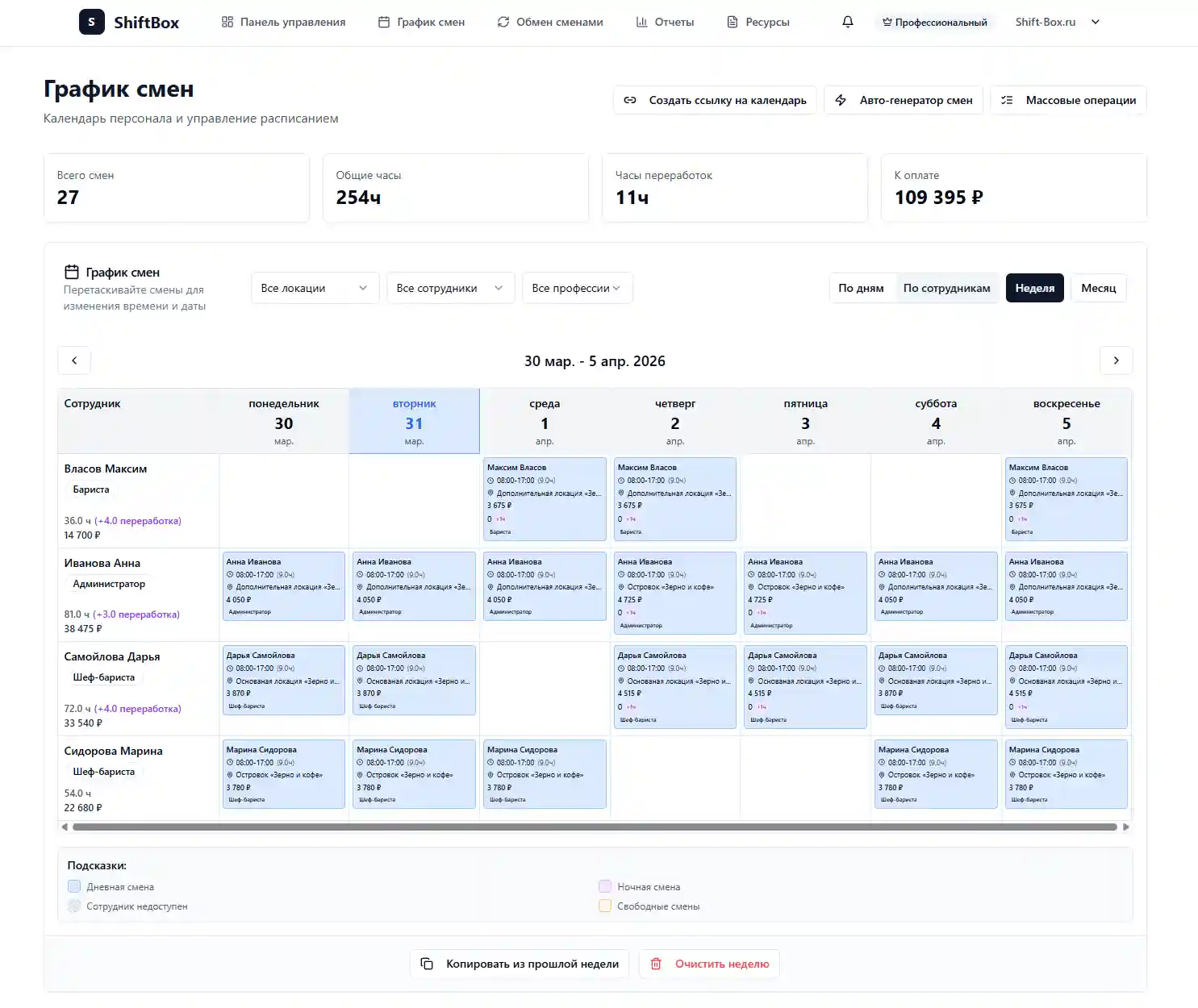
After publish, employees open the latest biweekly view—upcoming nine-hour days, which Friday is off, and approved swaps included—without a new email attachment after every edit.
Calendar, compressed day lengths, alternating Fridays, biweekly visibility, and hour reports share one workflow—no multi-tab Excel models, reply-all threads, and manual Friday toggles.
Build shifts in a clear matrix calendar, assign people with drag-and-drop, and immediately see coverage gaps.
Actual hours, lateness, and overtime live in one place so managers are not reconciling spreadsheets at month-end.
Staff open a browser link, see their shifts, mark unavailability, and request swaps without a heavy onboarding flow.
When shifts change, people see the new plan in their workspace—managers do not re-explain every edit in side threads.
On a biweekly compressed rotation, each role needs the same cycle seen from a different angle
Sees whether coverage holds on working Fridays and whether week-one hour spikes are about to trigger overtime policy before the biweekly period closes.
Operates from a generated 9/80 base: records PTO, meeting holds, and emergency coverage without manually re-marking alternating Fridays after every change.
Gets assignment-linked hours through uneven calendar weeks—especially when week one shows forty-four hours and week two balances the eighty-hour total.
9/80 teams rarely fail while the printed biweekly chart is fresh—they fail when PTO, meeting moves, and emergency coverage pull people off the wrong Friday. That is when a single live roster starts paying back the setup effort.
"We run 9/80—nine-hour days, every other Friday off, eighty hours in two weeks. The poster in the break room was fine until someone took PTO on a week-one Thursday and we backfilled with a nine-hour Friday nobody realized was supposed to be off. Payroll flagged forty-four hours in week one twice in a quarter. Now the biweekly cycle is generated in ShiftBox, alternating Fridays stay honest, and we see the overtime trap before we approve another swap."
Each supervisor kept correction notes, off-Fridays were easy to misread as vacation, and payroll rebuilt hours from three exports at period end.
The 9/80 cycle, alternating Fridays, swaps, and hour totals live in one process that survives a full biweekly rotation.
The team stops fighting roster drift through parallel files and moves to one current picture of compressed days, off-Fridays, and week-one hour spikes.
Value appears when the biweekly compressed cycle, alternating Fridays, and hours share one workflow through every nine-hour block and off-day
The 9/80 compressed work schedule promises something employees notice immediately: every other Friday off, with eighty hours still delivered across a two-week pay period. On paper it is elegant—nine workdays instead of ten, longer daily blocks that can protect focus time, and a recurring long weekend that competes with private-sector perks in public agencies, utilities, and technical departments. The pattern is not a casual flex arrangement. It is a contract between operations, HR, and finance about how hours compress, how Fridays alternate, and how weekly overtime rules interact with a pay period that rarely matches a simple Monday-to-Friday forty-hour story.
Most 9/80 implementations split the two weeks asymmetrically. Week one often carries four nine-hour days and one eight-hour day—forty-four scheduled hours inside a single calendar week. That is the overtime trap teams discover too late: managers still mentally model forty-hour weeks, while the schedule quietly schedules four extra hours in week one. Week two then balances the biweekly total with eight nine-hour days—seventy-two hours in that calendar week if you count naively by week, but the pay period cares about eighty across both. Spreadsheet templates that color cells but do not tie hours to assignments leave payroll guessing which version was actually worked and whether week one already crossed policy thresholds.
Alternating Fridays add a second failure mode. One Friday in the cycle is work; the other is off. Staff remember the benefit—long weekend—but forget the phase. A planner who marks "Friday off" statically instead of every other cycle creates predictable chaos: someone books travel for the wrong Friday, a client meeting lands on a day the counter should be closed, or a supervisor schedules mandatory training on what was supposed to be a rest day. The fix is not another PDF legend. It is a published biweekly calendar that flips the Friday flag automatically as the cycle advances.
ShiftBox treats 9/80 as an operating pattern—not a fake Excel download. You generate the two-week sequence with nine-hour and eight-hour blocks, mark which Fridays are off, publish the roster, and then manage reality: PTO, sick days, meeting holds, and approved swaps. Because the cycle lives in one system, a substitution that adds a ninth hour on the wrong day updates the week-one hour picture immediately. Payroll sees assignment-linked totals through uneven calendar weeks instead of reconstructing hours from email approvals and three different calendar exports.
Teams comparing 9/80 to a 4/10 compressed week should be explicit about the trade-off. Four ten-hour days with a fixed weekday off every week deliver a predictable rhythm for meeting overlap and childcare. 9/80 trades weekly regularity for every-other-Friday off and a biweekly cadence that fits organizations already on two-week pay periods. Neither pattern administers itself. ShiftBox does not oversell magic automation. It gives schedulers an honest workspace to generate the 9/80 schedule, keep alternating Fridays synchronized, and give finance a defensible hour trail before the week-one forty-four-hour trap becomes an overtime line item.
A 9/80 roster that survives the full biweekly cycle—not just week one on a poster.
Especially useful where nine-hour days, alternating Fridays off, and week-one forty-four-hour weeks are fixed constraints—and manual grids keep breaking at cycle boundaries.
Model eighty hours in nine days, mark every-other-Friday off, and keep week-one forty-four-hour weeks visible before payroll locks.
Ask for a walkthrough if your 9/80 variant uses different day lengths—we can map your anchor dates together.
ShiftBox helps teams generate and operate the 9/80 compressed work schedule—eighty hours in nine days, every other Friday off, week-one overtime visibility, and one workflow instead of a wall chart and a broken spreadsheet.
Eighty hours in nine days, alternating Fridays, and the payroll weeks that do not behave like a standard 40-hour rhythm
A two-week pattern where employees work eighty hours across nine days instead of ten. Typical implementations use eight nine-hour days plus one eight-hour day in week one, then eight nine-hour days in week two—with every other Friday off. The result is a regular three-day weekend on alternating cycles while still averaging forty hours per week.
In many 9/80 designs, week one includes four nine-hour days and one eight-hour day—forty-four scheduled hours inside a single calendar week. If payroll or managers still think in flat forty-hour weeks, those four extra hours can trigger unintended overtime, premium pay, or policy violations unless the schedule system makes the spike visible before the week closes.
Yes: define the nine-hour and eight-hour blocks, mark which Fridays are off, and publish the repeating biweekly calendar. Exceptions, PTO, and swaps then layer on the generated base instead of redrawing the compressed grid by hand every cycle.
One Friday in the two-week window is a scheduled day off while the other remains a workday—often an eight- or nine-hour block depending on your variant. Staff need a single published source that shows which Friday is off this cycle; otherwise "I thought we were off" conflicts pile up every other week.
No. A 4/10 schedule compresses each individual week into four ten-hour days with one weekday off every week. 9/80 spreads eighty hours across nine days in two weeks and delivers every-other-Friday off—not a fixed weekly day off. Teams choose based on meeting overlap needs, commute policy, and how finance handles uneven calendar weeks.
No install is required. Staff open a browser link to the published roster and see upcoming nine-hour blocks, eight-hour days, and which Friday is off in the current biweekly cycle—critical when the pattern flips every two weeks.
Neighboring schedules for compressed and hour-controlled workweeks
When four ten-hour days with a fixed weekly day off fit your team better than biweekly 9/80.
When week-one forty-four-hour weeks need a separate guardrail before payroll.
When compressed schedules must stay inside working-time limits and policy.