1
Problem Machine matrix lives on the whiteboard
CNC, lathe, weld, and grind coverage are planned visually—until someone erases Thursday and half the shop follows the wrong version.
Static rosters collapse the moment a rush job lands, a cert holder calls out, or setup runs long on the only five-axis cell
CNC, lathe, weld, and grind coverage are planned visually—until someone erases Thursday and half the shop follows the wrong version.
Only two people run the CMM or sign first articles. When one is out, the job queue does not wait—but the roster often still shows green.
Small-batch shops rarely repeat the same staffing mix. A template built for "normal week" fractures the moment three rush POs hit the same cell.
A setup that crosses shift change leaves the next crew guessing what was qualified, what still needs touch-off, and who owns the spindle.
Extra Saturday hours across welders and machinists only surface when payroll assembles the period—after customer penalties already landed.
Many job shops outgrow spreadsheets but cannot justify SAP or a full MES rollout. They still need one honest place for shifts, floaters, and hours.
Start with one cell or one shift block—no shop-wide freeze required
Most job shops pilot a single area first—the CNC cell on day shift, or weld plus inspect on a four-day week—then extend the same workflow across grind, shipping, and weekend coverage. The shop lead keeps jobs moving while the roster matures in the background.
Add machine groups, roles, and crews—operators, setup, weld, inspect, ship.
Build the base roster by cell and week, including scarce-skill tags.
Publish shifts to floor staff through their portal or shared link.
Record call-outs, floaters, and rush-order extensions without rebuilding spreadsheets.
Review hours by role and cell, then prepare overtime and payroll data.
The same order stack feels very different when Excel is no longer the shop lead's second job
Job shops run on changeovers, not office hours. A delayed material lot, a crashed program, a rush aerospace job, or two call-outs rewrite the floor plan before the sheet gets updated. Weld covers grind while CNC waits; inspect inherits parts nobody documented at handoff.
Shop leads, cell supervisors, and office managers see current shifts, crew assignments, and hours per area without manual reconciliation between the floor, the whiteboard, and the back office.
Keep machine coverage, scarce skills, and worked-time trail aligned when every week is a new mix of jobs
Planners edit; crews refresh—no competing "final" photos of the whiteboard in the group chat.
When only certified operators can run a cell, empty windows show before hot jobs queue behind a locked machine.
Saturday surge and floater moves layer on the standard week instead of living on a separate overtime list.
Setup status still lives with the job—but who is on the spindle next shift is never ambiguous.
Compare planned cell coverage to worked time before overtime hardens across a deadline stack.
Workforce scheduling without pretending you need an enterprise rollout to know who is on second shift weld.
Not abstract automation—concrete control points for the shop supervisor and office manager
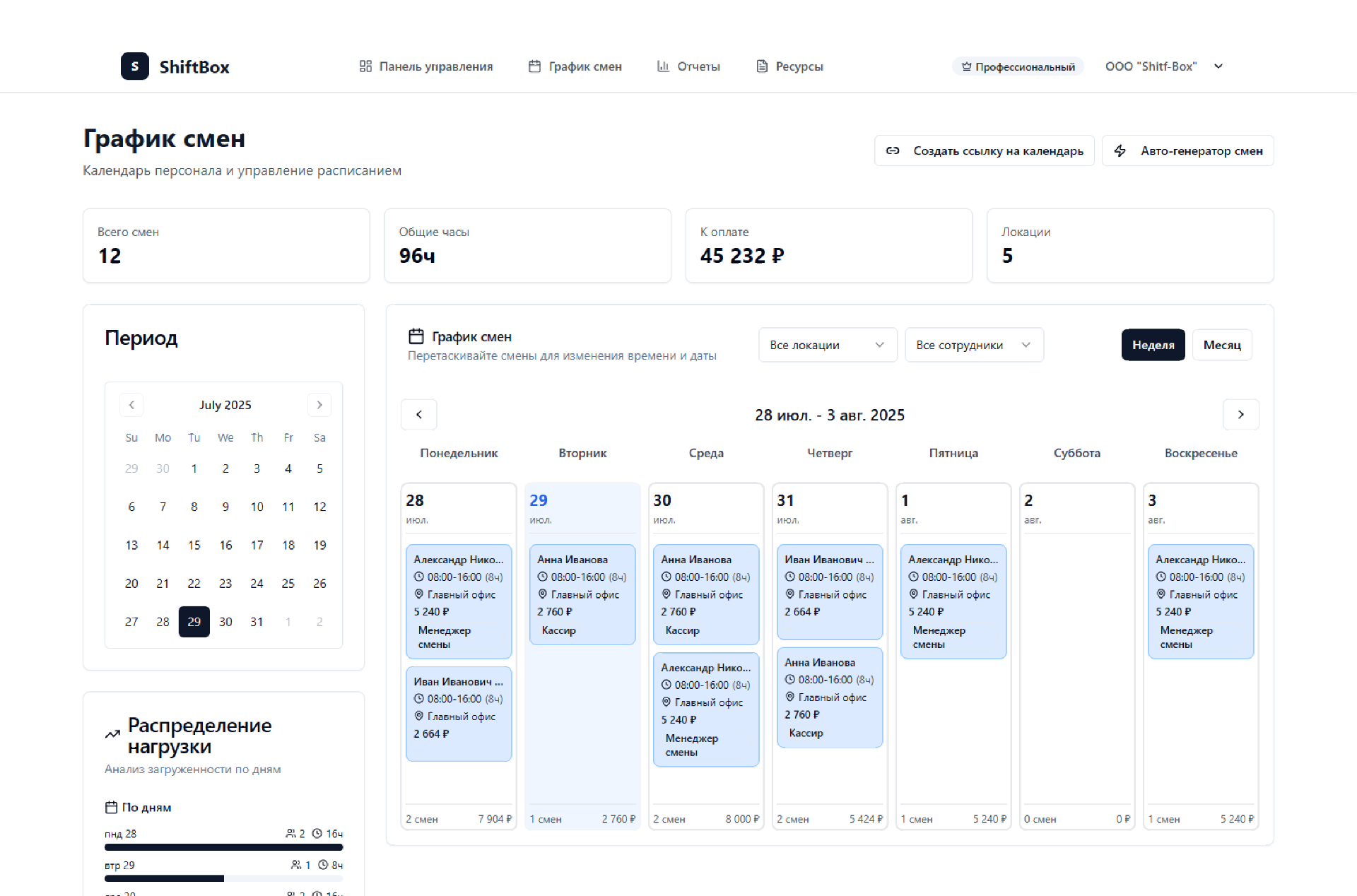
See who is on CNC, lathe, weld, grind, and inspect—where coverage is thin, and where to move a floater before a job idles.
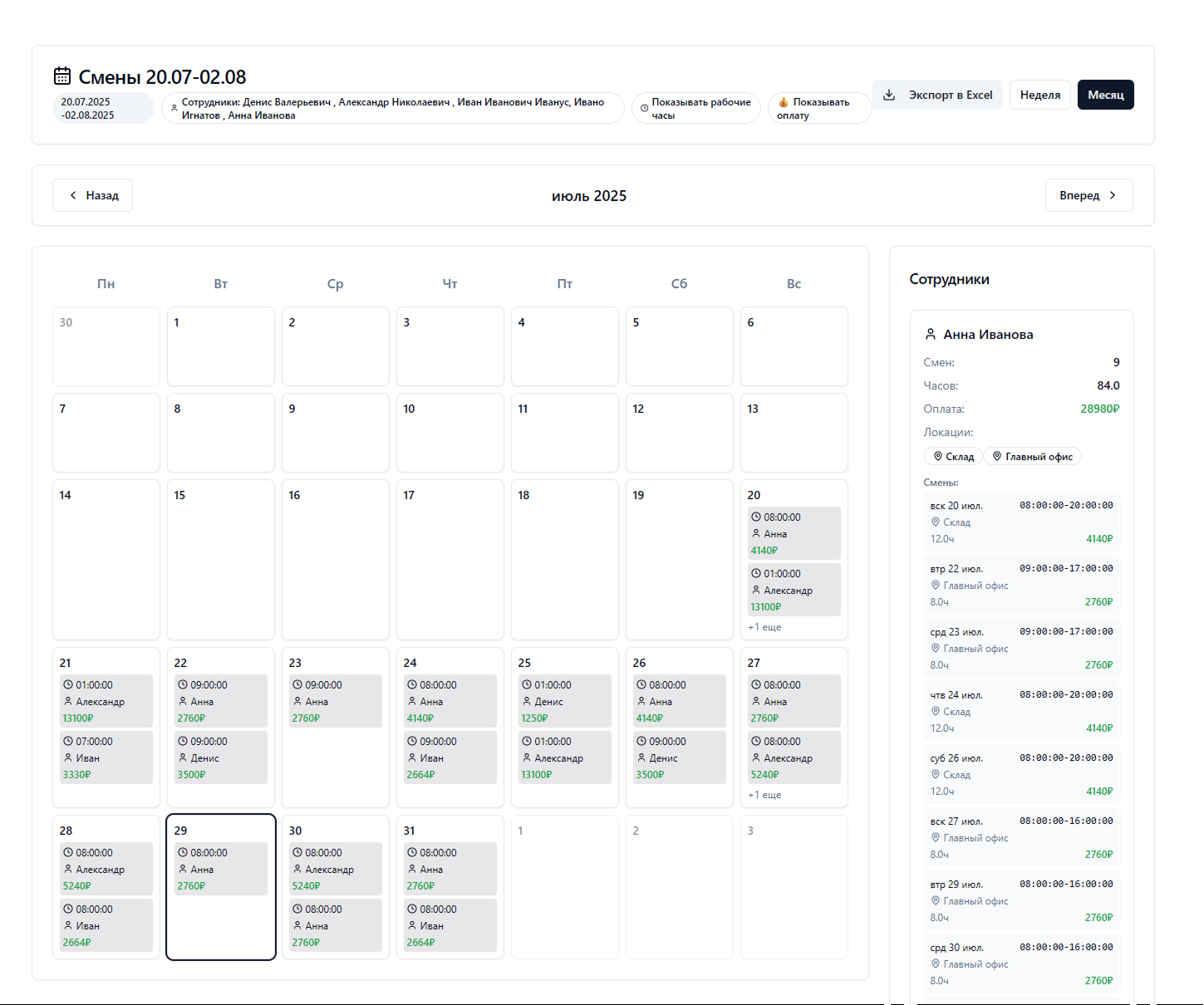
Shifts, extra Saturdays, and cert-gated assignments sit in one system instead of a patchwork of time cards and whiteboard notes.
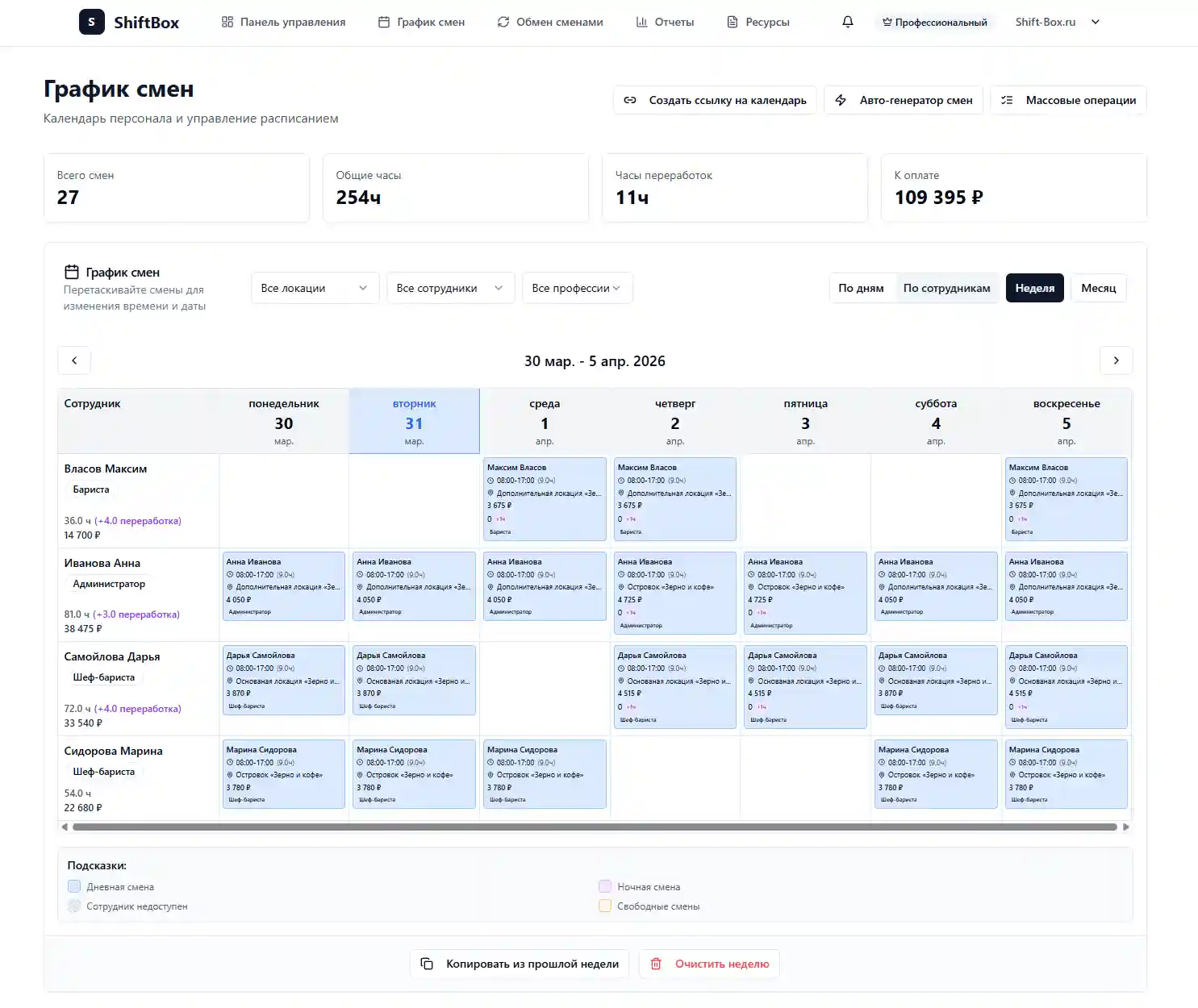
Easier to read operator load, spot chronic understaffed cells, and prepare payroll data without re-keying from three sources.
Calendar, people, cells, scarce skills, hours, and reports share one workflow—no Excel, radio threads, and manual whiteboard photos.
Build shifts in a clear matrix calendar, assign people with drag-and-drop, and immediately see coverage gaps.
Actual hours, lateness, and overtime live in one place so managers are not reconciling spreadsheets at month-end.
Staff open a browser link, see their shifts, mark unavailability, and request swaps without a heavy onboarding flow.
When shifts change, people see the new plan in their workspace—managers do not re-explain every edit in side threads.
Each role sees the slice of job shop operations it needs to keep machines cutting and jobs shipping
Gets a clearer picture of cells, operator load, and overtime spend without manual status collection from three supervisors.
Works with a live roster: adds shifts, closes coverage gaps, and publishes changes without chasing operators on break.
Gets cleaner hour and shift data instead of assembling it from time cards, whiteboard photos, and supervisor texts.
Job shop teams need more than a neat template—they need to keep the roster current when rush orders, cert call-outs, and setup overruns hit the same cell.
"We are thirty-two people—CNC, lathe, weld, CMM, ship. Scheduling lived on a whiteboard and a spreadsheet the office manager updated when she could. Rush weeks meant a separate overtime list nobody trusted. After ShiftBox, cells, floaters, and hours stopped living apart: the lead works in one window, and operators see who is on five-axis before they clock in."
Scarce-skill coverage had to be confirmed by phone, and the final hour picture came from time cards plus supervisor memory.
Cells, shifts, floaters, and actual time live in one process that is easier to keep current through order peaks.
The floor stops fighting staffing fires on whiteboards and moves to more predictable control of coverage, scarce skills, and overtime before jobs stall.
Not only build the roster, but keep it live as orders, call-outs, and setup reality change
Job shop scheduling is a different animal from line manufacturing. You are not repeating the same takt time on a conveyor—you are juggling a machine matrix against a queue of small-batch orders that changes shape every week. Monday might be a five-axis aerospace job with first-article hold points; Wednesday shifts to a weld-and-grind rush for a local OEM; Friday chases inspect sign-off so ship can make the carrier cutoff. The roster must answer a simpler question than an ERP screen: who is qualified, on which cell, for which shift—and what happens when the only CMM programmer calls out?
Large enterprises solve this with SAP, Oracle, or a full MES stack tied to routings and capacity plans. Most job shops between ten and eighty people are honest about what they need: not another six-month implementation, but one place where machinists, welders, setup techs, and inspectors see shifts; where scarce certifications gate coverage visibly; and where Saturday surge does not live on a sticky note outside the "official" week. ShiftBox is workforce scheduling for that layer—not pretending to replace your CAM, your quality system, or your order board.
The machine matrix is where manual tools fail first. Whiteboards work until someone erases Tuesday weld to squeeze in a floater—and half the shop still thinks the old names are on the bay. Spreadsheets work until three supervisors maintain parallel versions for CNC, second shift, and weekend cover. Scarce skills make gaps expensive: when only two people can run the CMM or sign aerospace FAI, an empty cell is not an HR problem—it is a missed ship date. Publishing roles and coverage in one calendar surfaces those gaps before the spindle sits idle.
Order peaks rewrite staffing faster than office schedules update. A rush PO does not ask whether your template allows overtime—it asks who can stay Saturday and whether weld is still covered when CNC pulls a floater. Layering surge blocks on a base week, publishing once, and tracking hours in the same system keeps the shop lead from rebuilding rosters in chat while jobs queue at inspect. Overtime control matters because deadline stacks compound quietly: four extra hours on three machinists and two welders is already a payroll story before anyone prints the job traveler.
ShiftBox fits job shops that outgrew spreadsheet roulette but will not buy SAP to answer "who is on second shift lathe." You model cells and roles, tag scarce skills, publish shifts to the floor, record call-outs and floaters without whiteboard amnesia, and give the office a cleaner hour trail through rush weeks. It is the operational calendar your people actually read—not a fake template download, not an ERP module nobody on the floor opens.
A more predictable shop roster and less daily manual work when orders shift.
Especially important for small-batch manufacturers that must react fast to rush jobs, cert-gated cells, and weekend surge without enterprise software weight.
Try it free and model one cell with a scarce-skill role and a rush-week floater move.
ShiftBox helps small-batch manufacturers keep cell coverage, scarce-skill assignments, and hours in one workflow—so machines stay staffed and payroll prep hurts less.
Machine matrices, small-batch orders, scarce skills, and payroll prep without enterprise ERP
No—and it does not pretend to be. ShiftBox focuses on who is on which shift, which machines have qualified coverage, and how hours accumulate. Routing, BOMs, and full production planning stay in your existing tools; the roster stops living in a parallel spreadsheet.
Yes: structure shifts by machine group, cell, or role so a five-axis operator is not confused with a general lathe hand. Floor leads see coverage gaps by area in one calendar instead of color-coded whiteboards that nobody updated after lunch.
Tag roles or people with the skills that actually gate production—CMM programming, TIG on aluminum, first-article sign-off. When only two people hold a cert, empty coverage windows on that role surface before a hot job stalls at the machine.
Build surge blocks on top of your base week, move floaters between cells, and publish once. Everyone—from the shop lead to payroll—works from the same rush-week plan instead of a patchwork of overtime sticky notes and text threads.
When published shifts and worked hours sit in one system, cumulative overtime across machinists and welders is easier to track during the month—not only when finance reconciles the period after three jobs shipped late.
Staff open a browser link to their personal schedule. No app install is required for basic shift visibility—useful for machinists who need quick access between setups without learning an ERP screen.
Pages that help close neighboring scenarios for manufacturing and shift teams