1
Problème Two crews, two stories
Each team remembers a different version of who traded shifts last Tuesday.
Symmetry on paper does not stop drift once swaps and leave enter the picture
Each team remembers a different version of who traded shifts last Tuesday.
The master file changes faster than the group chat can resend screenshots.
You reconstruct coverage and hours from fragments instead of a timeline.
Backfill rules are verbal, so coverage quality swings week to week.
The base pattern goes in quickly; the system keeps it current as reality changes
Add people and roles.
Build the core 2/2 template.
Publish shifts to the team.
Run swaps and hours inside the same tool.
Even a simple 2/2 board loses clarity when edits and actual time stay manual.
Trouble rarely starts in the pattern itself—it starts after swaps, leave, and sick days when nobody shares the same version.
Planning, changements et heures réelles au même endroit — le chef voit une image vivante par personne et poste.
Keep the repeating block, the exceptions, and the worked-time trail aligned
Planners edit; crews refresh—no competing "final" attachments.
Substitutions stay dated so mirrored teams do not argue from memory.
Compare planned blocks to what actually ran before overtime hardens.
Vacations and sick days are part of the operational calendar, not a side spreadsheet.
Pas une automatisation abstraite — des points de contrôle concrets à chaque poste.
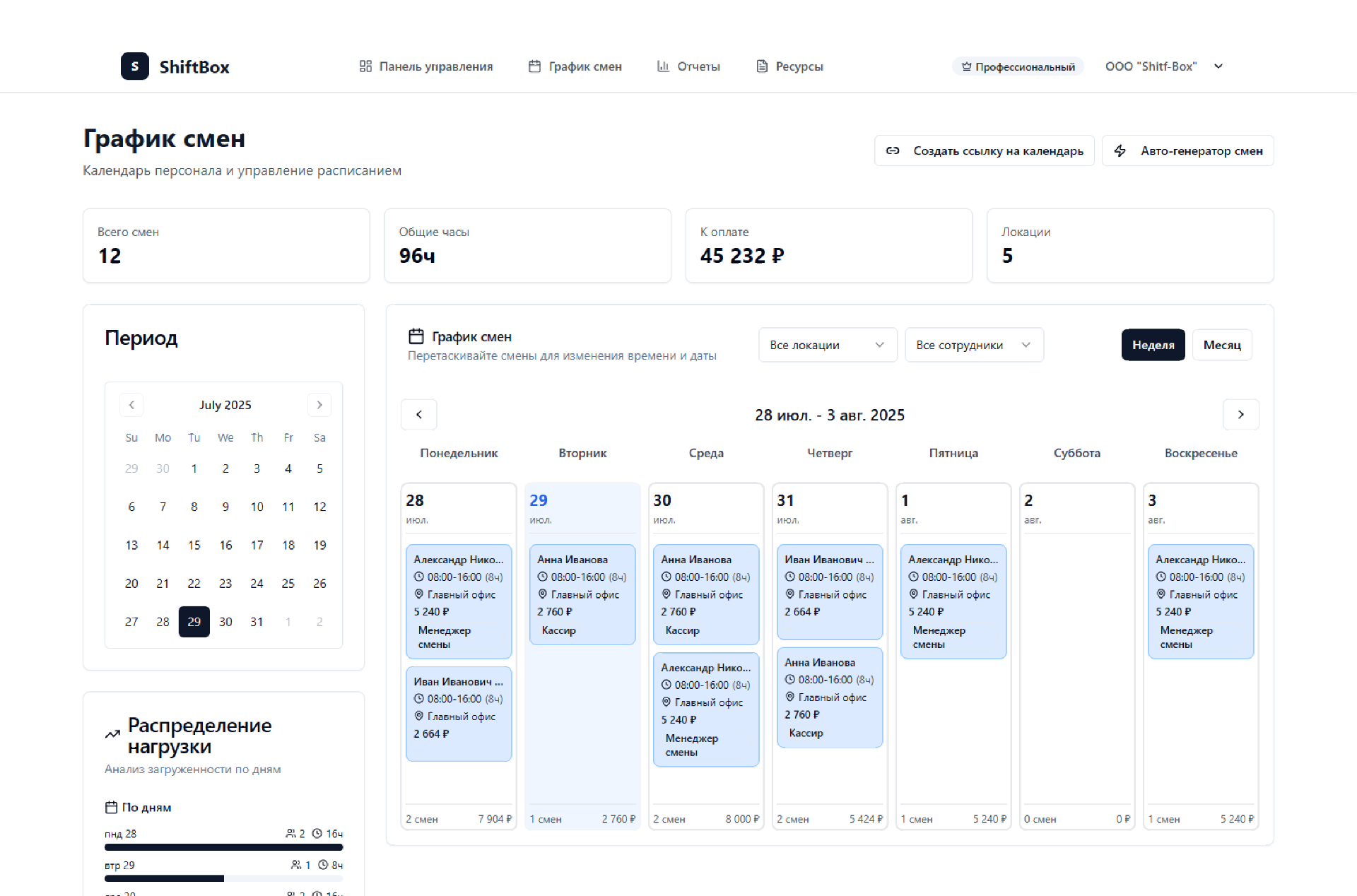
2/2 no longer lives apart from leave, sick days, and moves: everyone sees the same current shift picture.
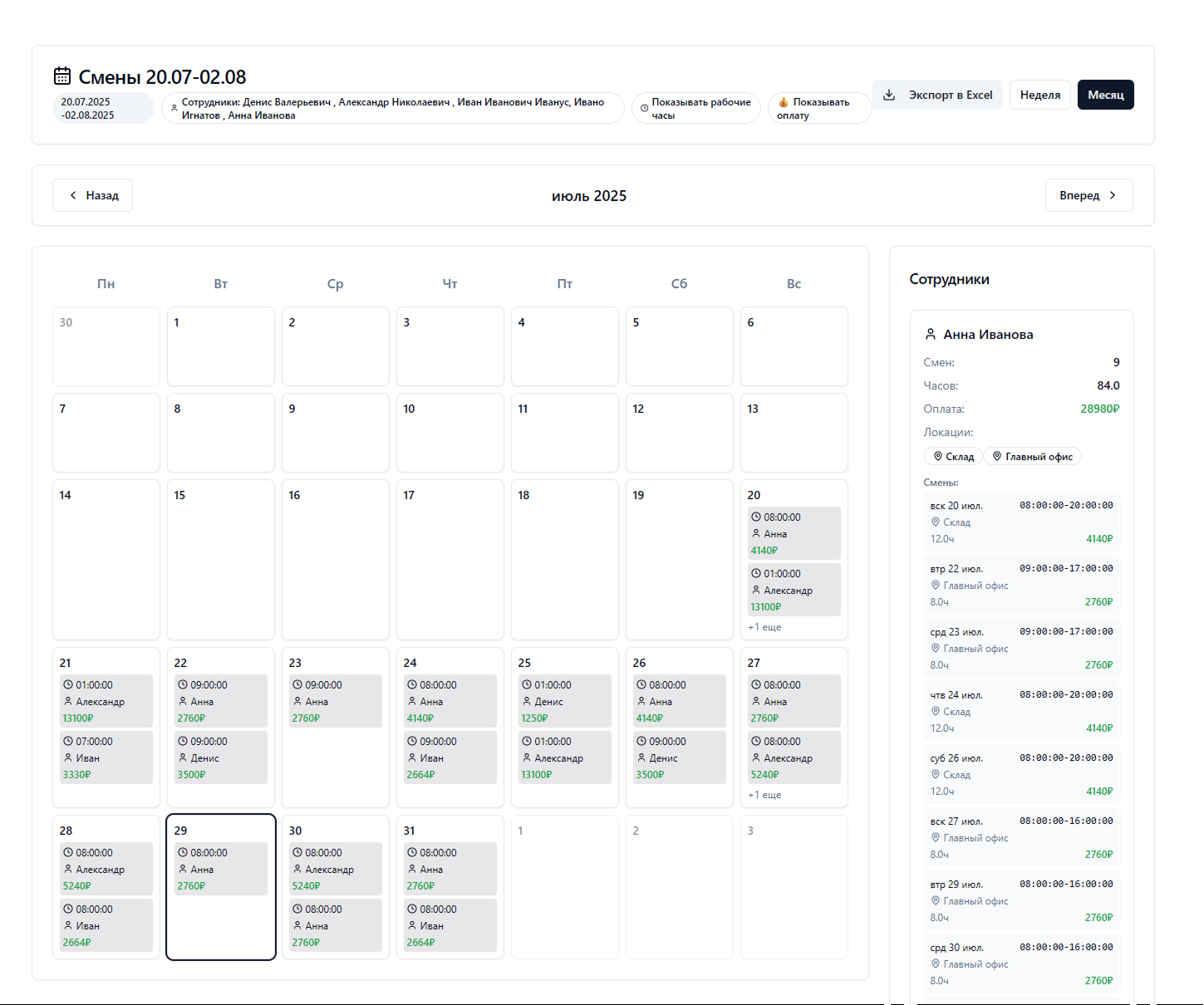
Hours per person, coverage swaps, and overload sit together so leads can decide before period close—not after.
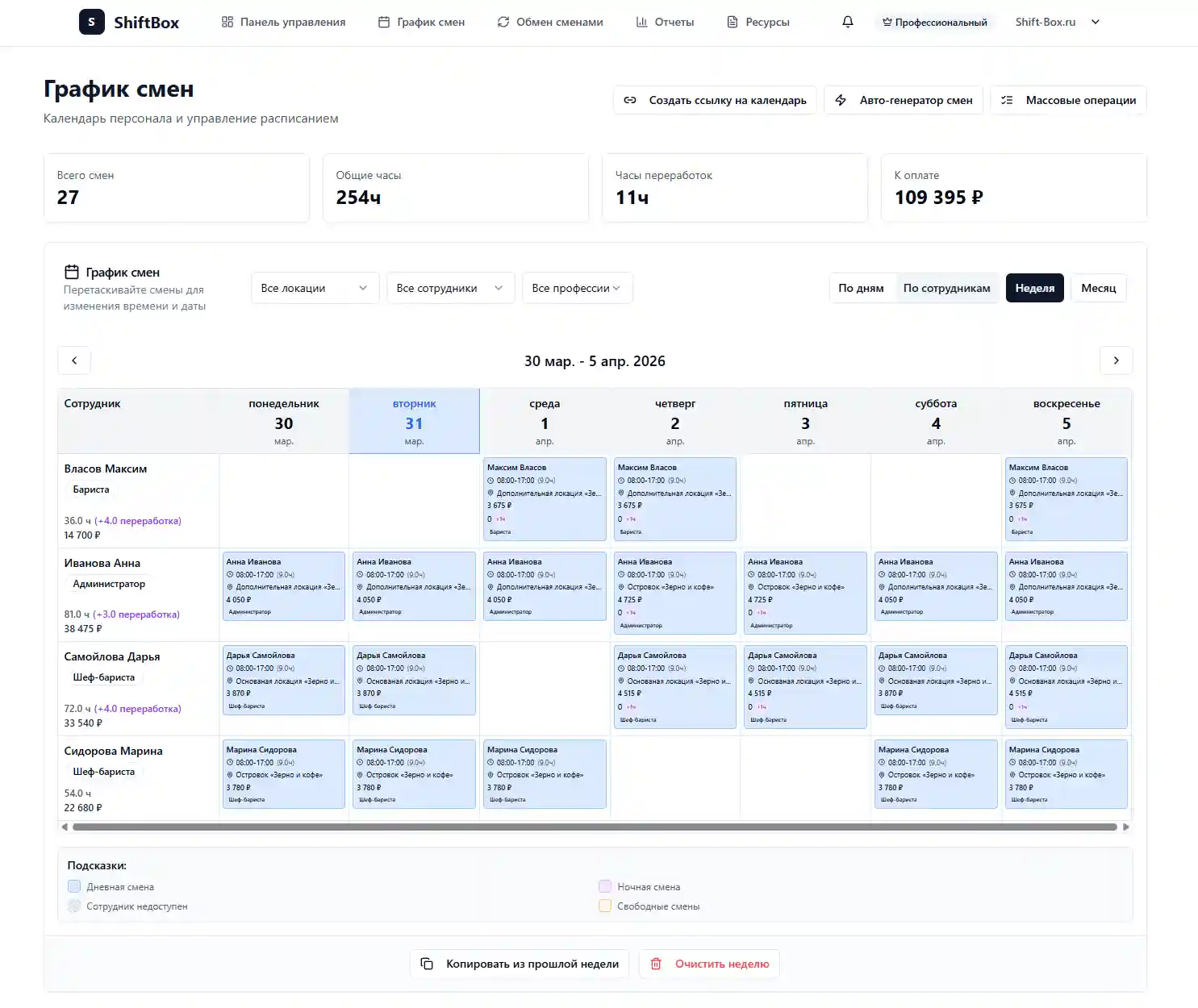
After publish, staff open the latest plan in their portal—no new file after every edit.
Calendar, people, hours, coverage, and reports share one workflow—no Excel, chat threads, and manual roll-ups.
Construisez les shifts dans une matrice claire, assignez en glisser-deposer et voyez tout de suite les trous de couverture.
Heures reelles, retards et heures supplementaires au meme endroit pour eviter la reconciliation de tableurs en fin de mois.
Le staff ouvre un lien navigateur, voit ses shifts, marque l indisponibilite et demande des echanges sans onboarding lourd.
Quand les shifts changent, chacun voit le nouveau plan dans son espace — les managers ne reexpliquent pas chaque modification dans des fils paralleles.
Sur un planning vivant, chaque rôle a besoin de sa part de la même vérité.
Voit personnes, postes et charge sans attendre le dossier manuel de fin de période.
Travaille au même endroit : construit les postes, édite le planning et publie sans fils interminables ni renvois de fichiers.
Gets a cleaner base for timesheets, hour checks, and payout prep—not scattered sources.
Teams on this pattern rarely break on day one—they break once real edits pile up. That is when one shared process starts saving time.
"We are a team of twelve. After a few moves and vacations the manager could not tell whose cycle was current. Now schedule, changes, and hours live in ShiftBox: one calendar for the lead, one published view for the crew."
Every fix meant a new sheet, a people-by-people check, and manual hour reconciliation at period end.
Template, exceptions, and shift facts stay in one process that survives each swap.
The crew stops rebuilding 2/2 by hand after every edit and shares one current picture of people, hours, and shifts.
Value shows up when schedule, exceptions, and hours share one workflow.
Any base pattern looks simple until real exceptions appear. Once moves, swaps, and deviations stack up, a manual process stops being transparent—for managers and staff alike.
ShiftBox keeps this scenario in one place: calendar, worked time, coverage, and publish act as a single loop. Edits no longer drag a new file version and a final manual roll-up behind them.
A steadier board that survives real-world changes across the week or period.
Especially useful where the pattern looks standard but every exception shifts the final picture of people and hours.
Start free and publish a 2/2 baseline your crews can open anywhere.
Ask for a walkthrough if you run mirrored day/night crews—we can map that scenario.
ShiftBox keeps the familiar 2/2 beat from turning into tribal knowledge—publish, adjust, and read hours from one place.
Quand l’alternance serrée multiplie les micro-changements
Souvent en quelques étapes : on importe le modèle, puis les exceptions restent dans le même écran au lieu d’éclater en plusieurs fichiers.
Chaque changement vit dans le planning central : plus besoin de reconstruire la chaîne à la main ni de renvoyer des captures.
Oui : la charge se lit plus clairement avant la fin de période, ce qui limite les mauvaises surprises.
Un lien personnel, sans application mobile obligatoire : la version affichée est celle publiée par l’équipe.
Scénarios pour équipes en rythme de shifts