1
Problème Parallel "sources of truth"
Screenshots, chat threads, and local copies disagree after the first mid-week fix.
Frequent off-days make it easy to lose the thread when reality interrupts the cadence
Screenshots, chat threads, and local copies disagree after the first mid-week fix.
One substitution can shift who thinks they are on tonight—especially with short on-blocks.
Overtime and coverage gaps surface only when payroll asks for proof.
PTO and sick days force improvised coverage that the static grid never modeled.
The base day-on cycle goes in first; real-world changes follow in the same system
Teams usually build the 1/3 template, attach people and sites, then run duty rotations and actual hours inside ShiftBox.
Add people and sites.
Build the core 1/3 cycle.
Publish shifts to the team.
Run moves and hours inside the same tool from there.
For long shifts it is critical to keep one picture of people, sites, and hours
The more sites and moves you run, the higher the risk that people, hours, and the roster diverge.
Duty posts, sites, and hours sit together, so a long cycle is easier to keep under control.
Same calendar for the template, exceptions, and the hours that actually happened
Managers update; staff refresh—no re-emailing a workbook after every change.
Substitutions stay tied to dates and roles so the next shift change is not guesswork.
Spot heavy stretches while you still have room to rebalance the roster.
Vacations and sick leave sit in the same workflow as the core 1/3 rotation.
Pas une automatisation abstraite — des points de contrôle concrets à chaque poste.
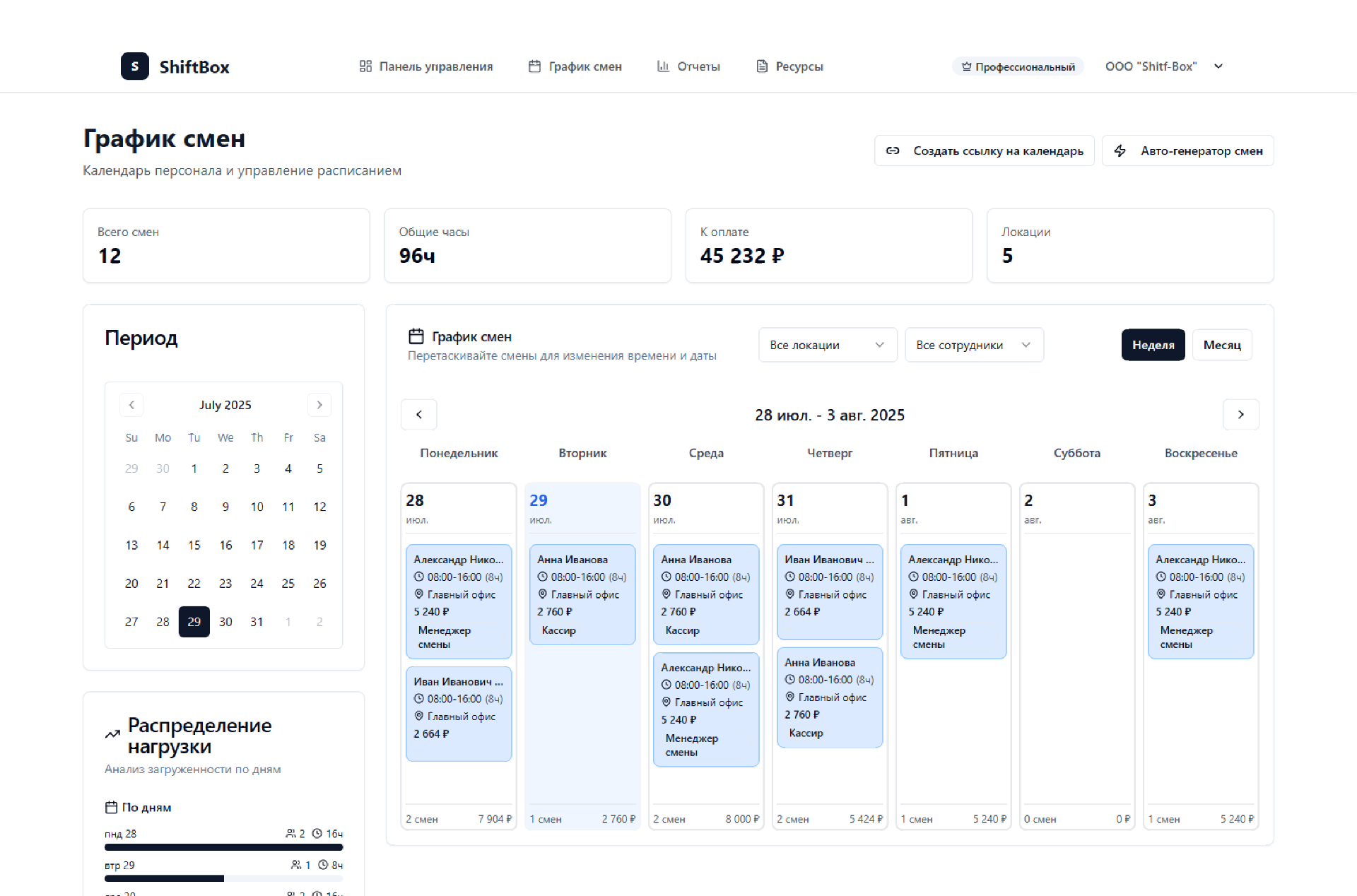
1/3 no longer lives apart from leave, sick days, and moves: everyone sees the same current shift picture.
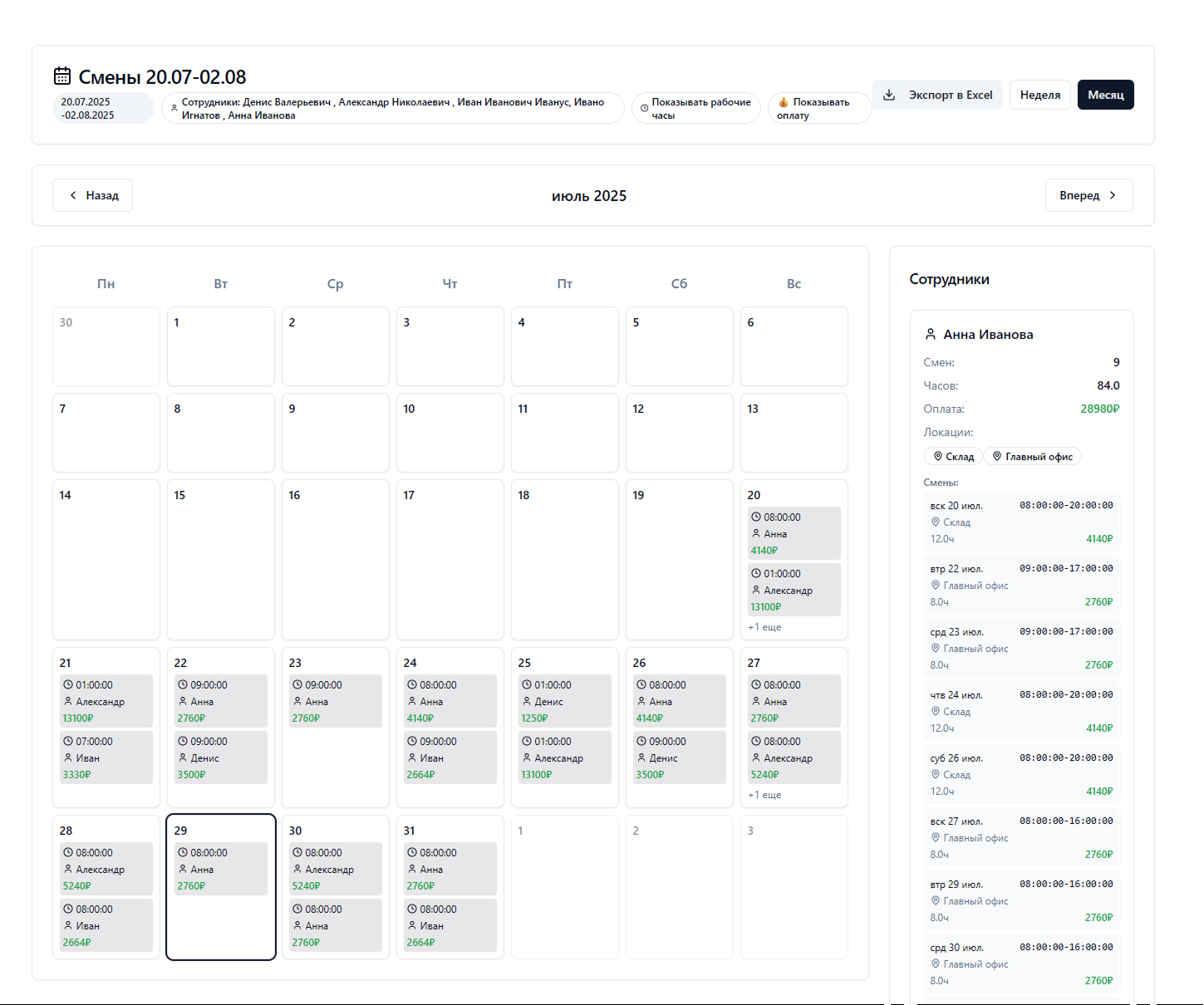
Hours per person, coverage swaps, and overload sit together so leads can decide before period close—not after.
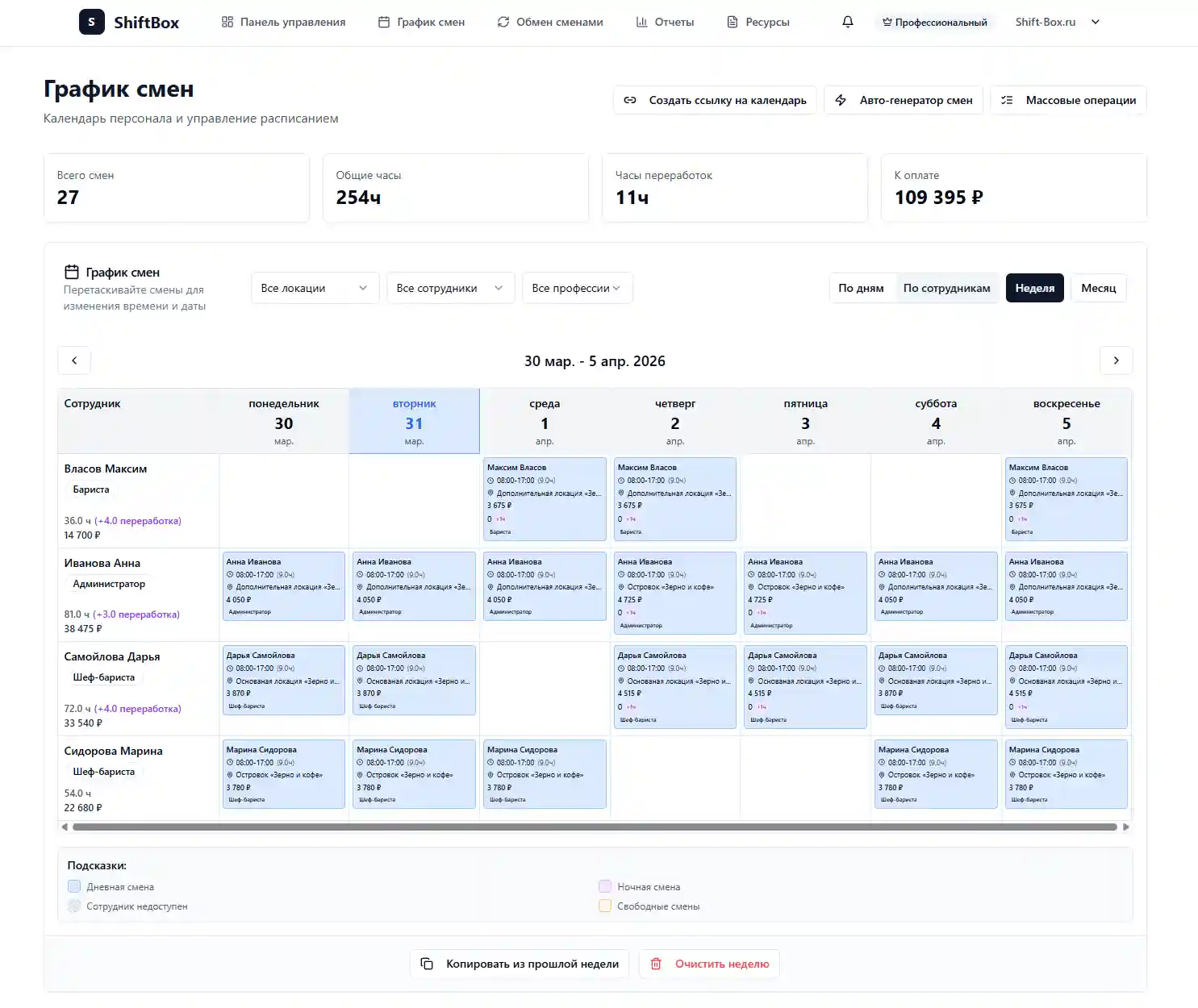
After publish, staff open the latest plan in their portal—no new file after every edit.
Calendar, people, hours, coverage, and reports share one workflow—no Excel, chat threads, and manual roll-ups.
Construisez les shifts dans une matrice claire, assignez en glisser-deposer et voyez tout de suite les trous de couverture.
Heures reelles, retards et heures supplementaires au meme endroit pour eviter la reconciliation de tableurs en fin de mois.
Le staff ouvre un lien navigateur, voit ses shifts, marque l indisponibilite et demande des echanges sans onboarding lourd.
Quand les shifts changent, chacun voit le nouveau plan dans son espace — les managers ne reexpliquent pas chaque modification dans des fils paralleles.
Sur un planning vivant, chaque rôle a besoin de sa part de la même vérité.
Voit personnes, postes et charge sans attendre le dossier manuel de fin de période.
Travaille au même endroit : construit les postes, édite le planning et publie sans fils interminables ni renvois de fichiers.
Gets a cleaner base for timesheets, hour checks, and payout prep—not scattered sources.
Day-on teams rarely break on day one—they break once real edits pile up. That is when one shared process starts saving time.
"We are sixteen people on day-long duty posts. After a few cross-site moves we used to rebuild the duty roster from chat messages. Now schedule, changes, and hours live in ShiftBox: one calendar for the manager, one published view for the crew."
Every fix meant a new sheet, a people-by-people check, and manual hour reconciliation at period end.
Template, exceptions, and shift facts stay in one process that survives each swap.
The crew stops rebuilding 1/3 by hand after every edit and shares one current picture of people, hours, and shifts.
Value shows up when schedule, exceptions, and hours share one workflow.
Any base pattern looks simple until real exceptions appear. Once moves, swaps, and deviations stack up, a manual process stops being transparent—for managers and staff alike.
ShiftBox keeps this scenario in one place: calendar, worked time, coverage, and publish act as a single loop. Edits no longer drag a new file version and a final manual roll-up behind them.
A steadier board that survives real-world changes across the week or period.
Especially useful where the pattern looks standard but every exception shifts the final picture of people and hours.
Start free and mirror your current 1/3 baseline without rebuilding it by hand each week.
We can demo a handoff-heavy 1/3 line if you want to see the flow live.
ShiftBox is built for rotating crews who cannot afford fuzzy edges—one workspace for the 1/3 template, the exceptions, and the hours story behind them.
Quand le modèle théorique ne suffit plus
En règle générale peu : vous posez le gabarit 1/3, puis les ajustements se font dans le même fil sans dupliquer les onglets.
Au même endroit que le planning officiel, sans refaire la chaîne à la main ni envoyer une nouvelle capture.
Oui : la charge se lit plus tôt, avant de clôturer la période et de découvrir les dépassements.
Par un lien personnel, sans application : ils voient toujours la dernière version publiée.
Scénarios pour longs shifts et nuit