1
Problema One absence breaks the line
There is no bench to hide a gap during morning rush.
Thin coverage means every change is visible to guests immediately.
There is no bench to hide a gap during morning rush.
The spreadsheet stops being true by Tuesday.
People stay “just a bit longer” and it never returns to the roster.
Without heavy implementation or extra bureaucracy
Teams bring roles, people, and base shifts in first, then run substitutions and actual attendance in one process.
Add sites, roles, and employees.
Build the base roster for shifts and open/close coverage.
Publish shifts to the crew in their portal.
Run substitutions, hours, and changes in the system from there.
Hospitality ops calm down when sites, roles, and changes sit in one place
Trouble usually starts when you have to rebuild the plan fast across baristas, counter staff, and responsable de sedes—not on day one.
Roster, changes, and actual hours sit in one process so the café lead decides faster and does not lose crew detail.
Practical control points for every day—not theoretical automation
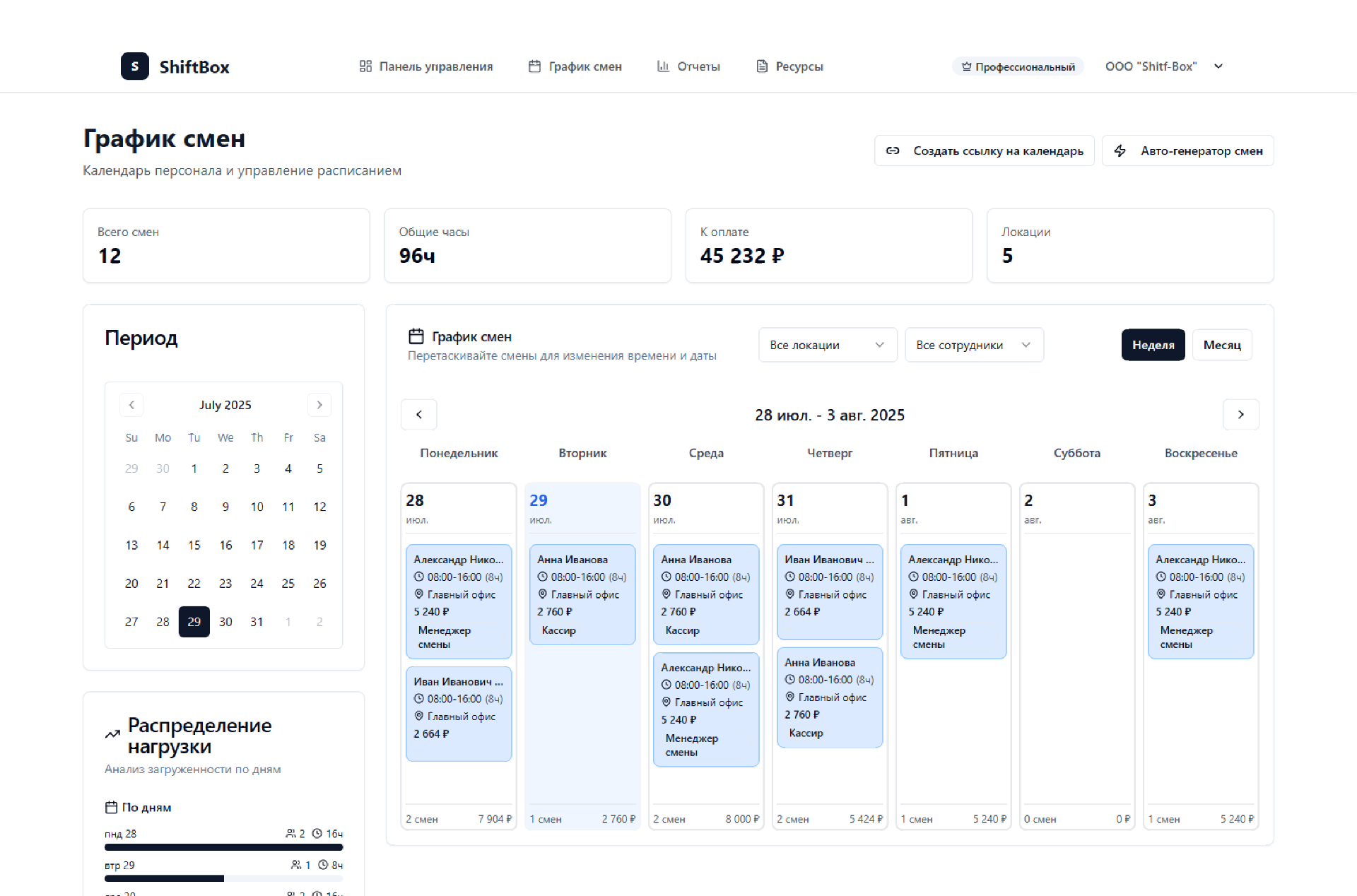
See who covers the early shift, where the site is uncovered, and how to move people without manual panic.
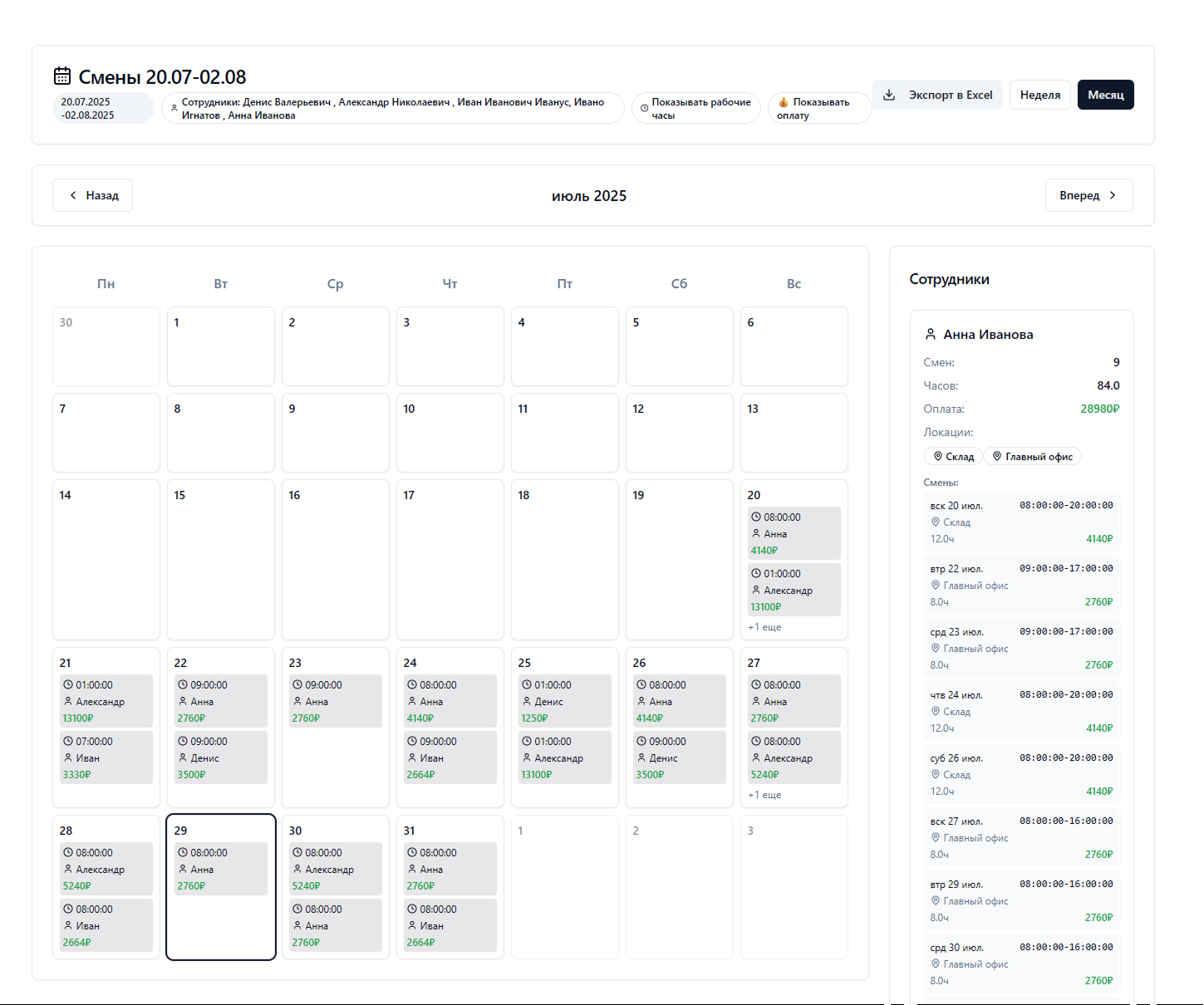
Moves and swaps land in the shared shift and hour picture instead of disappearing in chat.
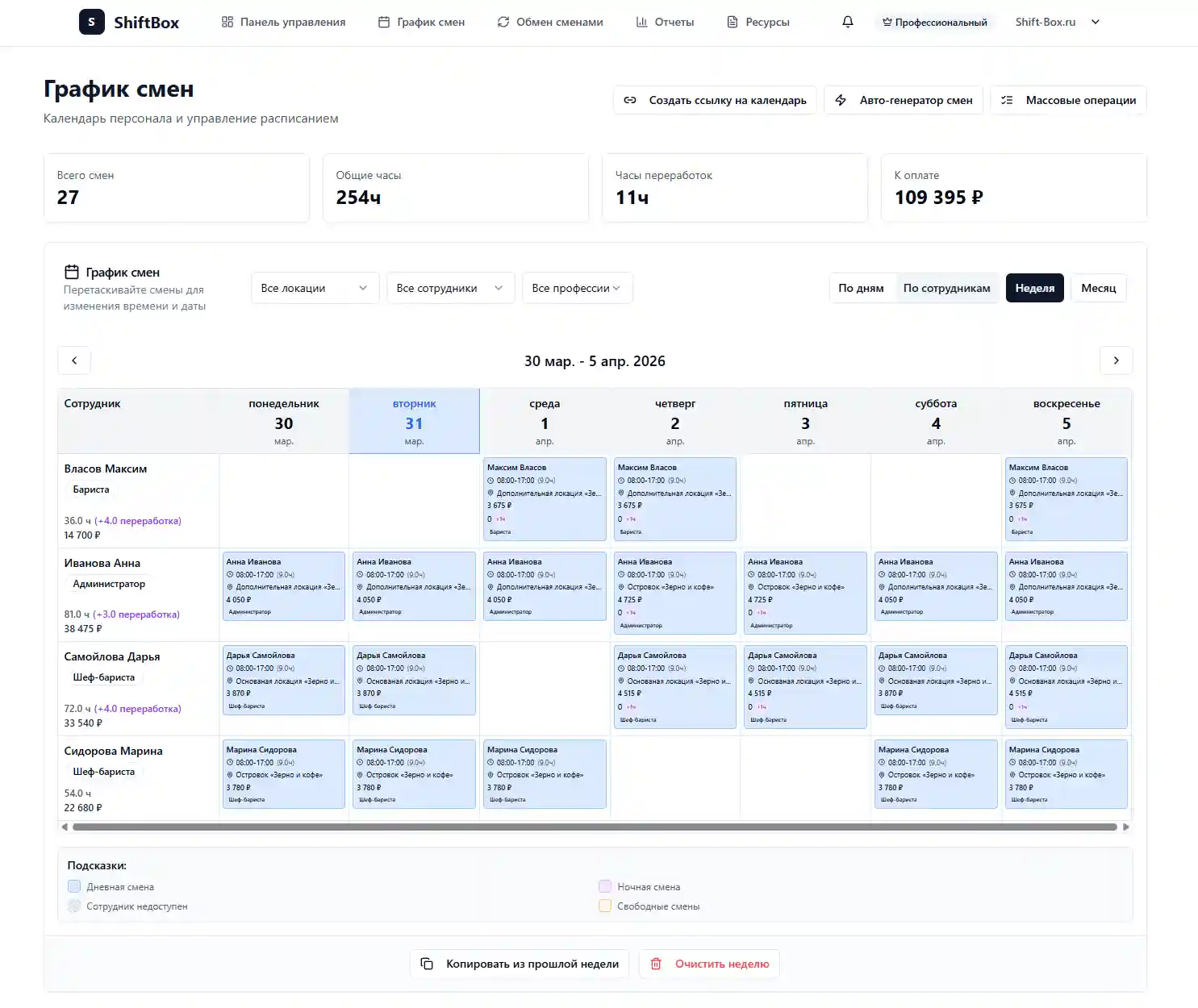
Easier hour data prep and a clearer view of where the crew is actually overloaded.
Calendario, personal, horas, sustituciones e informes en un solo flujo: sin Excel, chats ni consolidados manuales.
Monta turnos en una matriz clara, asigna con arrastrar y soltar y ve al instante los huecos de cobertura.
Horas reales, retrasos y extras en un solo sitio para que los responsables no concilien hojas al cierre.
El equipo abre un enlace en el navegador, ve sus turnos, marca indisponibilidad y pide cambios sin onboarding pesado.
Cuando cambian los turnos, la gente ve el plan nuevo en su espacio: los managers no reexplican cada edicion en hilos aparte.
Cada rol gana algo, pero todos trabajan en un solo flujo, no en archivos sueltos.
Ve sedes, personas y carga con más claridad, sin pedir resúmenes constantes a los gerentes.
Trabaja con un horario vivo cada día: arma turnos, aplica cambios y publica sin caos en el chat.
Base mucho más limpia para partes de horas, revisión y cálculo final por empleado.
Hacen falta más que una plantilla bonita: mantener el proceso al día cuando hay sustituciones, bajas y cambios de personal.
"We run four cafés. We used to close openings through chat and reconcile barista swap hours by hand. Después de ShiftBox, roster, changes, and hours stopped living apart: the coordinator works in one window, and the crew sees a ready, current shift plan."
Los cambios de personas y sedes había que confirmarlos a mano, y la foto final de horas venía de varias fuentes.
Sedes, turnos, sustituciones y tiempo real en un proceso más fácil de mantener al día.
El equipo deja de apagar fuegos en hojas de cálculo y pasa a un control más predecible de horario, horas y sustituciones.
A missed shift hits service immediately when the site runs at full pace
When barista schedules live in spreadsheets, the manager spends time on confirmations: who is definitely in, who can cover opening, who is already over hours. That shows up fast in cafés and bakeries with short, floating, or overlapping shifts.
ShiftBox gathers that process in one window. You see the plan, changes, and actual hours without jumping between chats, tables, and notes.
A tighter crew roster and fewer opening surprises.
Especially useful for high-turnover sites, frequent substitutions, and mixed shift lengths.
Model a peak week and see swaps plus hours in one flow.
ShiftBox helps small hospitality crews publish shifts, absorb changes, and keep hours visible so owners are not reconciling the week from memory.
Equipos pequeños, demanda variable, cambios frecuentes
Vale cuando el plan cambia a menudo: una baja es gran parte del día.
Sí, un enlace en el navegador del móvil suele bastar.
Puede modelar ventanas cortas y cobertura flotante sin plantillas rígidas.
Si todos cubren huecos, las horas crecen rápido: junto al calendario se nota antes.
Escenarios para gestionar mejor equipos por turnos